
Legislators question how average teacher pay is calculated
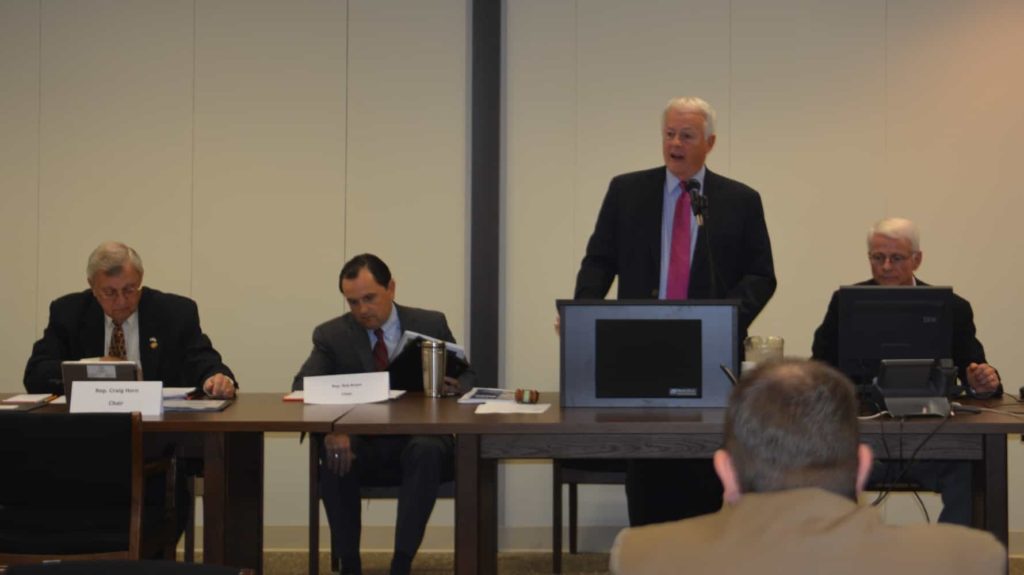

The House Appropriations Committee on Education met this morning. Rep. Hugh Blackwell, R-Burke, presided. Here is EdNC’s profile of this committee and its members.
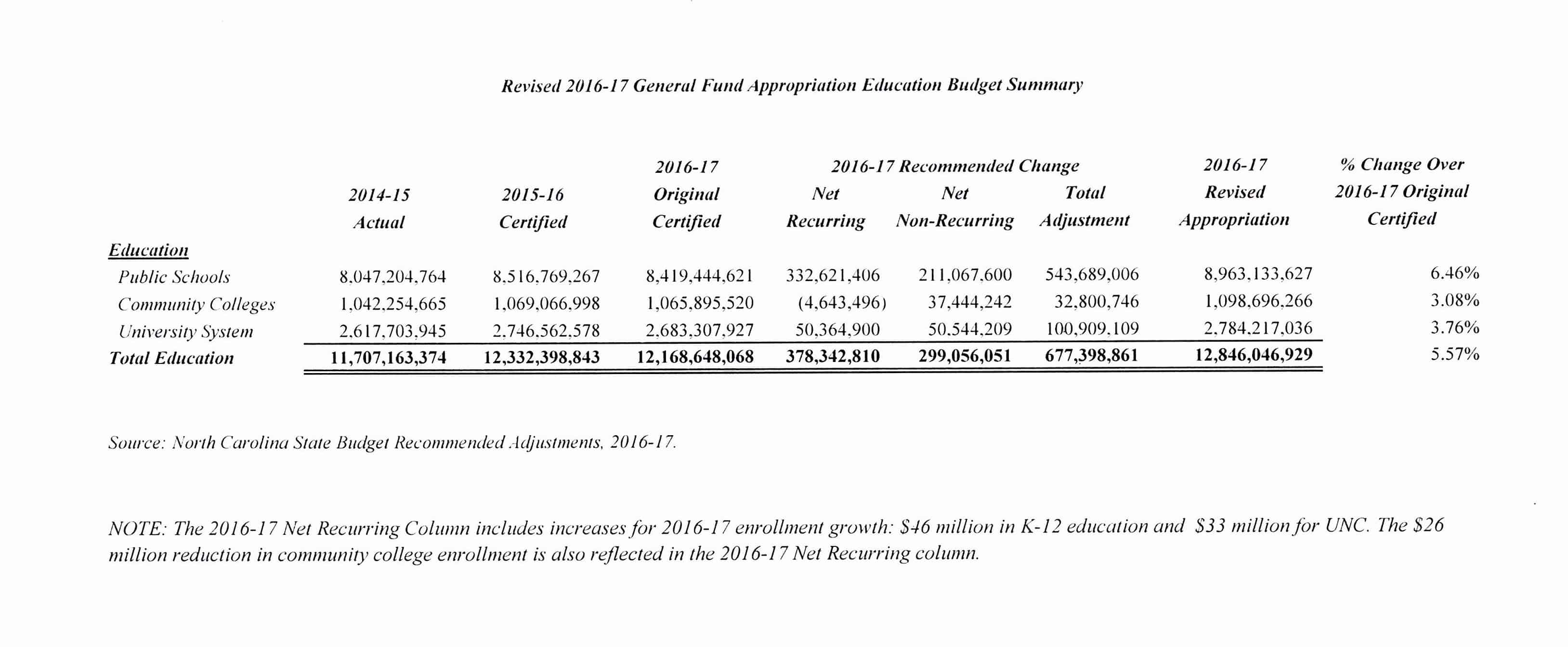
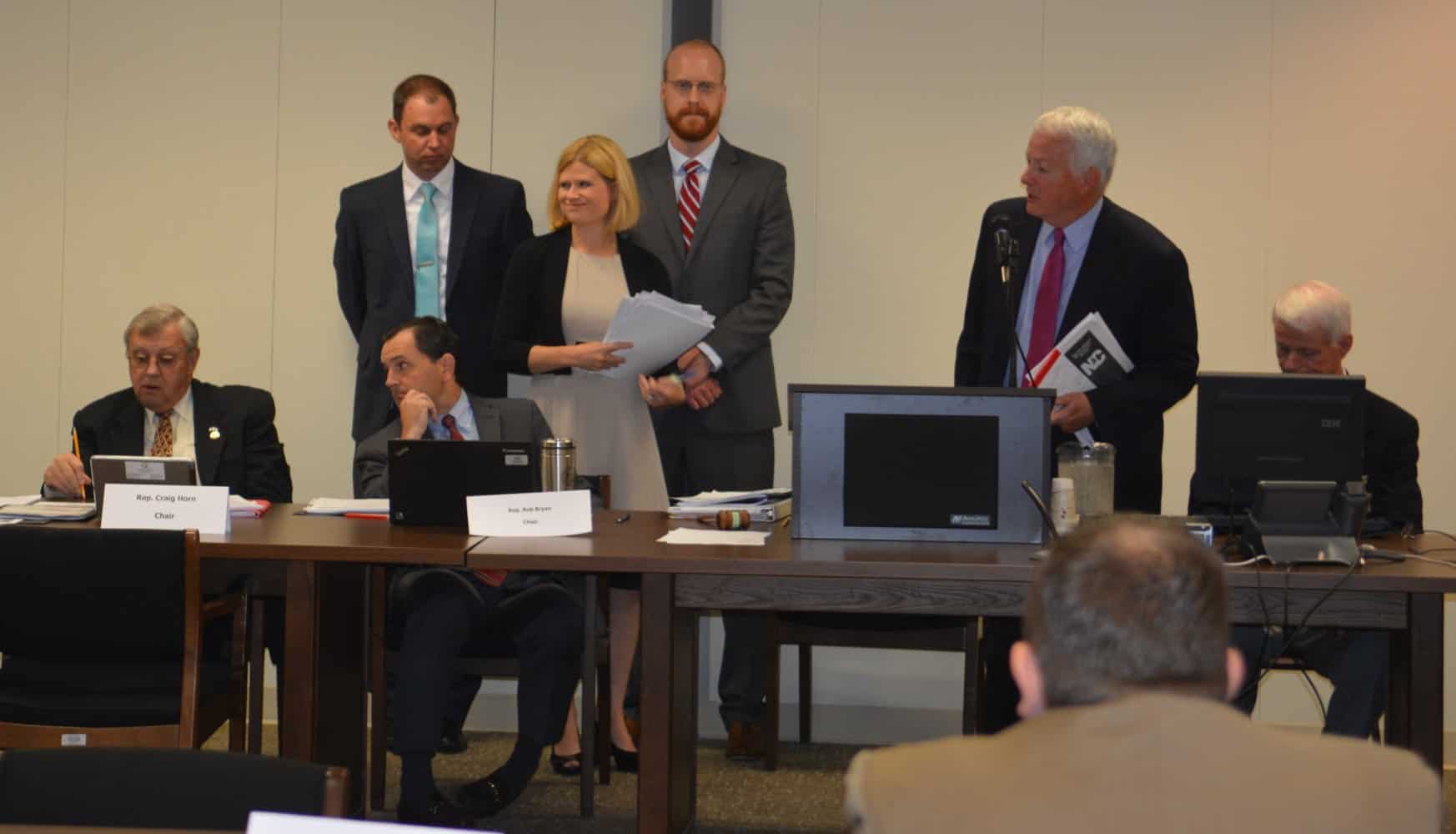
Staff from the Office of State Budget & Management (OSBM) presented the Governor’s proposed adjustments to the FY 2016-17 education budget to the committee. Nick Goettsch on the OSBM staff presented the budget for K-12 public schools. The Governor’s budget proposes a more than $543 million increase for public schools, a 6.5 percent increase.
The Governor’s budget proposes to increase average teacher pay in North Carolina to more than $50,000, but the committee had questions about how the average is calculated.
Goettsch said calculations of average teacher salary use the NEA’s methodology, including state, local, and other compensation. According to Goettsch, here is how the average was calculated:
$43,608 average state compensation +
$3,870 average local compensation +
$453 average other compensation =
$47,931 average total compensation
Goettsch said the Governor’s budget proposes an additional $2,313 in average state compensation (not including bonuses) to increase the average to $50,244. With benefits, the average would be more than $66,000, he said.
Here is the Governor’s proposed budget for public schools:
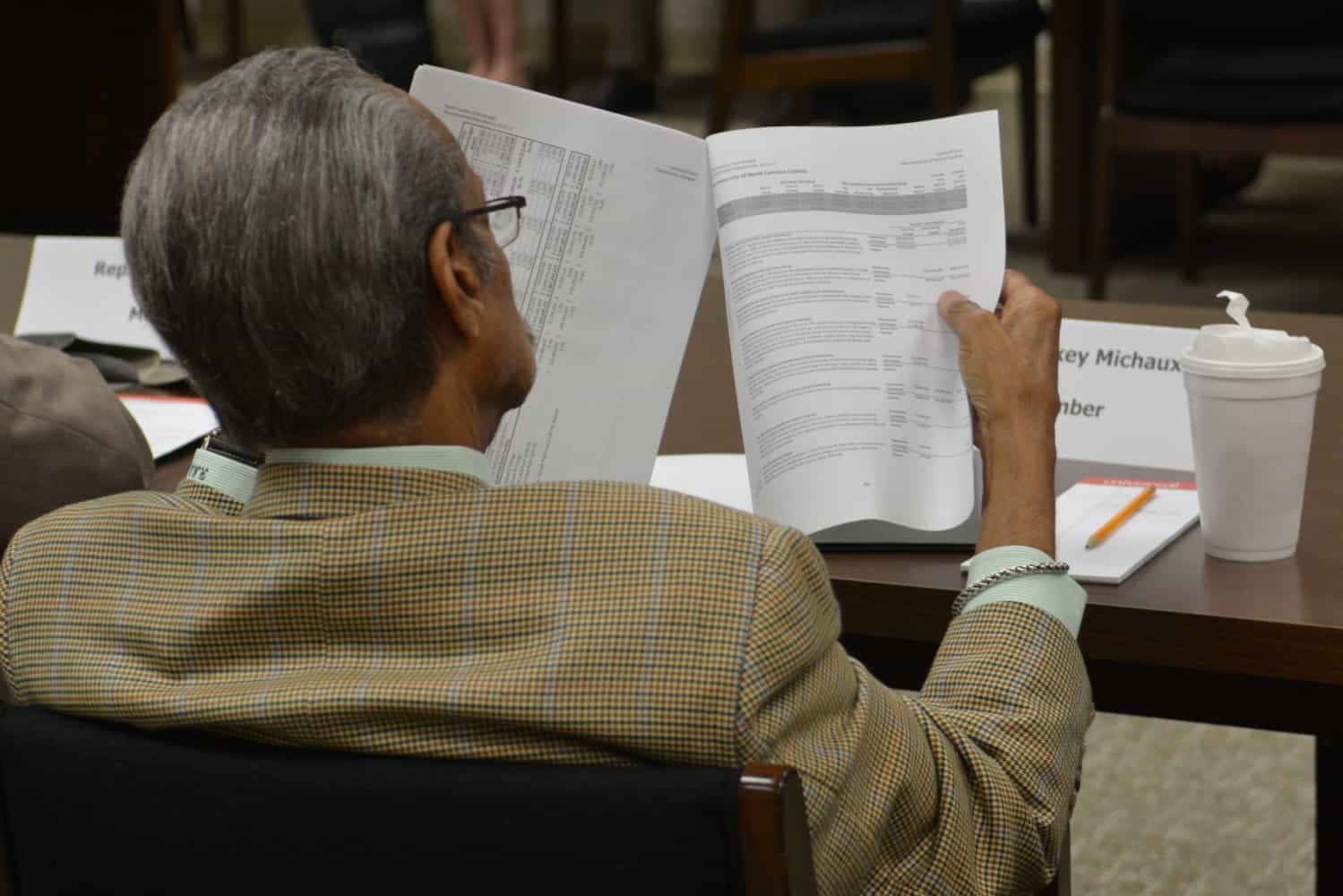
Rep. Mickey Michaux, D-Durham, questioned using the average since many districts are not able to pay the average local compensation used in the calculations.
Brian Matteson, an education analyst in the Fiscal Research Division, noted that average local supplements are trending up from $3,550 in 2013-14 to $3,870 in 2015-16. He also noted that seven districts do not have any local supplements: Cherokee, Clay, Graham, Halifax, Weldon, Madison, and Swain. “North Carolina has a statewide minimum salary schedule for teachers,” said Matteson, which is “a little bit atypical” nationally.
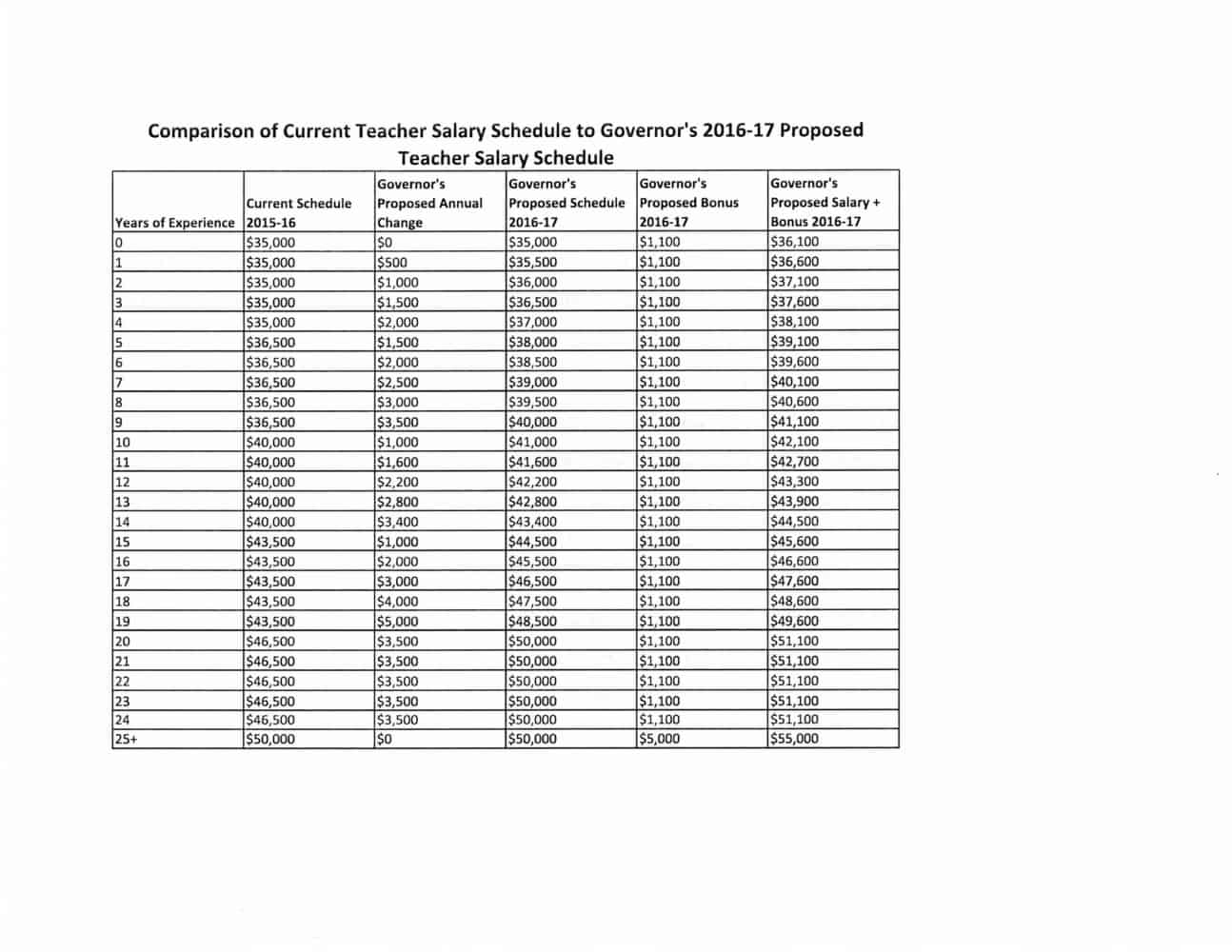
In addition to the pay increases, the Governor’s budget proposes bonuses for teachers: $5,000 for teachers with 25+ years of experience, and $1,100 for all other teachers. Rep. Skip Stam, R-Wake, questioned the use of bonuses since “the sky is not falling” and most of “these teachers will be in these positions next year.”
Rep. Debra Conrad, R-Forsyth, asked about the impact of the Governor’s budget on local districts that choose to base local supplements on a percentage of the state salary schedule.
Rep. Craig Horn, R-Union, noted that the Governor’s proposed budget increases from 6 to 21 the number of steps in the teacher’s salary schedule.
Catherine Truitt, the Governor’s senior education advisor, said this decision was based on teacher feedback. When the steps were collapsed to six, teachers would have to wait a span of five years to receive an increase, she said. Uncollapsing the steps, she said, will allow them “to realize moderate pay increases each year.”
Truitt said most teachers leave the profession between steps 0-14. The Governor’s proposal allows for moderate increases each year with “bigger bumps at benchmark years,” she said.
This chart allows you to compare the current salary schedule to the Governor’s proposed schedule for 2016-17:
Rep. Blackwell said the committee plans to meet next Tuesday, Wednesday, and Thursday from 8:30-10am. The committee will hear from the N.C. Department of Public Instruction about the budget. Rep. Horn asked that education stakeholders be given an opportunity to weigh in before the committee hears from its members about the development of the committee budget proposal.
Here is the Governor’s budget proposal