
Perspective | Our communities need health care workers; community colleges have a key role to play

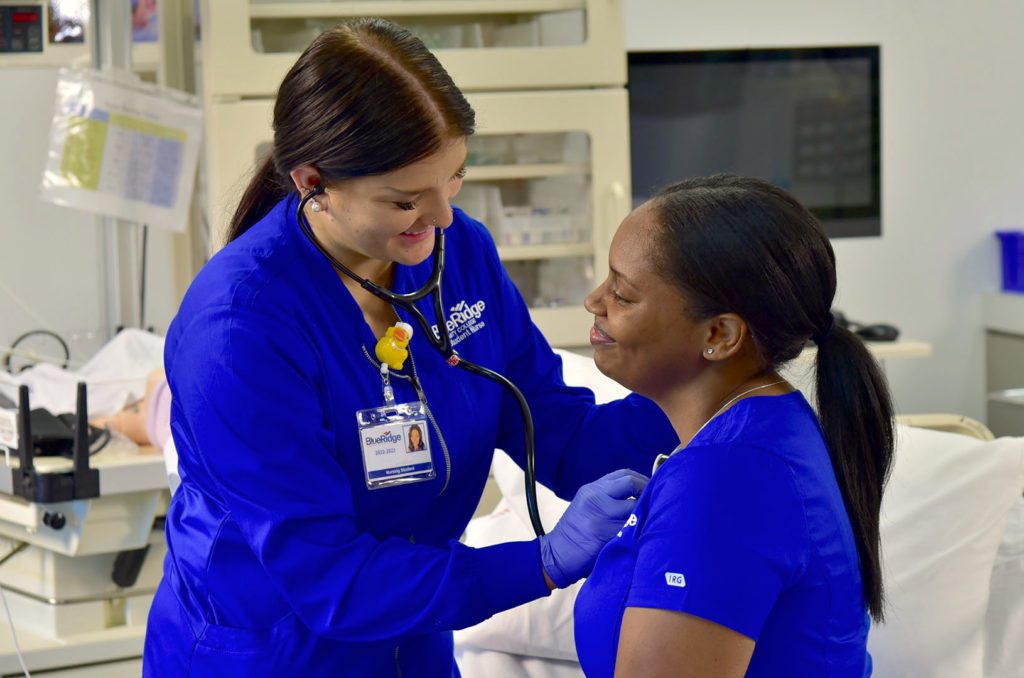
Educational institutions serve as a vital pipeline that feed much-needed talent into our health care system. That system is made up of a vital and complex network of individuals who safeguard the overall health and wellness of a community.
For many communities across our state, the health care workforce pipeline is facing a critical shortage of workers, particularly nurses. Even before the COVID-19 pandemic, data from the Sheps Center for Health Services Research at UNC Chapel Hill noted that North Carolina faced a probable shortage of about 12,500 nurses in the coming decade. Since the pandemic, that number has been recalibrated and is expected to be closer to 21,000 fewer nurses by 2033.
Community colleges across our state have a long history of fostering productive collaborations between educators, health care providers, and community organizations to make educational opportunities more attainable to all aspiring students. MyFutureNC knows and understands this dynamic. They recognize that in order to reach the goal of 2 million North Carolinians with high-quality credentials or postsecondary degrees by 2030, we must not only bridge, but eliminate, the gap between the skills employers need and the education and training available throughout our state.
We’re closing in on the goal, but we’re still 31,000 individuals below where the state needs to be. Add that to our shrinking pipeline of nurses, and there is indeed a sense of urgency. Now, more than ever, community colleges and our partners have a key role to play in training health care workers who can fulfill roles across many departments and needs.
Multifaceted training and impact
Whether in or out of a hospital, community members come in contact with a multitude of providers and caregivers — even in a single visit — who received their training and education at a local community college. These frontline workers range from billing and insurance specialists to medical assistants, nurse aides, pharmacy technicians, and nurses. Many of us also train surgical technologists and EKG technicians.
The medical field continues to grow, and the training we are able to offer is essential to any effort to strengthen capacity and build interest and excitement around a health care career. Our ability to be nimble and responsive to local needs enables us to add and expand programs and offerings quickly to address the critical need for health care providers in our communities.
Like other community colleges across the state, Blue Ridge expanded its associate degree nursing program in 2022. We also partner with Western Carolina University to provide seamless transfer opportunities for our nursing students and with Wingate University for students aspiring to be pharmacists.
Responding with partnerships and pathways
Strategic partnerships with area health care providers and employers enables our instructors to bring hands-on and clinical experiences to students, resulting in strong connections and job opportunities upon graduation and completion of their training. In the case of the Health Sciences Center — a partnership among Henderson County, Pardee UNC Health Care, Wingate University, and the City of Hendersonville — we’ve also been able to provide integrated opportunities for learning.
The Health Sciences Center in Hendersonville has been the hub of Blue Ridge’s health care programs since it opened in 2016. The design of this 100,000-square-foot facility allows our students the opportunity to learn together, no matter their program, and collaborate with Wingate’s pharmacy and physician assistant students, while also training at the Health Sciences Center. Additionally, Pardee’s Cancer Center and their team of providers, as well as Pardee Surgical Associates, are based in the Health Sciences Center, creating a natural pathway for learning for students.
Most impactful are Blue Ridge’s Career and College Promise programs, which provide tuition-free, dual enrollment programs for students who want to jump-start a career in health care by taking college courses while still in high school. And as we’ve all come to know and understand, if we can capture a student’s attention and interest while in high school, we’re well positioned to keep them engaged for the remainder of their educational journey. The result? Community colleges are able to build a stronger workforce for our communities and positively impact overall health and quality of life.
Blue Ridge Community College is honored to be a strategic education and training partner, ensuring that every member of this delicate ecosystem is well trained and prepared for their career. I know without a doubt that community colleges across North Carolina will continue to be instrumental in creating a healthier community — and state — for all.