
The impact of ‘lost instructional time’ on students during COVID-19

The State Board of Education heard Wednesday about a new study assessing what the state’s Department of Public Instruction (DPI) is calling the “impact of lost instructional time” on North Carolina students due to COVID-19.
The study found an impact in almost every subject. Michael Maher, executive director of the Office of Learning Recovery & Acceleration at DPI, stressed that COVID-19 alone was responsible for the results. He said that most students made progress. It was just slower during the pandemic than it would normally have been.
Students who went to school in person where “specific and targeted resources and supports” were in place did better than those who stayed totally remote.
“These findings are critical to understanding how we continue to work towards recovery and acceleration statewide,” said State Superintendent of Public Instruction Catherine Truitt in a press release.
 Sign up for the EdDaily to start each weekday with the top education news.
The data
In contrast to many studies that compare pre-pandemic students’ performance with current students’ performance, this study projected how students would have performed had COVID-19 never happened. Maher and his team then compared that with how those same students actually performed.
According to the report, the only subject where the impact of COVID-19 wasn’t felt was English II. And students’ results were especially impacted in math.
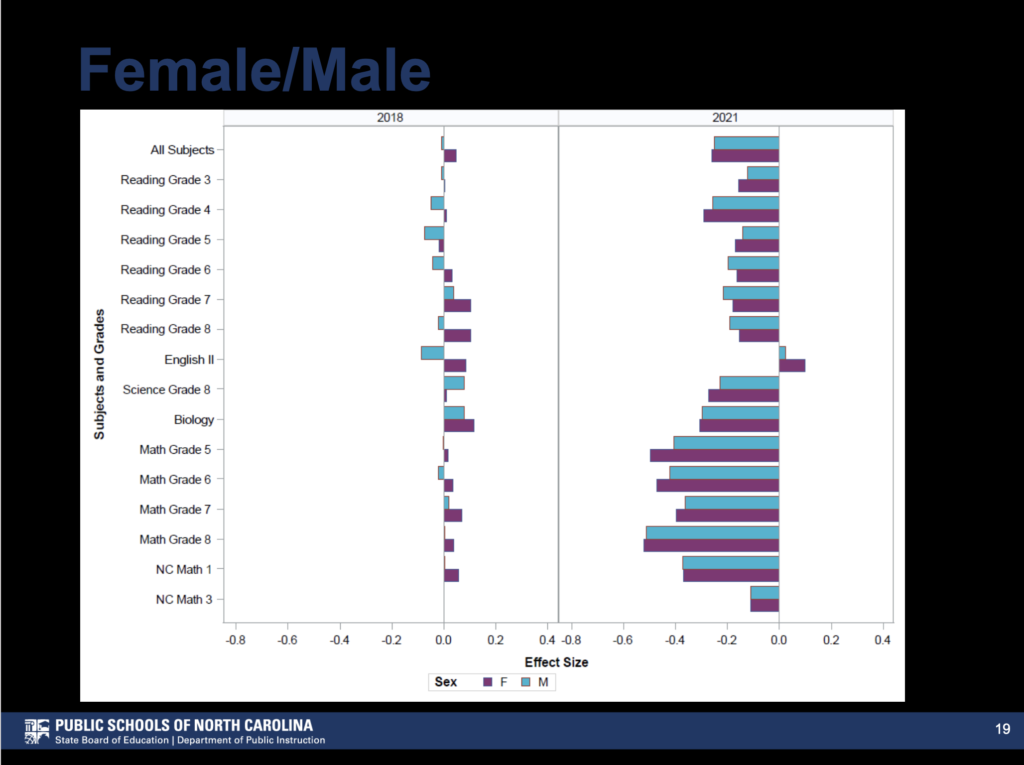
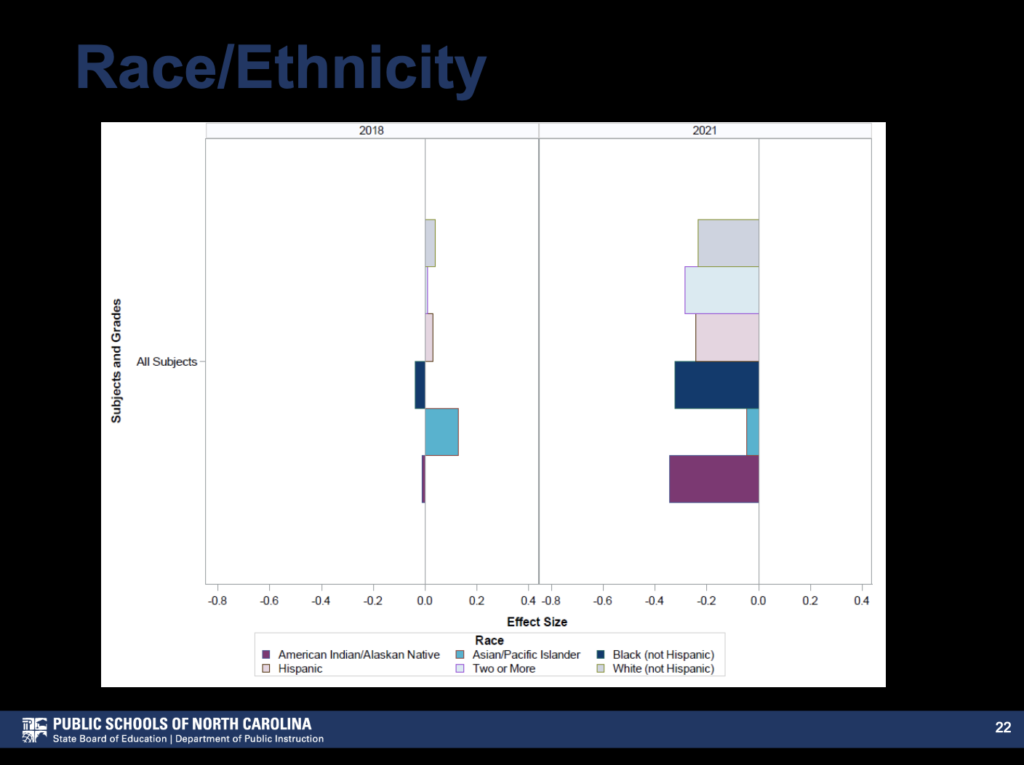
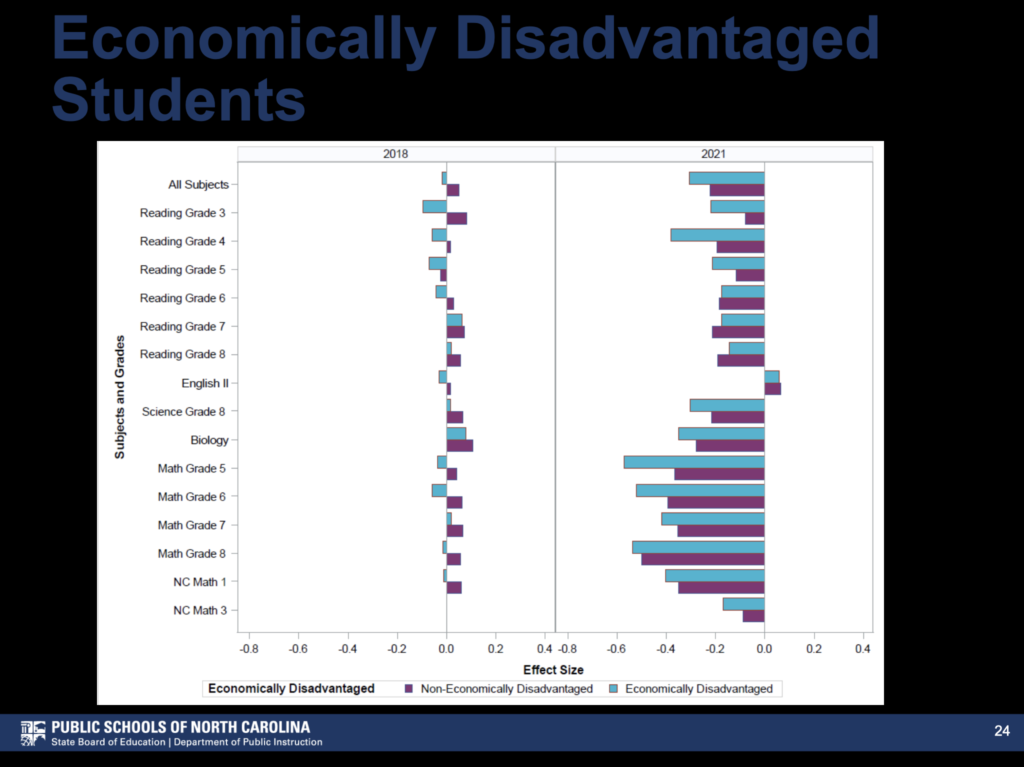
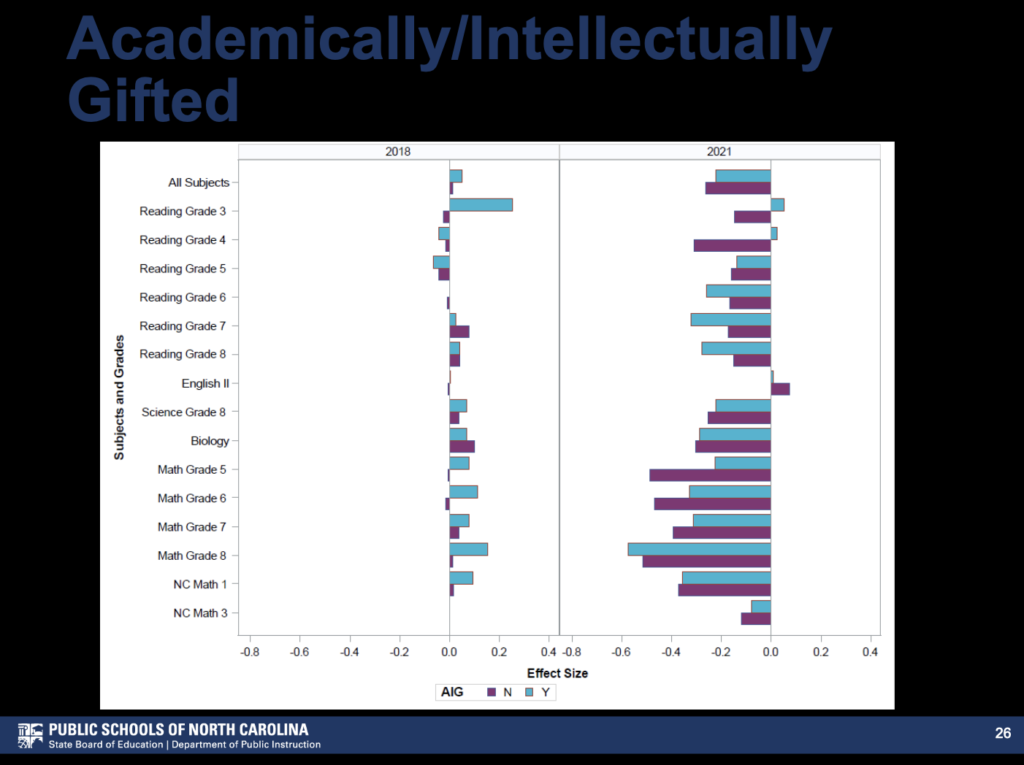
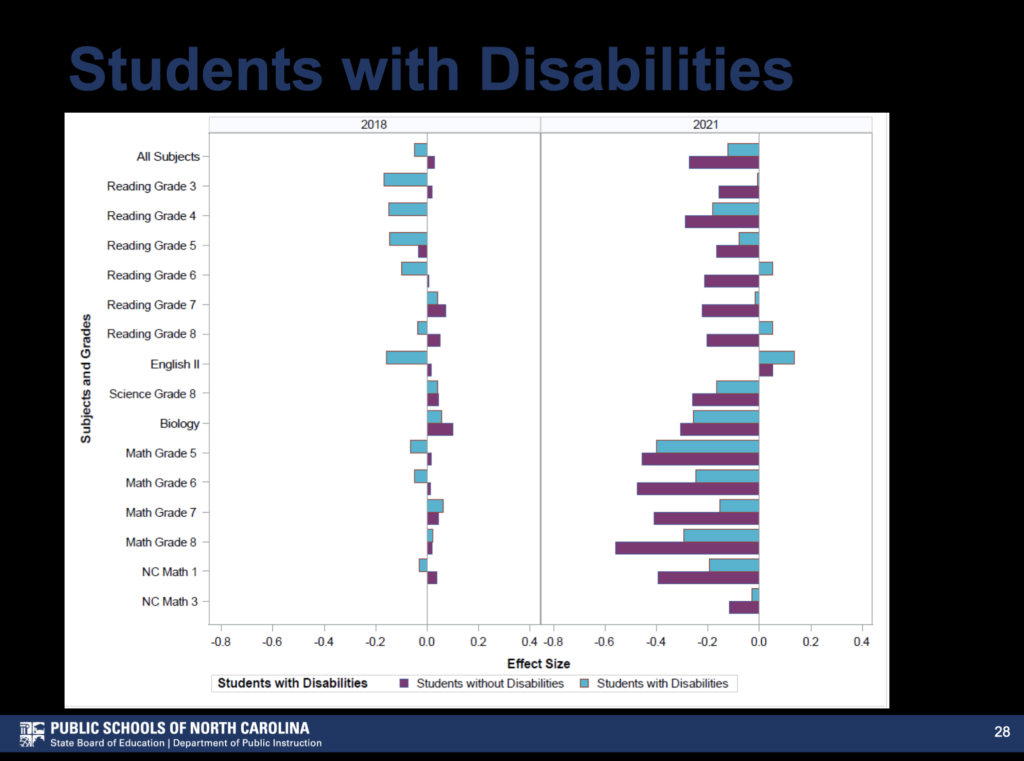
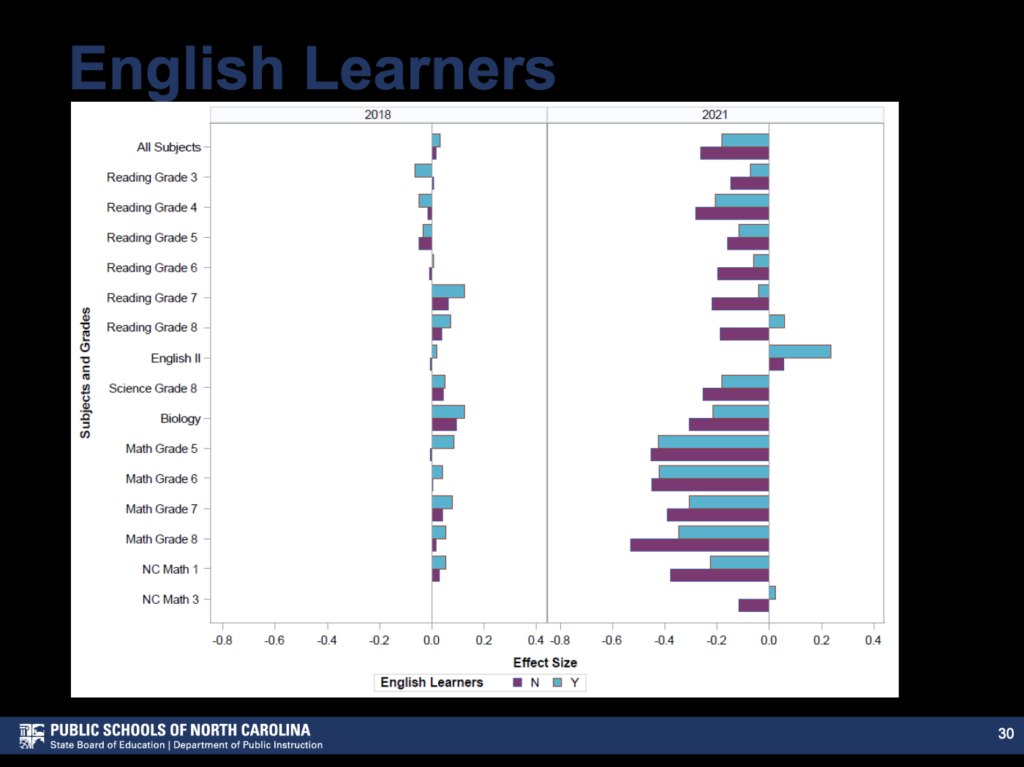
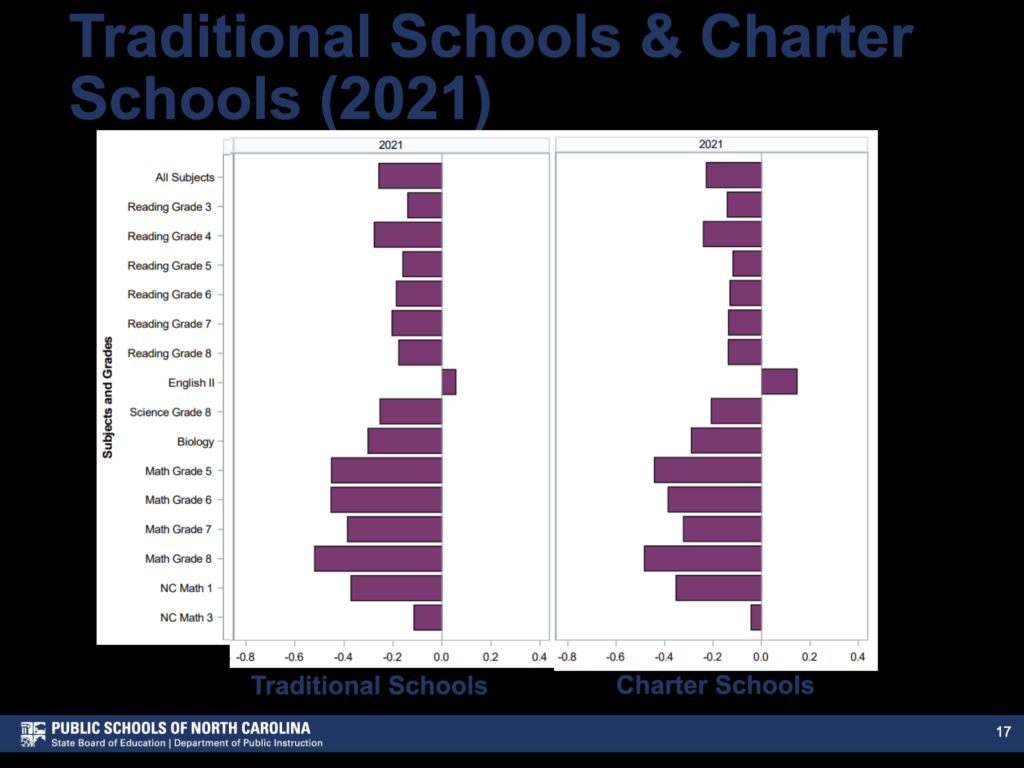
In the graphs below, zero means that students did as well as expected. Bars going to the left indicate a negative (worse than expected) performance. The further to the left, the worse the performance. Bars going to the right indicate a positive (better than expected) performance. The further to the right, the better the performance.
The study found that male student learning was not more impacted by the pandemic than that of female students “despite early predictions.” The report states that “because females outperform males in a ‘typical year,’ females are further from what we might have expected in the absence of the pandemic.”
The report states that, during the pandemic, students of all races and ethnicities did worse than expected, and existing disparities were exacerbated.
Similarly, the gap between students who come from economically disadvantaged backgrounds and other students widened. This is especially true in fifth and sixth grade math.
The study found a negative impact of COVID-19 on gifted students too “despite early predictions.” This was especially true in sixth, seventh, and eighth grade reading, and eighth grade math.
Less of an impact was found on students with disabilities, and the study finds they exceeded expectations in sixth grade reading, eighth grade reading, and English II.
The same was also true for English Language Learners, with better than expected performance in eighth grade reading, English II, and Math 3.
When it comes to the difference in performance between students in charter schools and those in traditional public schools, the study found “small differences” that “did not warrant further disaggregation.”
Maher and his team highlighted some key takeaways from the data, including the need for access to reliable broadband Internet at students’ homes, the benefit of in-person learning, and the importance of focusing resources and interventions on those students most impacted by the pandemic and in those grades and subjects where students were most affected.
Maher said this analysis is the first of its type in the state and “one of, if not, the first nationally.”
Truitt said in a press release that these resources will help educators as they move forward.
“This preliminary report will help us pinpoint which North Carolina students need additional supports and allows us to better target resources to specific grades and content areas. This data is a significant step forward in our work to identify the challenges so we can continue developing and supporting district run interventions that accelerate student learning,” Truitt said.
State Board Chair Eric Davis said in the press release that these findings highlight strategies already embraced by the Board.
“Before the pandemic, the state’s Public Education Strategic Plan called for eliminating opportunity gaps, targeting resources and supports, and increasing the number of adults in our classrooms to increase the personal interactions with students,” he said. “While all students have been impacted by COVID, our students who were most challenged pre-pandemic are the most negatively impacted by COVID. This preliminary report reinforces the urgency for our state to take bold and aggressive steps to accelerate our students’ academic achievement.”
The report will go on to the General Assembly. The Office of Learning and Recovery intends this to be the first of many levels of data analysis related to the pandemic. Maher said during last week’s webinar that the next phase will be to work with districts on their data so that they can focus recovery work on students “disproportionately impacted” by the pandemic.
Read the FAQ about the study here.
See the presentation below.