
A district rethinks early learning

Trying new things amid the stress
Early Bird readers, hello again. Newcomers, welcome! If you were forwarded this email, you can sign up here to receive it every two weeks, and join our conversation on issues facing North Carolina’s young children and those who support them. If you’re already a subscriber, please help us reach more people by sharing this with your friends and co-workers interested in early childhood education.
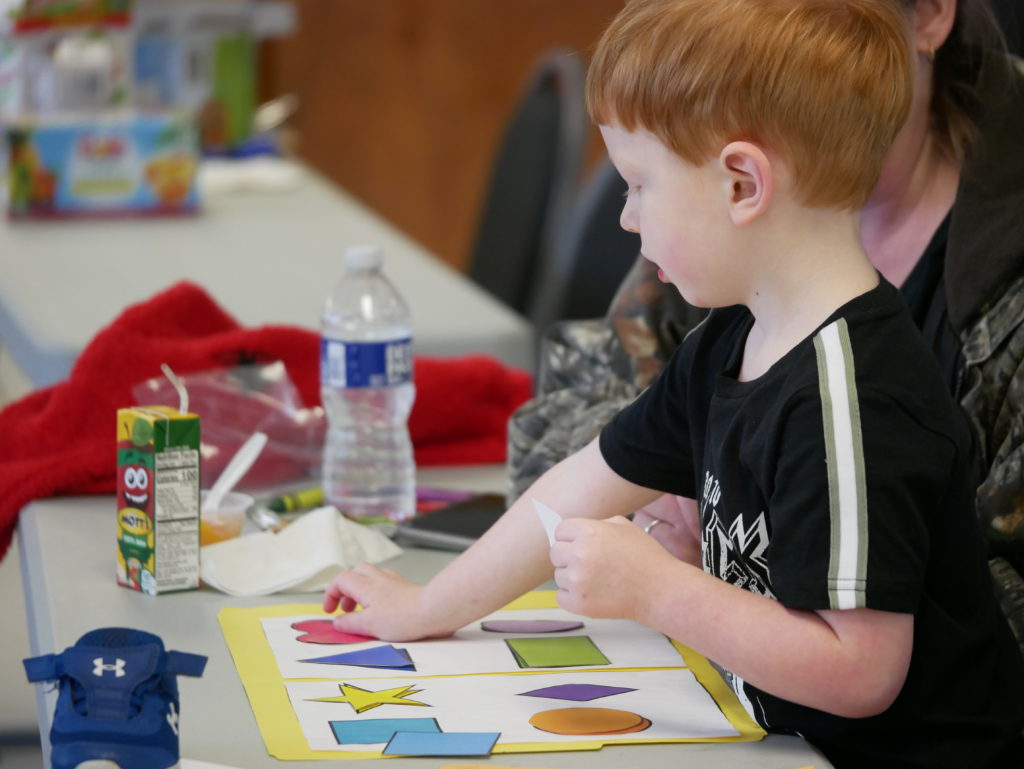
Carter Height, in the photo above, is one of the 3-year-olds attending weekly learning pods hosted by Edgecombe County Public Schools in Tarboro. I spoke with his grandmother Cynthia Coley, who comes to the pods with him, on a November morning. Because Height hasn’t been around many peers or in a formal learning environment, Coley thought the district’s pods would make a big difference for him.
After a month of pods, Height had started talking with the other children and participating in activities. Deborah Thomas, the district’s early childhood transitions coordinator, said the kind of change she’s seen in Height is the point of the weekly meetings — school readiness.
Thomas hosts the meetings in a community center and a library, explaining and modeling that sometimes intimidating term to children and their caregivers. The pods are one of three initiatives the district has launched this school year in an effort to reach children and families amid challenges shared by districts across the state. It’s difficult to know where young children are before kindergarten and how to support their needs. And as children enter kindergarten and early elementary grades, teachers are noticing the pandemic’s disruptions in their skills and social and emotional development.
Read on here for how the district is rethinking its approach to early learning to address longstanding challenges — plus the added stress of the pandemic — from parent literacy nights to community collaboration.
National early childhood dollars still at play
The 19th News reports that large early learning investments, including universal pre-K for 3- and 4-year-olds and unprecedented child care subsidies, are still a part of behind-the-scenes talks in Washington after Build Back Better failed to pass in December.
“The child care and pre-K components would be funded for a longer period of time than in the White House’s proposal — a decade, instead of six years — likely necessitating the removal of other components, such as paid leave or an extended, expanded child tax credit to remain under the agreed-upon $1.75 trillion price tag,” writes Washington correspondent Amanda Becker.
Other details of the new proposal are still unknown. Becker reports that Congress might return its focus to Build Back Better around March or April.
In the meantime, I’d love to hear what you’d like to see in EdNC’s early childhood coverage in 2022. Fill out this quick survey and let me know what questions and story ideas you have. Thank you for reading.
The big picture for little kids
 Sign up for Early Bird, our newsletter on all things early childhood.