
House hears from public on Senate budget plans

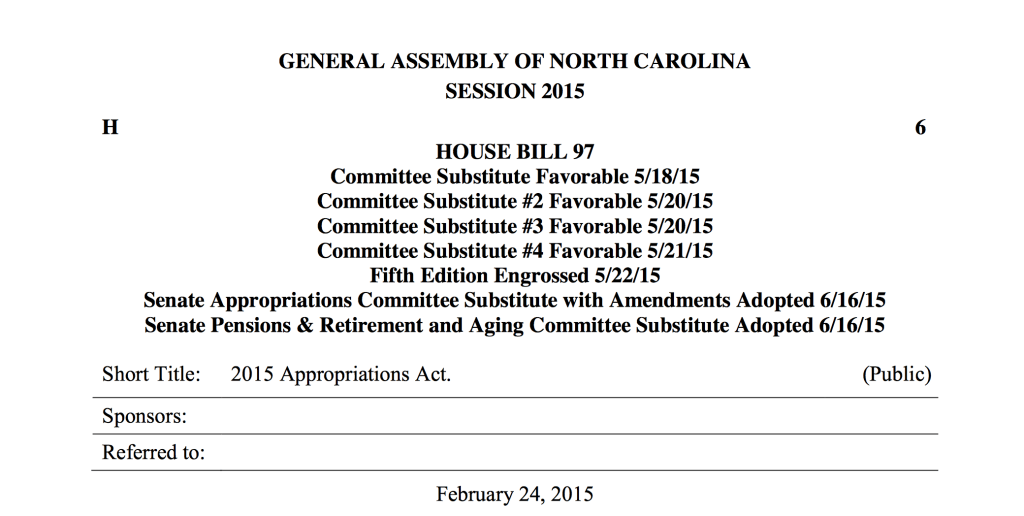
The House Appropriations Committee heard opinions from members of the public on budget plans from the Senate yesterday.
Teacher assistants and drivers education were hot topics among the commenters, with many speaking critically of Senate proposals to gut the number of teaching assistants and forgo funding for drivers ed.
Wake County Superintendent James Merrill pointed out that the Senate plan on teacher assistants could impact the 50,000 students in the midst of their school year at year-round schools in the county.
“You are currently debating whether to provide money that has already been spent,” he said.
He said the county already has 753 teacher assistants at work in these year-round schools. He also said that schools already have the ability to exchange TA positions for teacher positions if necessary.
“This flexibility we already have is not broken and does not need mandatory fixing,” he said.
Merrill noted that the Senate plan to reduce class sizes would mean adding 145 teachers for whom they have no room, and he gave an estimate of $100 million dollars as the construction cost to facilitate the reduced class sizes and increased teacher rolls.
“If we must wait until September, October, hang tough,” he told the assembled House lawmakers. “Make it worth our wait.”
Mary Ellis, superintendent of Union County Public Schools, spoke about the Senate proposal to reduce teacher assistants as well, at one point holding up her hands in demonstration.
“It takes more than one set of these for the number of children you put in a classroom,” she said, before explaining the integral role TAs play in elementary school classrooms.
Steve Phillips, traffic safety manager at AAA Carolinas, gave a critique of the Senate’s plan to do away with funding for drivers ed next year.
He said the number one cause of death among teens is car accidents.
He acknowledged that there are problems with how drivers ed is taught and recommended a task force to fix any issues with the program. He also emphasized the need for General Assembly funding for the program.
“We can be the state that is part of the solution and not the state that is contributing to the epidemic that is killing our kids,” he said.
Robert Shackleford, president of Randolph Community College, criticized the Senate’s plan to ultimately move drivers education to community colleges.
“We don’t have the infrastructure to offer it. We don’t have the equipment to offer it. We don’t have the people to offer it. We don’t have the money to offer it,” he said.
He said it would actually be more expensive to run the program at community colleges as it’s unlikely that students would drive to community college campuses for instruction. Rather, he surmised the colleges would have to send instructors to the students.
“Actually, it’s a diversion from our missions, and we don’t think it’s a very good precedent if something isn’t working out well somewhere else, give it to the community colleges,” he said.