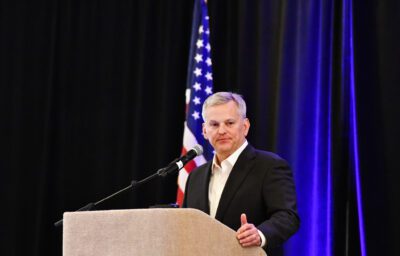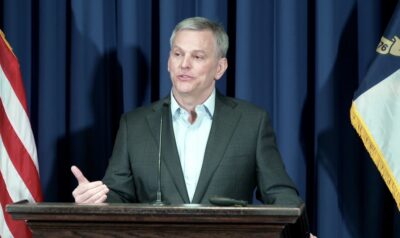
Gov. Josh Stein announced a “critical needs budget” proposal on Monday, calling, among other things, for raises for teachers and state employees, $319 million to fully fund Medicaid after federal funding cuts, and funds to raise the state’s subsidy reimbursement rate for child care.
During a press conference on Monday, Stein said his proposal is meant to “fill the gap” until the lawmakers pass a new comprehensive budget.
“North Carolina has gone nearly two and a half years without passing a new state budget — the only state in the country to finish 2025 without one,” Stein said in a press release. “While lawmakers work toward a full, fiscally responsible budget this spring, there are urgent needs facing our state right now like fully funding Medicaid and giving law enforcement, teachers, and other public servants a long-deserved pay raise. This budget invests in critical public safety, education and health care services for the people of North Carolina that cannot wait.”
 Sign up for the EdWeekly, a Friday roundup of the most important education news of the week.
The budget includes a 2.5% raise for all state employees — including most community college faculty and staff — which the proposal says equates to an additional $1,095 on average for state employees.
“State employees have not had a raise since July 1, 2024, and state salaries have not kept up with inflation, which has gone up 3% over that same period,” the budget document says. “Recruitment and retention concerns persist across nearly all state agencies. The recent DAVE Act Long-Term Vacancies & Lapsed Salary Report quoted low compensation as the most common reason for the state’s long-term vacancies.”
Under the proposal, K-12 teachers and instructional support would receive higher pay raises — 13% for beginning teachers and a 5.8% average raise for other educators. There are also funds to “restore master’s pay for over 1,000 teachers whose advanced degrees are in the subjects they teach.”
This funding increases starting teacher pay to at least $49,518 including state and local supplements, a 13% increase, and provides a 5.8% average raise while reducing mid-career salary plateaus. This schedule also raises pay for experienced teachers, instructional support personnel, school psychologists, speech pathologists, and audiologists. Assistant principals and state agency teacher salaries are increased in accordance with the statewide teacher salary schedule.
— Governor’s budget proposal
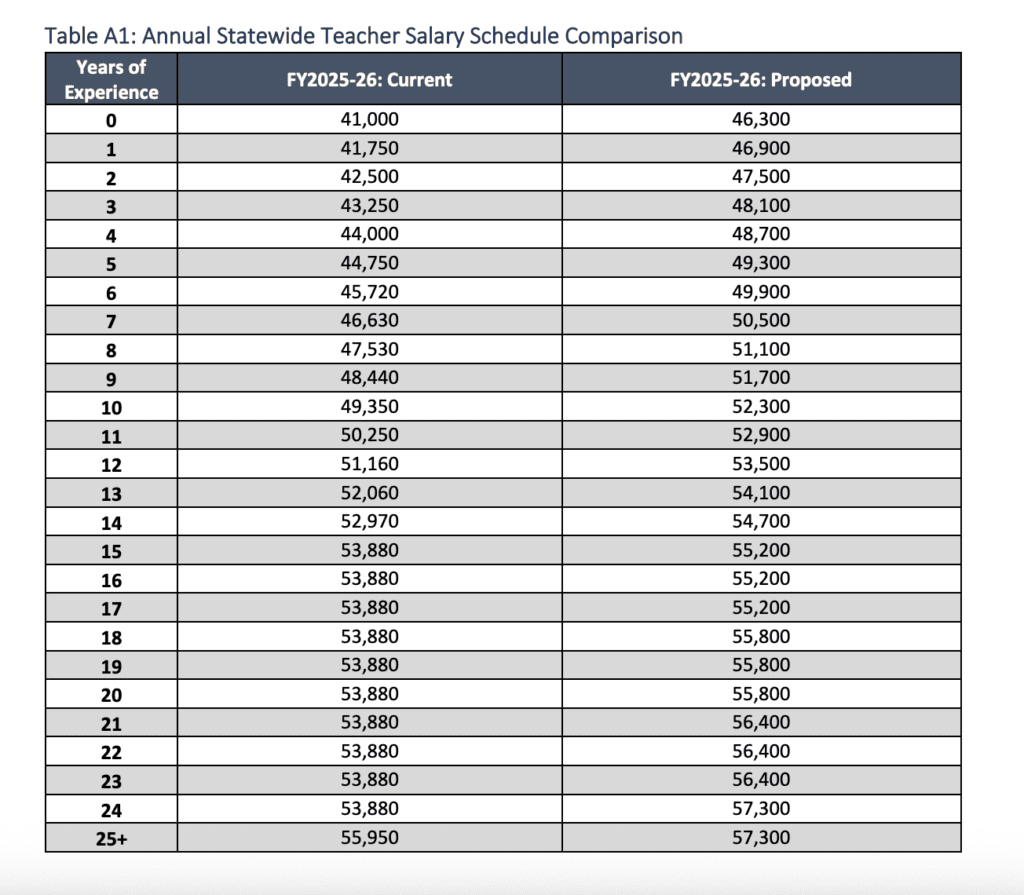
Under the proposal, principals would receive the same 2.5% raise as other state employees.
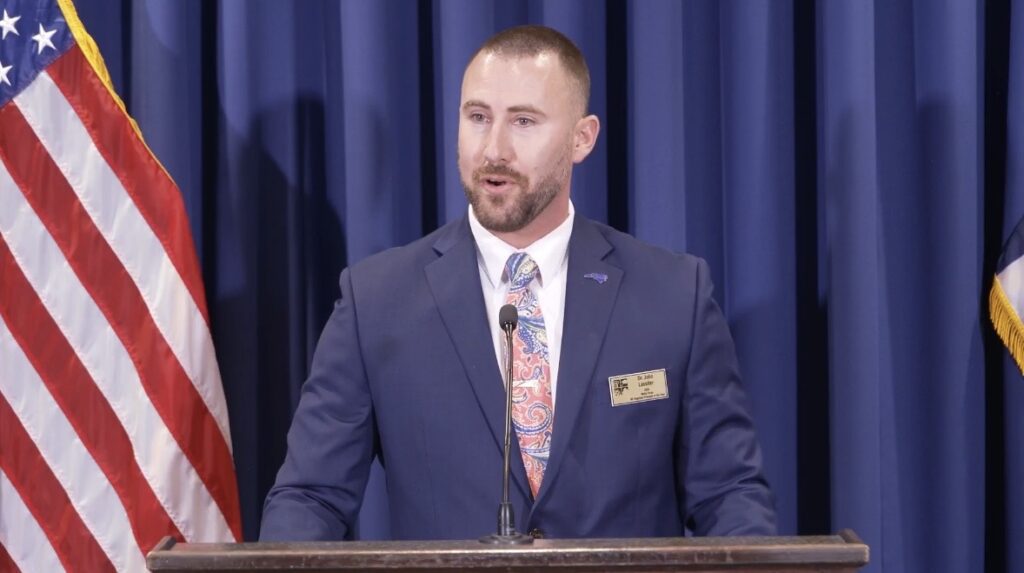
On Monday, former Northeast Regional Principal of the Year John Lassiter joined Stein to ask lawmakers to invest in public schools.
Lassiter — who serves as principal of Hertford Grammar School in Perquimans County and as president of the North Carolina Principals and Assistant Principals’ Association — spoke about the impact teachers had on him as a child, when he was in and out of the hospital as a third grader and fell behind in school.
“I’m standing here today because my teachers refused to give up on me,” he said.
He added that most people in the room could probably think of a teacher who had a similar positive impact on their lives. Despite the importance of teachers, Lassiter said, they often feel undervalued.
“There’s no reason North Carolina, with our growth, our talent, and our economic momentum should be asking teachers to carry the future on their back while we fall behind on investing in them,” he said. “… So I’m challenging the General Assembly today to ‘let your walk talk.’ Find compromise, pass a budget, act, and lead. Help us take a meaningful step toward restoring the prestige that once came with being a teacher, and make the most important investment a state can make — one that pays dividends for generations.”
The governor’s budget would give 10% raises to specific employees, like certified public safety and law enforcement officers and nurses and health care technicians at all state-run facilities.
There is also a one-time cost of living adjustment of 2.5% for state retirees, whom have not had any adjustment since November 2023.
“Much has changed since 2023 — the last time the state passed a full Appropriations Act. Persistent inflation has driven up the cost of almost everything, from raw materials to contracted services. The state added 326,000 new residents since the 2023 budget was passed. And the federal funding landscape has dramatically shifted for the worse,” Stein said in the release. “Passing a state budget for the current year is the most immediate and impactful step we can take to improve the lives of the people of North Carolina. Let’s give North Carolinians the stability they deserve.”
Medicaid, child care, and more
Stein’s budget proposal largely focuses on health care, public safety, and public education.
“In this critical needs budget… I am not including all of the important needs that the state government today faces, because I expect the legislature to pass a comprehensive budget relatively soon,” Stein said at Monday’s press conference. “However, there are a handful of other truly urgent needs that cannot wait for them to work through all of their differences.”
Here are other education-related items included in the governor’s budget proposal:
- $319 million to fully fund Medicaid in Fiscal Year (FY) 2025-26, following cuts in federal funding. Medicaid provides health care insurance for more than 3 million North Carolinians, including 1.2 million residents in rural counties, according to a report by the NC Rural Center. In addition to students whose families receive Medicaid, schools across the state provide services for students through Medicaid reimbursements.
- $20 million recurring to “bring the child care subsidy rate to the 75th percentile of the 2023 market rate study for the last quarter of FY 2025-26.” Early childhood advocates have long called for increased subsidy funding, which helps low-income working families afford care. “The annualized need to increase the subsidy rate to the proposed level is $80 million,” the proposal says.
- $46.4 million for an enrollment growth adjustment at the UNC System, reflecting a 1.6% increase in total student credit hours in 2024.
- $10 million nonrecurring to distribute to state agencies seeing higher costs in fuel, utilities, salt, and brine due to winter weather.
- $1 million nonrecurring to ensure the full statutory amount for FY 2025-26 scholarships for students who are the children of wartime veterans. “This funding only covers the gap in the current fiscal year for scholarships already awarded. (The NC State Education Assistance Authority) currently estimates $7 million needed in recurring appropriations for the next fiscal year,” the proposal says.
The governor’s office said an updated state revenue forecast is expected to be released later this month, ahead of the short session, which begins in April.
“We’re going to work together to develop a comprehensive, fiscally responsible budget for the short session. But before we do that, let’s act now to keep North Carolina strong and to address certain critical needs,” Stein said.
You can read the governor’s full budget proposal on his website.
Sergio Osnaya-Prieto contributed reporting to this article.

Recommended reading