Students in North Carolina’s public schools are placed in grades based on age and progress from grade to grade based on the school calendar. Teachers go from topic to topic based on curricula and pacing guides. On Monday, state leaders convened to discuss what schools would look like if students instead moved through school as they were ready.
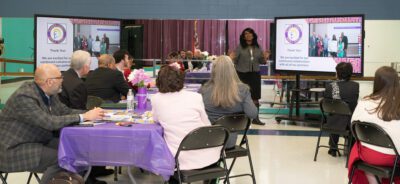
BEST NC, a nonpartisan education advocacy group, brought together educators, policymakers, and other state and national leaders on Monday to discuss how the state could better meet the needs of students through “tailored learning.”
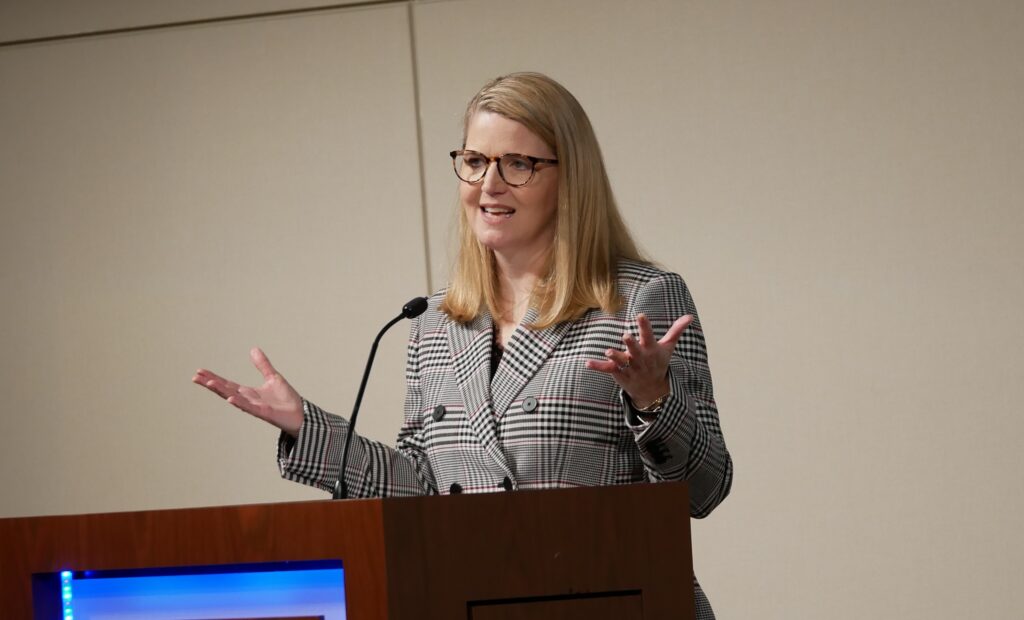
“We’re doing everything based on averages,” said Brenda Berg, president and CEO of the organization. “We have age-based grade levels. We have standard pacing guides. We have uniform semester timelines. We have credits earned by time, not by mastery. And the list goes on and on. … If there’s one thing we know, there are no students who are average. Students do not learn at the same pace.”
 Sign up for the EdDaily to start each weekday with the top education news.
The convening was the group’s annual Education Innovation Lab meeting, which focuses each year on a topic which the organization believes the state can make progress. Initiatives like a new teacher apprenticeship program, the state’s principal fellows program, and the expansion of advanced teaching roles have originated in past years’ meetings, Berg said.
Since the pandemic, the state has focused on remediation to make up for learning disruptions, Berg said, instead of rethinking how schools operate.
“We chose to focus on remediation, which I understand, but we stuck with the same kind of status-quo, time-based structure that we had before,” she said.
Examples in and out of state
According to BEST NC, tailored learning is a student-centered approach that aligns instruction, assessment, and progression to what students know and can do, while providing teachers with timely, actionable data they can use to inform instructional decisions.
The idea of tailored learning is not new, and in some ways, is already happening in classrooms across the state. Teachers are differentiating instruction based on students’ needs and interests. There are various efforts centered on “personalization,” “mastery-based learning,” or “competency-based education.”
Monday’s meeting was an effort to put all of those terms and efforts under a larger umbrella, and create common language in order to shape policy and practice.
Related reads

The current system is not aligned to student need, Berg said.
Within a typical classroom, there are students at three to five different grade levels, according to a 2018 report from education advocacy organization TNTP. In North Carolina, students who were economically disadvantaged were missing out on advanced course placement despite being as prepared as their wealthier peers, a 2017 News and Observer investigation found.
“We really have a need to think differently about not just how we’re placing students, but how students are thriving in our classrooms,” Berg said.
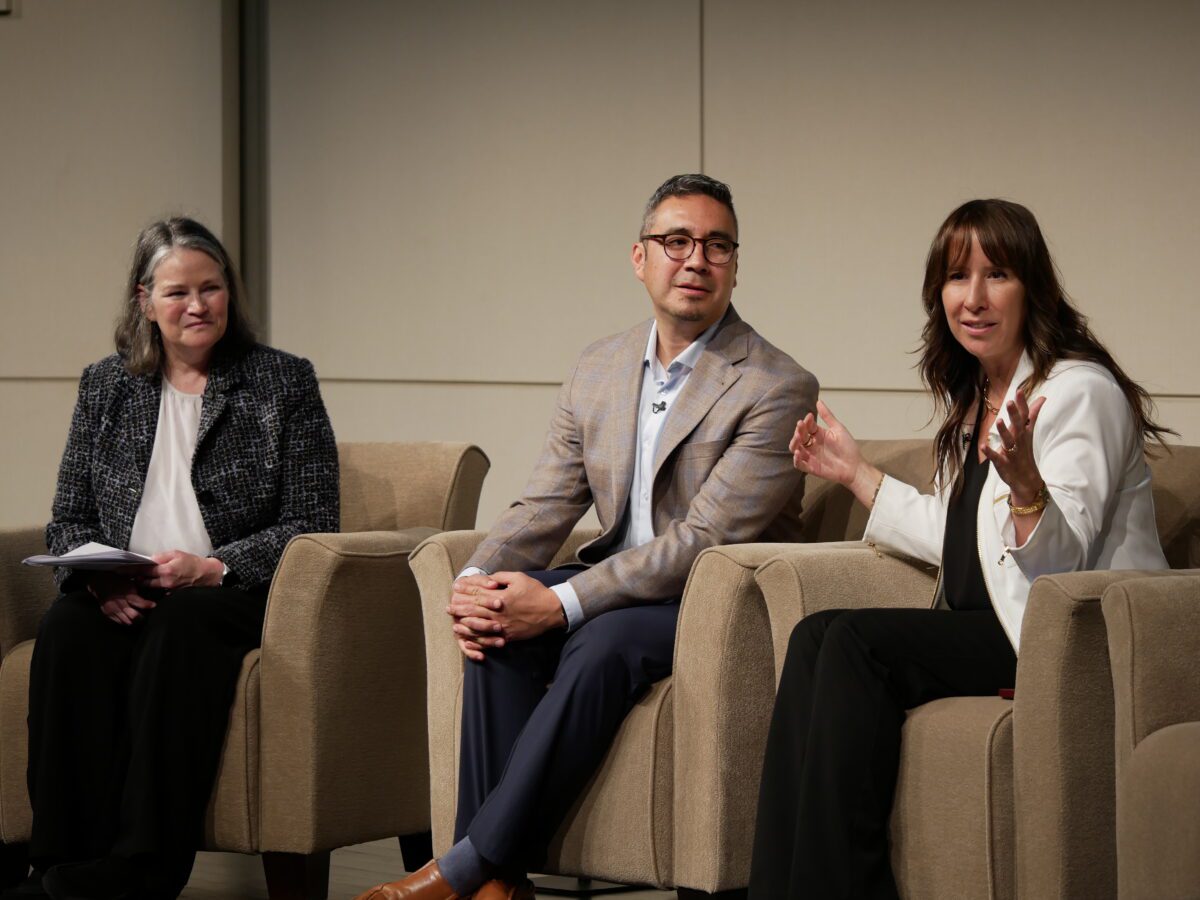
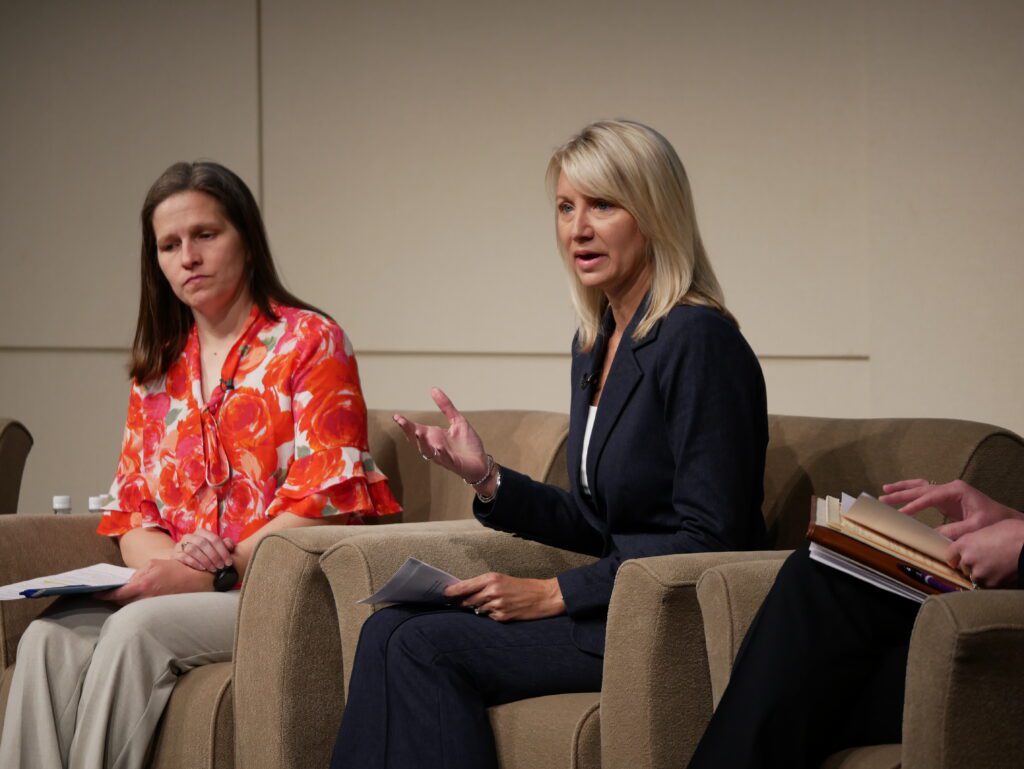
Tailored learning does not mean schools have different expectations for different students, said Lisa McIntyre-Hite, executive vice president and COO of Competency-Based Education Network, on a panel Monday.
“We’re not talking about different expectations or standards for different learners,” McIntyre-Hite said. “We’re not talking about personalizing the ceiling that someone will get to. We’re saying everyone’s going to get to this level of competency, and we’re going to personalize the pathway to get there.”
States should be clear on what competencies they want children to have, McIntyre-Hite said. She defined competencies as skills and knowledge, as well as the dispositions required to demonstrate that skill or knowledge in practice.
“It is not just a set of rote academic skills,” she said, naming dispositions like empathy and teamwork.
Throughout the convening, leaders said states need clear expectations, language — as well as support and guidance through implementation — for successful shifts to tailored learning.
They pointed to New Hampshire and Vermont as states to watch. Within North Carolina, they highlighted a network of charter schools that uses a competency-based approach called Second Mile Education Schools and the state’s Golden LEAF Initiative, a pilot in 15 rural middle schools using a competency-based model with an aim to improve math outcomes.
Shifting schools
Leaders said the biggest barrier to progress is often shifting culture, which starts with strong leadership. RTI International’s Center for Education Services created a framework to help schools work toward competency-based education. It outlines steps schools can take in four categories: structure, culture, teaching, and learning.
Structure refers to the systems in place — such as assessment systems, course credits, physical infrastructure, scheduling — that enable CBE at the school or district level. Culture is defined at the district, school, and even classroom levels, ensuring that the atmosphere in each of those spaces encourages innovation, engagement, and relevance. Teaching and Learning primarily focus on classroom-level changes around things like personalization, curriculum, flexible learning environments, and student ownership.
— RTI International framework
State and district leaders, principals, and teachers need to be committed to tailored learning for change to happen, said Kayla Siler, an education consultant at RTI. And those individuals should be in an open dialogue with families and community members.
“You need to have that established culture of trust and communication, outreach, making sure your parents know what’s happening,” Siler said. “You’re bringing them in the building. You’re showing them what you’re doing. You’re letting them experience the processes that your students are going through, your teachers are going through. You’re making it a whole community effort.”
Shifting systems
The systems around schools need tweaks as well, experts said, in order for school leaders to feel supported.
For example, when students are driving their learning and moving at their own pace, teachers need a different set of skills. Educator preparation programs should be part of conversations to equip teachers with those skills, leaders said.
“Teachers understand that their job is coaching and intervention,” said Angela Whitford-Narine, CEO of Second Mile Education Schools, the charter school network.
Teachers need assessment tools that give them the information they need to support each individual student, leaders said. And states need measures and accountability models that ensure all students are learning.
Formative assessments play an important role in helping teachers know where students are, tailor their approach, and measure progress. The only statewide diagnostic assessment is DIBELS, a literacy assessment tool that all K-5 classrooms use. Teachers at all levels need access to similar tools, said Leah Carper, director of stakeholder engagement in Guilford County Schools.
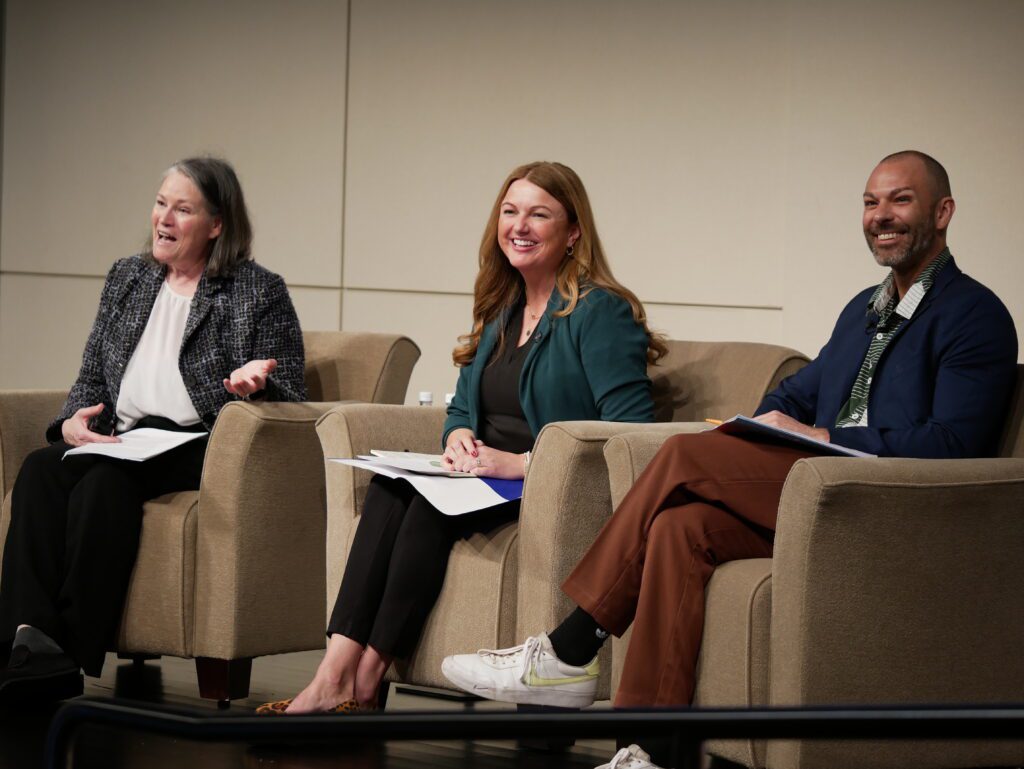
Whitford-Narine, the charter school leader, said flexibility in state law given to charter schools has been “critical to us being able to do what we do.” For example, she said her schools are not required to use the Carnegie units, or the traditional units to award student credit (one unit is 120 hours of classroom instruction).
Rachel Wright Junio, who leads the Golden LEAF Project at the Department of Public Instruction (DPI), is operating instead in traditional public schools. She said proficiency scales from Marzano’s High Reliability Schools Framework have been an important starting point to shift to tailored learning without waiting for systems-level change.
“There are ways to implement standards-based, mastery-based, tailored learning in a way where you’re you don’t have to change your your grading practices completely, and it doesn’t have to be this big, scary thing,” Wright Junio said.
The project hopes to provide a scalable framework for other schools across the state, she said.
“Our rural school districts will will serve as models of innovation and success,” she said. “At the end of this, we’re going to have 20 schools that are models in our state for competency-based education and mastery-based learning, which is very powerful.”
You can watch the panels from Monday’s event on BEST NC’s YouTube channel.
Recommended reading