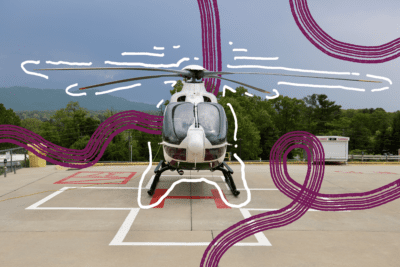
For those of you who lived and worked in western North Carolina after Hurricane Helene, you have seen a glimpse of the future. Many of us remember the near constant whirr of helicopters.
Earlier this month, the Federal Aviation Administration (FAA) announced eight proposals that could define the future of aviation, and North Carolina is among the lead states.
“North Carolina is ready to turn next-generation aircraft into real-world solutions for our communities,” said Julie White, deputy secretary for multimodal transportation at NCDOT. “Through the eIPP, we will connect rural areas, expand mobility options, and demonstrate how electric aviation can benefit residents across the state.”
First, some terminology and acronyms, including eIPP.
“Advanced air mobility” is an umbrella term for the future of flight. According to this U.S. Department of Transportation (DOT) website, “AAM is not a single technology but rather a collection of new and emerging technologies being applied to aviation, particularly in new aircraft types. AAM is designed to deliver agile, affordable, and accessible flights to all Americans and drive infrastructure development, employment, and innovation.”
“AAM has the potential to reshape how we live, work, and connect,” says the website.
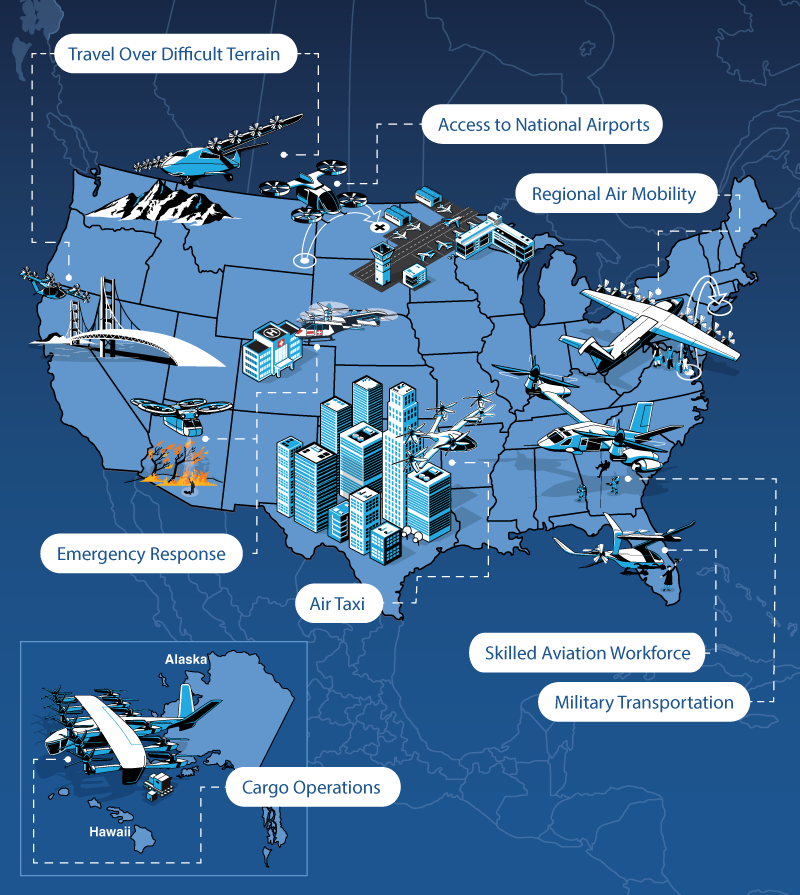
A few more acronyms: eVTOL is electric vertical takeoff, and landing and eIPP is eVTOL integration pilot program.
The federal announcement
According to the federal press release, “eVTOLs are futuristic aircraft that have the potential to generate new jobs, connect communities, and strengthen American leadership in aviation.”
Together, the eight pilot projects, according to release, create one of the largest real-world testing environments for next-generation aircraft in the world.
The public will start to see operations begin by summer 2026.
The selected projects include a range of operational concepts, including:
- Urban air taxi services,
- Regional passenger transportation (including short takeoff and landing aircraft),
- Cargo and logistics networks,
- Emergency medical response operations,
- Autonomous flight technologies, and
- Offshore and energy-sector transportation.
“The future of aviation is here — and it’s going to dramatically improve how people and products move,” said U.S. Transportation Secretary Sean Duffy. “Congratulations to the great American innovators behind each of these exciting pilot programs. Working together, we will ensure America leads the way in safely leveraging next-gen aircraft to radically redefine personal travel, regional transportation, cargo logistics, emergency medicine, and so much more.”
eLIFT-NC
As part of this federal pilot program, the N.C. Department of Transportation (NCDOT) Division of Aviation will lead an initiative called eLIFT-NC (Electric Logistics and Integrated Flight Testing), creating a statewide network of electric air taxis connecting hospitals, airports, and rural communities to improve healthcare access and quality of care, while meeting rigorous safety and infrastructure standard, according to a state press release.
NCDOT will collaborate with health care providers and electric aircraft manufacturers, including BETA Technologies and Joby Aviation.
The plan, according to the release, includes initial training and baseline operations, expanded route development and, ultimately, hospital pad-to-pad eVTOL missions. The program also supports planning for charging infrastructure, vertiport development, and the digital systems required for long-term implementation.
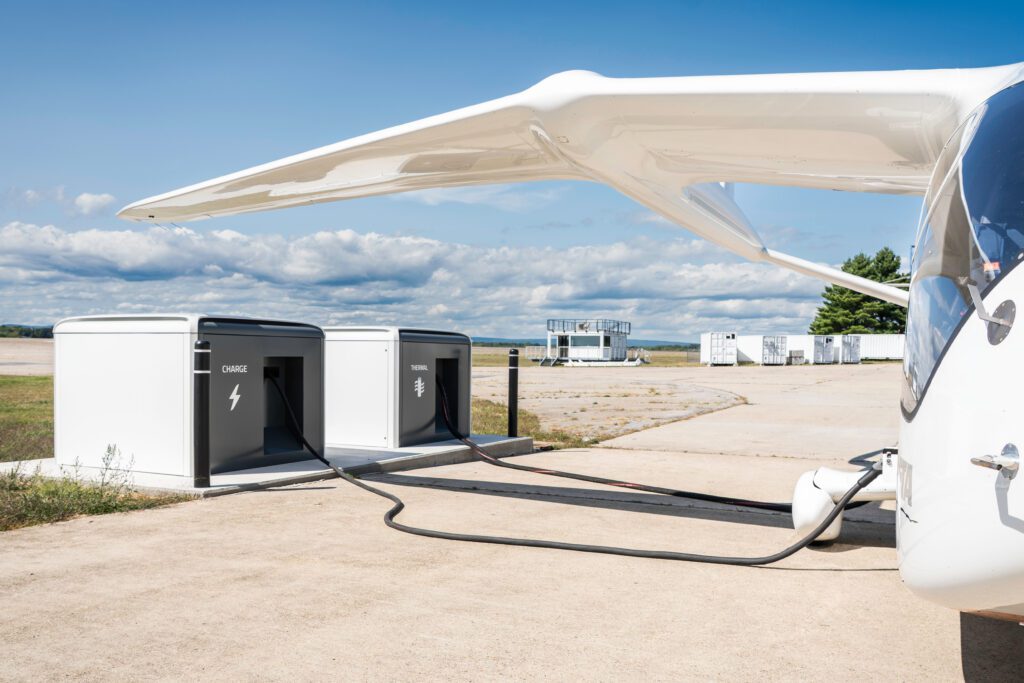
“North Carolina has leaned forward on AAM from day one. With strong partners like NCDOT and Raleigh Executive Jetport, we’re ready to move from readiness planning to real operations under the eIPP,” said Kristen Costello, BETA’s head of regulatory and government affairs. “This is a big opportunity to prove how electric aviation can deliver critical cargo and medical support to connect communities, expand access, and strengthen disaster response across the state.”
“Today marks the culmination of nearly a decade of collaboration between Joby and the FAA to bring a new class of aircraft safely to market,” said JoeBen Bevirt, founder & CEO of Joby Aviation.
“It is the moment the United States clears the way for eVTOL integration into our national airspace.”
Background on AAM
On Oct. 17, 2022, the Advanced Air Mobility Coordination and Leadership Act was signed into law, and with it DOT was tasked to establish an AAM Interagency Working Group, which reviews and examines AAM challenges and opportunities across the country. Both a national strategy and a comprehensive plan, called LIFT, have been developed.
President Donald Trump continued support for AAM through his executive order, Unleashing American Drone Dominance, on June 6, 2025.
According to the national press release, the goal is “the safe integration of next-generation Advanced Air Mobility aircraft into the national airspace and ensuring the United States leads the way in aviation innovation.”

Recommended reading