
DHHS extends early childhood teacher compensation supports through end of 2023

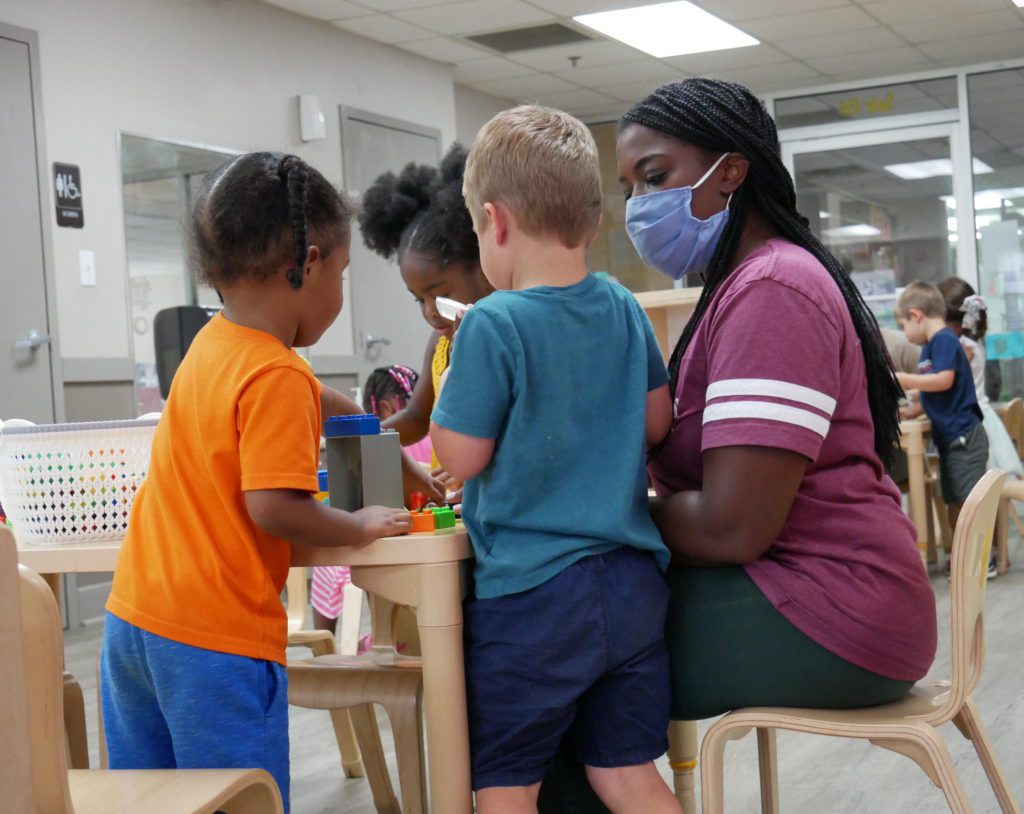
Early care and education programs in North Carolina will not face as steep a cliff when federal stabilization grant funds run out next year. The state Department of Health and Human Services has decided to provide $150 million for programs to support teacher compensation through December 2023.
Since last fall, DHHS’s Division of Child Development and Early Education (DCDEE) has distributed $655 million in grants to 4,247 centers and home-based providers from the federal American Rescue Plan Act.
Many programs were concerned about retaining staff when grants they had used to raise employees’ compensation dried up. DCDEE leaders encouraged programs to boost compensation — specifically to raise teachers’ base pay and benefits rather than giving bonuses — when the programs started receiving grants in November 2021.
Most programs did — 92% the 3,861 centers and home-based providers that had received grants in December 2021 opted in to increasing compensation, according to a Child Care Services Association report. Seventy-nine percent of programs had used them to increase teachers’ base pay and/or benefits. Many did so without knowing how those raises would be sustained in the long term.
The new funding is aimed at helping sustain those increases for now. The funds come from the same federal legislation, but are discretionary funds allocated for workforce initiatives and will not be enough to fully replace current stabilization funding, according to a DHHS press release.
 Sign up for Early Bird, our newsletter on all things early childhood.
“This extension of compensation grants is another important step toward recognizing the crucial work of early educators and helping child care programs stay open for the families who count on them,” Susan Gale Perry, NCDHHS chief deputy secretary for opportunity and well-being, said in a statement. “At the same time, we can’t rely on temporary solutions; we need long-term investment to strengthen the early care and learning workforce and ensure access to high quality care. This workforce is fundamental to our economy and foundational to the well-being of children and families.”
In December, programs were still struggling to find teachers, even with increased compensation.
“Despite months of recruitment for new staff, including marketing bonuses, increased pay and better benefits, programs are still struggling to hire new staff and are turning away families because they cannot expand classrooms,” reads the CCSA report. “It is a Catch-22 situation in which programs want to return to full enrollment but cannot find qualified staff to expand services.”
In recent months, the number of staff in child care facilities has increased — from 36,954 people in November to 39,667 in June. The median wage of child care teachers in the state was $10.62 an hour in 2019.
Share this story
- To ease a looming end to one-time funding, @ncdhhs will provide $150 million in compensation supports to child care providers across North Carolina through December 2023. #nced
- Temporary help for #earlychildhood programs is extended, but "we need long-term investment to strengthen the early care and learning workforce and ensure access to high quality care," @susangaleperry of @ncdhhs says. #nced