
State looks to field test teacher licensure and pay reform

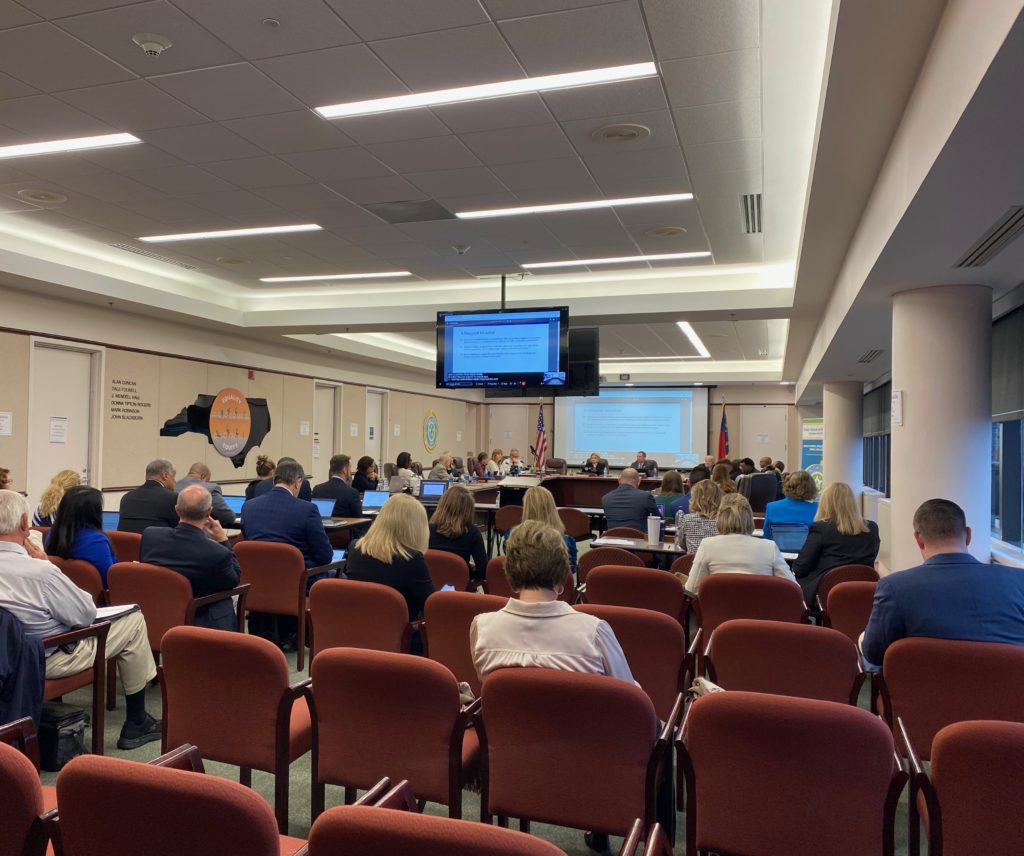
The licensure and pay reform plan voted on by the State Board of Education this week has a ways to go before it significantly impacts teachers across the state.
Ultimately, the plan will take shape as a pilot before lawmakers ever consider it for statewide implementation.
“What we’re really doing is putting a test in place,” said Board member Amy White during the December meeting.
The detailed proposal was worked on for more than a year by the The Professional Educator Preparation and Standards Commission (PEPSC) and was anticipated to go to the Board and then on to the General Assembly for consideration. State Superintendent Catherine Truitt was eager for the Board to take up the proposal in December so that a request could be made to lawmakers during the long session, slated to begin in January.
But toward the end of the process in PEPSC, it became clear that reform would be slower in coming. The eventual blueprint that passed out of PEPSC, 9-7, was devoid of much of the detail that had been the focus of the commission.
At the State Board of Education this week, the Board passed the following motion, which delays a final resolution. The Board attorney is to come back before the Board in January to let members know what changes lawmakers would need to make in order for PEPSC and the Board to continue moving the proposal forward.
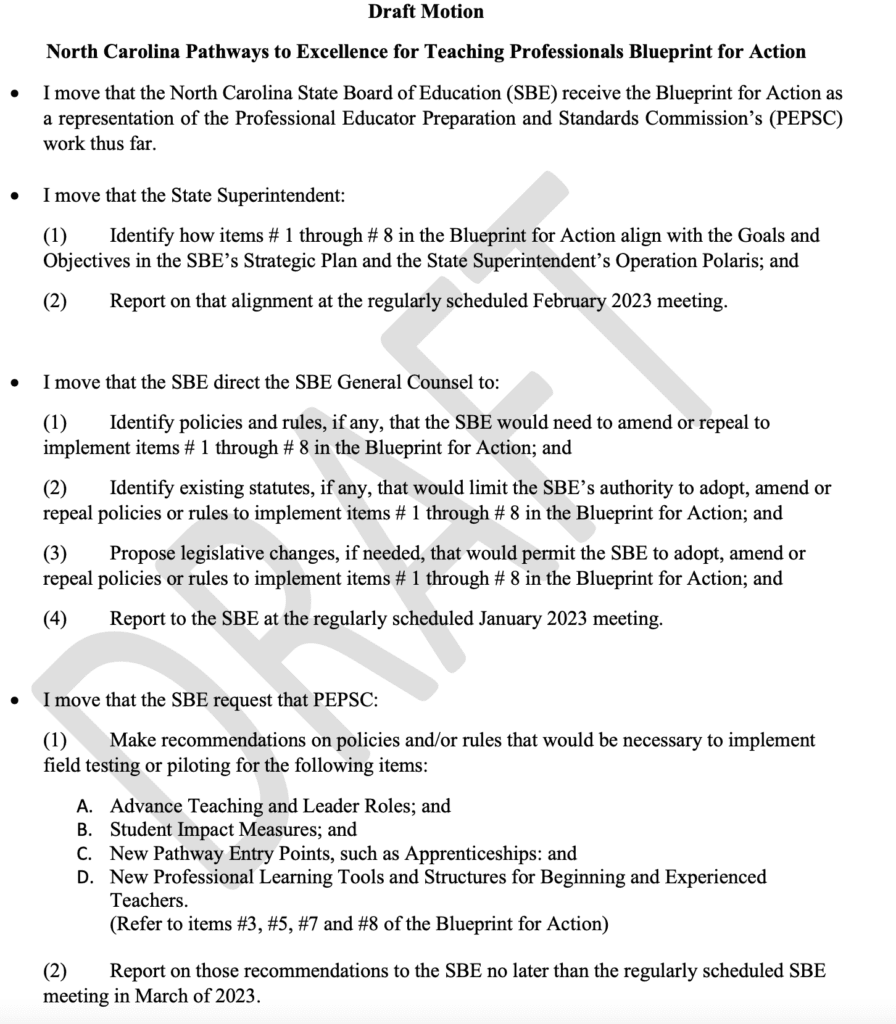
In the meantime, PEPSC is to report back to the Board by March with recommendations on what would need to happen to create a pilot, rather than fully implement a reform plan. Legislative action would be necessary to move forward with a pilot.
And State Board of Education Chair Eric Davis announced this week that the Board will form a subcommittee focused specifically on the plan.
“The thought behind this is we’ve got more work to do before we know what to ask the legislature,” he said. “But we’re heading towards an ask that would expand on our existing authority around licensure.”
A hallmark of the plan — and one of the most attractive aspects — is dramatically higher pay for teachers. Truitt said she still plans to ask for funding for those salaries that could be used in the implementation of a pilot.
Leah Carper, the state’s 2022 Teacher of the Year, said a concern she has heard among many teachers was that the General Assembly would welcome portions of the plan but not provide the funding necessary for higher salaries. She asked the Board how the funding could be ensured.
Davis said there were no guarantees, but that trust was necessary. He said the focus of the Board was coming up with the best possible model for the good of teachers and students. He also tempered expectations about the speed of licensure reform.
“This is a multi-year, multi-phase effort, but we’re going to start making progress quickly,” he said.
Board member John Blackburn said it was necessary not to have an antagonistic attitude toward the legislature.
“Let’s look at the legislature as our partners,” he said. “They have funded us extraordinarily well in our schools in North Carolina.”
Truitt spoke about the importance of the licensure reform work, saying that attracting and retaining teachers in North Carolina is difficult under the current model.
“This career as it currently stands doesn’t offer what they’re looking for,” she said of young people considering a career in education. “It doesn’t offer a pathway to advancement. It’s a job that one has to stay in for many decades in order to realize the benefits of that work. It can be a very isolating job, especially in the secondary classrooms where there isn’t as much collaboration. It’s a job that has a lot of autonomy not coupled with supports. And we cannot continue — we lose new teachers because we don’t offer them the supports they need to be successful.”
The Board also discussed the need to come up with a Frequently Asked Questions form that could combat some of the misinformation members suggest has cropped up around the plan.
Truitt took to Twitter after the vote Thursday and released a statement about the passage of the blueprint.
“Today, members of the State Board of Education approved a blueprint to guide changes around how we license and compensate teachers in our state,” she said. “I’m optimistic about our goal of piloting this work so that we can continue to increase the quantity, quality and diversity of teachers and prepare them to be licensed, hired, supported and retained as highly effective educators in North Carolina Public Schools.”
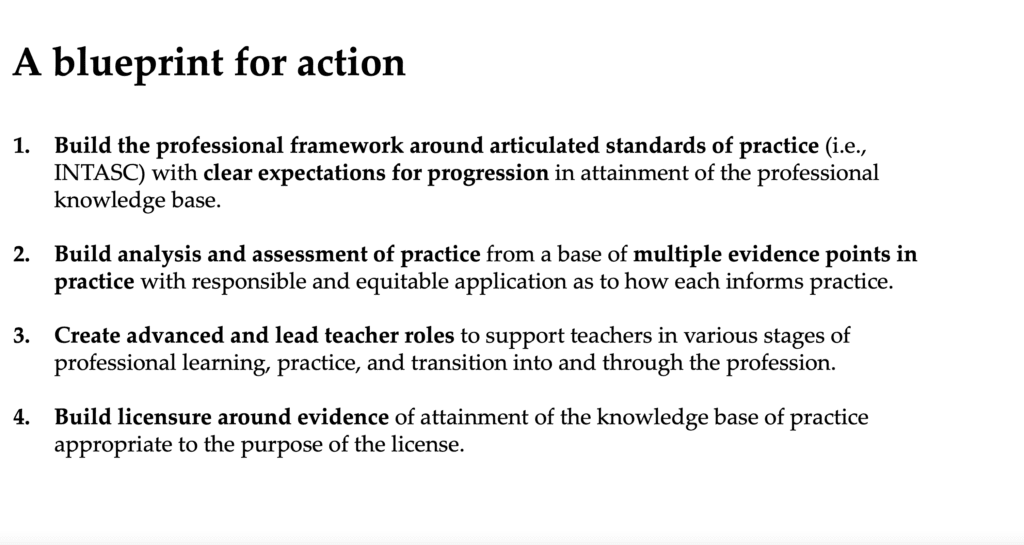
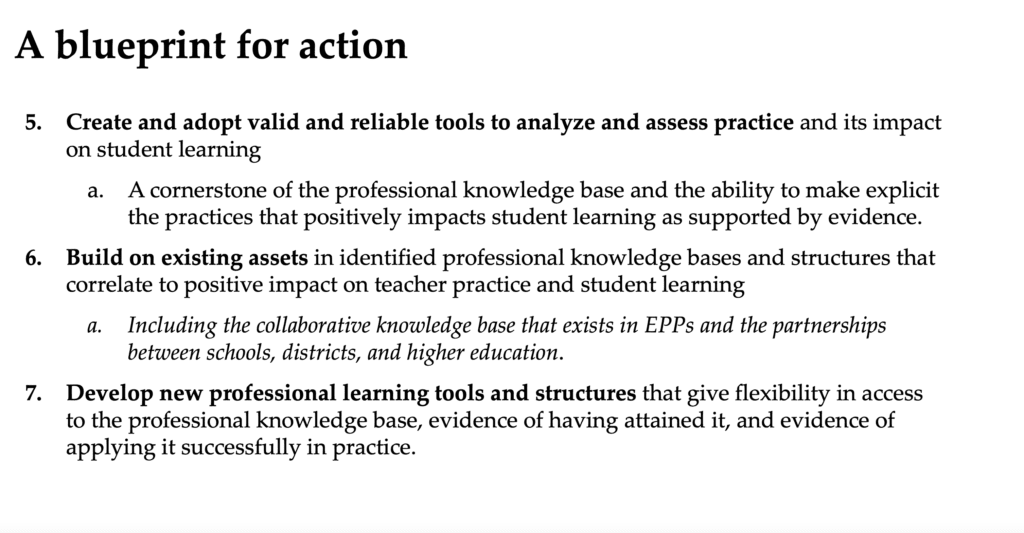
Below is the blueprint for action approved by the Board.
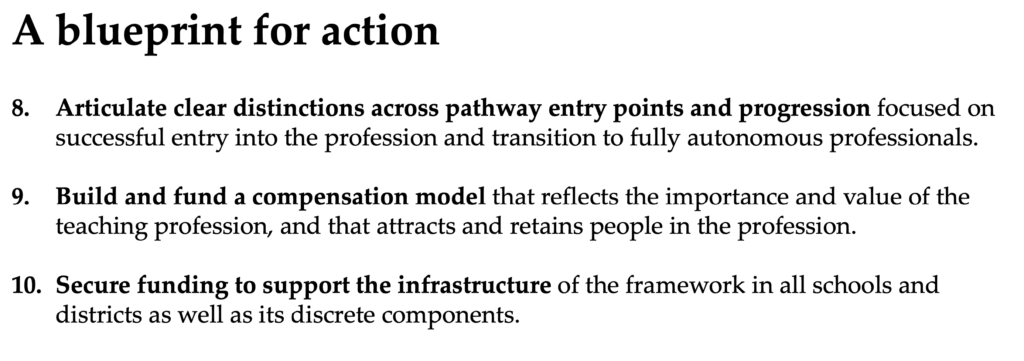
See the discussion on the licensure reform plan from the State Board of Education in November here.
Accountability
The State Board of Education got an update on work to reform the state’s school accountability model. Currently, schools are graded using a formula comprised of 80% academic achievement, based on test results, and 20% academic growth.
The Department of Public Instruction (DPI) is working on coming up with a new model that would incorporate multiple measures with which to understand the quality of schools.
Board members had a chance after the presentation to give some input into what measures they would like to see.
Board member James Ford said he would like to see school climate and culture included. He said without a detailed measurement, parents might miss hidden problems, particularly among students of color. Things such as students not feeling comfortable in schools, feeling like their cultures aren’t affirmed, or the sense that the school atmosphere is oppressive.
“You just won’t be able to determine that if you don’t measure those things,” he said.
Truitt added that good school culture and climate aren’t important just for students.
“It’s not just the students who need to feel that their school is a place where they belong,” she said. “Our teachers need to feel that this is a place where they belong and are valued … and students’ parents need to feel that this is a safe place for them.”
Vice Chair Alan Duncan said one of the most important things to do in education is “uplift” the role of the educator.
“I suggest to you that that be something that is part of the work of the group,” he said.
He also brought up the need to be careful about including measures of absenteeism. He pointed out the connection between absenteeism and discipline, saying research shows that students of color receive punishment at disproportionate rates from their peers. Punishments such as suspension and expulsion can contribute to rates of absenteeism.
“If the child’s suspended for 10 days or longer, they’re not in school,” he said.
He said, however, that the matter was “delicate” because there are times when suspension is warranted.
Legislative requests
The State Board of Education continued conversation about what requests they would like to have for lawmakers come the long session in January. See the requests here. Items in yellow are changed from last month.
The legislative requests were moved from action to discussion and will be considered for a vote next month.
Duncan questioned why there wasn’t additional money in the budget request for DPI’s efforts to turnaround low-performing schools and districts through its district and regional support model.
Jamey Falkenbury, director of government affairs for the state superintendent, said that General Assembly members had told DPI staff they would like to see the current turnaround model working for multiple years before considering additional funding, likely in the next short session.
Truitt pushed back against including a legislative ask for the long session. She said that when the Board talks about school turnaround, members are often pushing for more coaches for schools. She said that there are things that have to be in place before effective coaching can take place.
See presentation below.
Ed Corps
The State Board of Education heard an update on the Ed Corps program, which was launched as a joint effort between the Board and Gov. Roy Cooper’s office. It has now formed into an independent nonprofit.
The organization works with districts to find and train literacy tutors to go into schools and helps students.
During the presentation, Board members heard that the goal of the program is 500 literacy tutors this year. So far, the program has 374 tutors who have been hired.
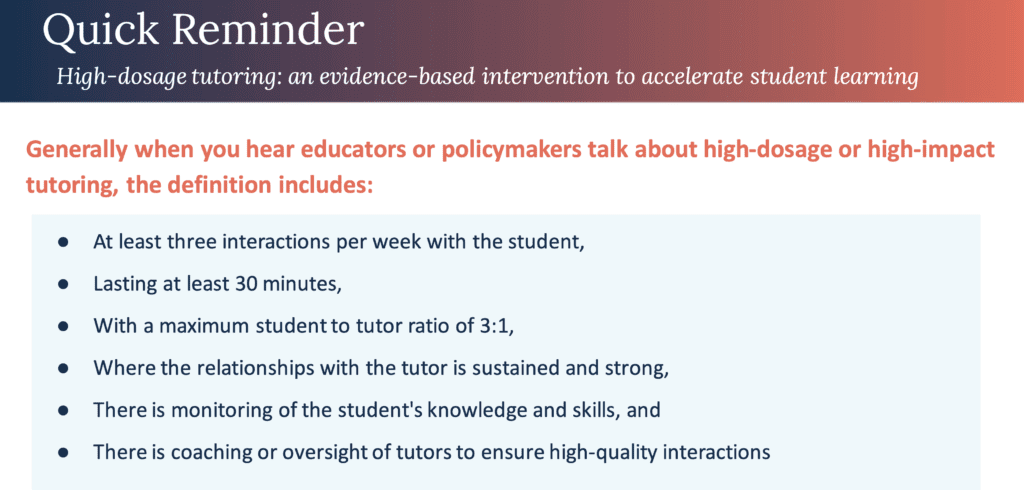
The focus of the program is high-dosage tutoring, which the Board got a quick primer on.
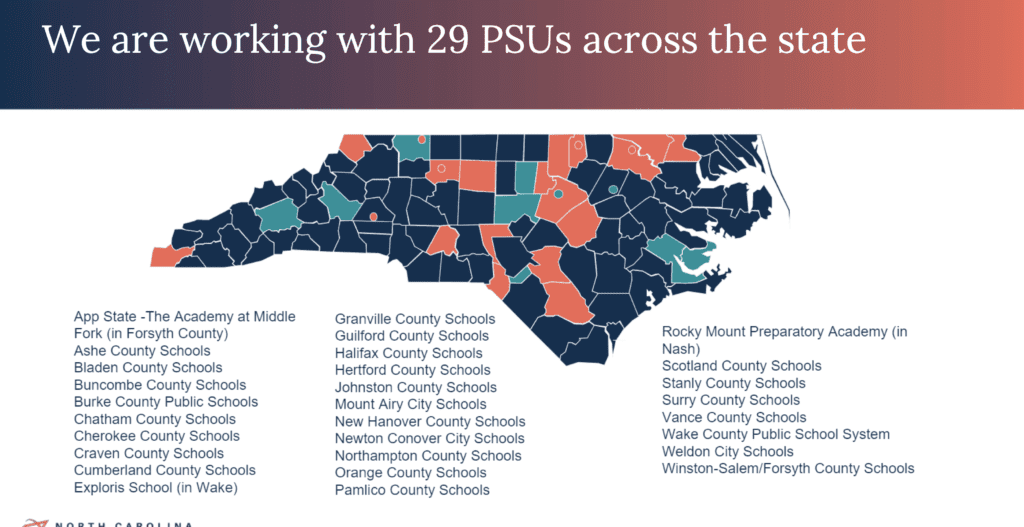
So far, Ed Corps works with 29 public school units. See those below.
Share this story
- A licensure reform plan that seemed imminent now appears to be headed for a slower rollout. The State Board of Education approved a blueprint this week that will begin a process that will likely lead to a pilot of the proposal.
- “This is a multi-year, multi-phase effort, but we’re going to start making progress quickly," said @edstateboard_nc Chair Eric Davis about a proposed licensure reform plan. Find out what happened at the State Board.