
Supreme Court rejects suit against Halifax Commissioners
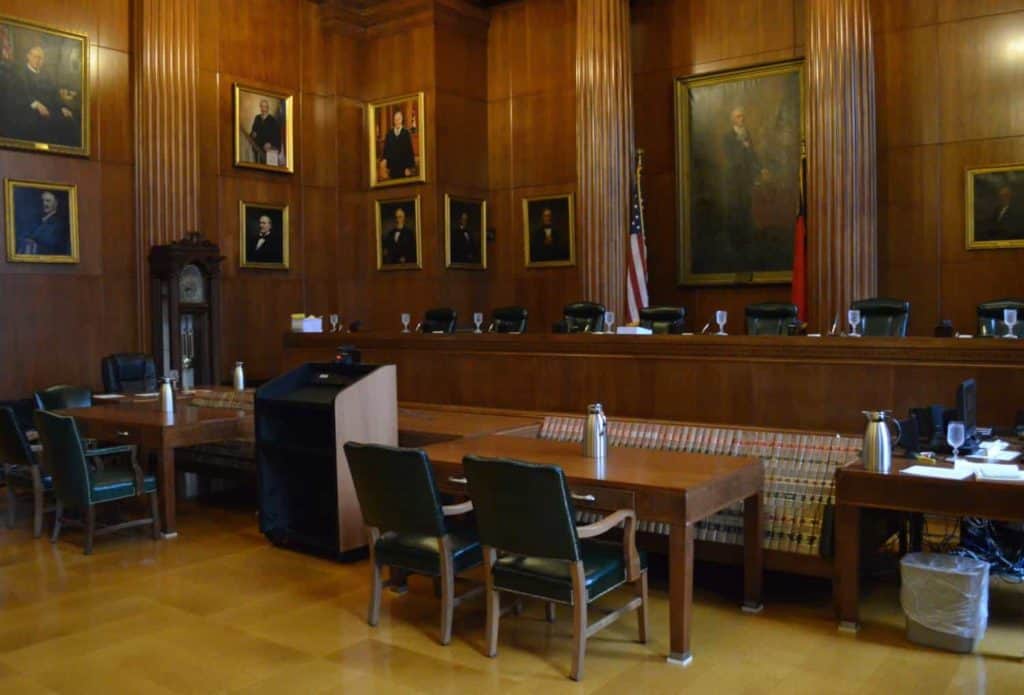

The state Supreme Court last week shot down a lawsuit brought by some Halifax County families against the county’s Board of Commissioners.
The families were trying to hold the Board of Commissioners accountable for the quality of Halifax students’ education.
Plaintiffs alleged that the Board of Commissioners were maintaining a three-district system, dating back to the Jim Crow era, dividing Halifax County kids into districts along racial lines while failing to fulfill the state constitution’s mandate that all students have the opportunity for a sound, basic education.
At issue was the funding provided by the county commissioners to cover costs for things such as buildings, building maintenance, and instructional supplies. The Supreme Court ultimately concurred with the Court of Appeals, however, agreeing that the responsibility for the education of students in Halifax lies with the state, not the county.
Halifax County has three separate school districts — Weldon City Schools, Halifax County Public Schools, and the Roanoke Rapids Graded School District. A press release from the plaintiffs explains that each district has fewer than 3,000 students, but that Weldon City Schools and Halifax County Public Schools have 94 percent and 85 percent African-American students respectively, while Roanoke Rapids has only 65 percent. The plaintiffs alleged the educational resources between the three districts are inequitably distributed by the county.
David Harvey, president of the NAACP branch in the county, said in the press release that the fight isn’t over.
“We have been advocating for all students in Halifax County for almost a decade, and this lawsuit was our last resort after years of trying to work with our county leaders for change. But we will not give up. If our Supreme Court says we have to sue the State for the County’s failures, then that’s what we will do,” he said.
The Supreme Court said that if the plaintiffs allegations are true, then they should be addressed via the Leandro court case. Leandro is the long-running education funding lawsuit where the court found that the state has a responsibility to provide a sound, basic education to all North Carolina students. The case is still ongoing.
“…the duty to remedy these harms rests with the State, and the State alone,” the Court’s opinion stated.