
A seed without soil: Hydroponics at Surry Community College

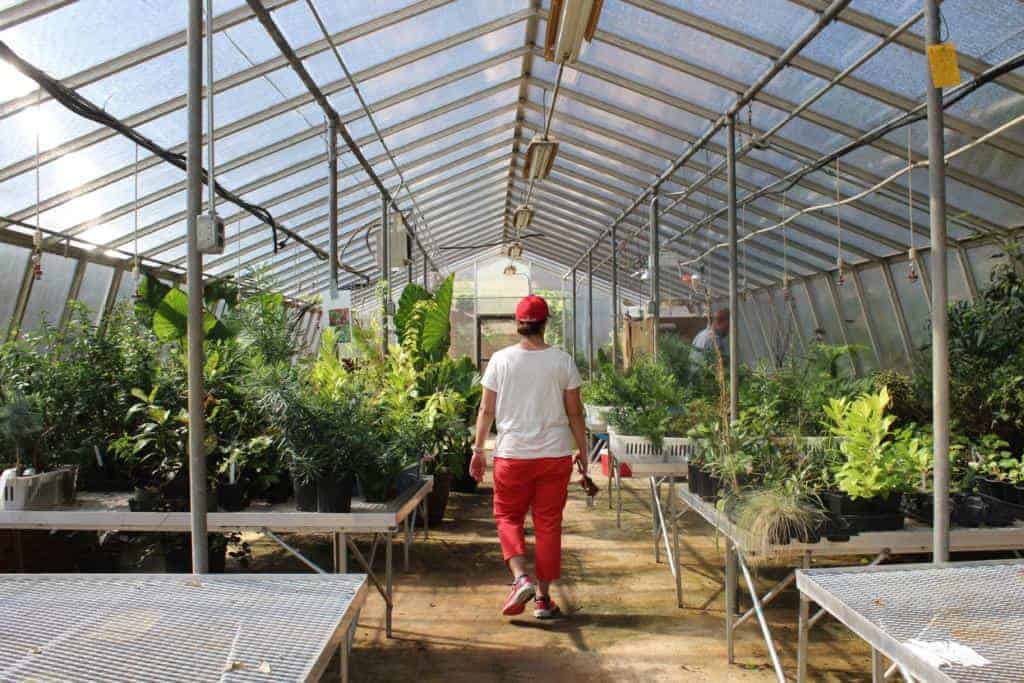
“My grandma had greenhouses, and my folks were always out gardening and landscaping and growing plants. I knew that’s what I wanted to study,” said Jeff Jones, who went on to N.C. State to study botany and horticulture.
As a graduate student, Jones said he had the opportunity to work for professors and see different types of horticultural production, “from ornamental plants to fruit and vegetable production to niche specialty production like with mushrooms or with truffles or hydroponics.”
Hydroponics, put simply, is growing plants in water — without the use of soil.
Ever since joining the faculty at Surry Community College in 2011, Jones, now chair of the sciences division, pursued his interest of niche and alternate crop production, and just last year, the college got a demo hydroponics system.
“Hydroponics is a type of crop production that we’re highlighting with our horticulture classes, just trying to give them as much exposure to different crop production systems as possible,” Jones said.
Students in several classes — including horticulture, plant science and fruit and vegetable production, and sustainable agriculture — use the hydroponics system in the controlled environment of a greenhouse to learn about water, fertilizer, and pest management.
“We’d like to use our classes to refine our system, to monitor those inputs and outputs, so that we can have a better idea of precise numbers in terms of water and fertilizer and even calculating electricity for the light system that we’re using,” Jones said.
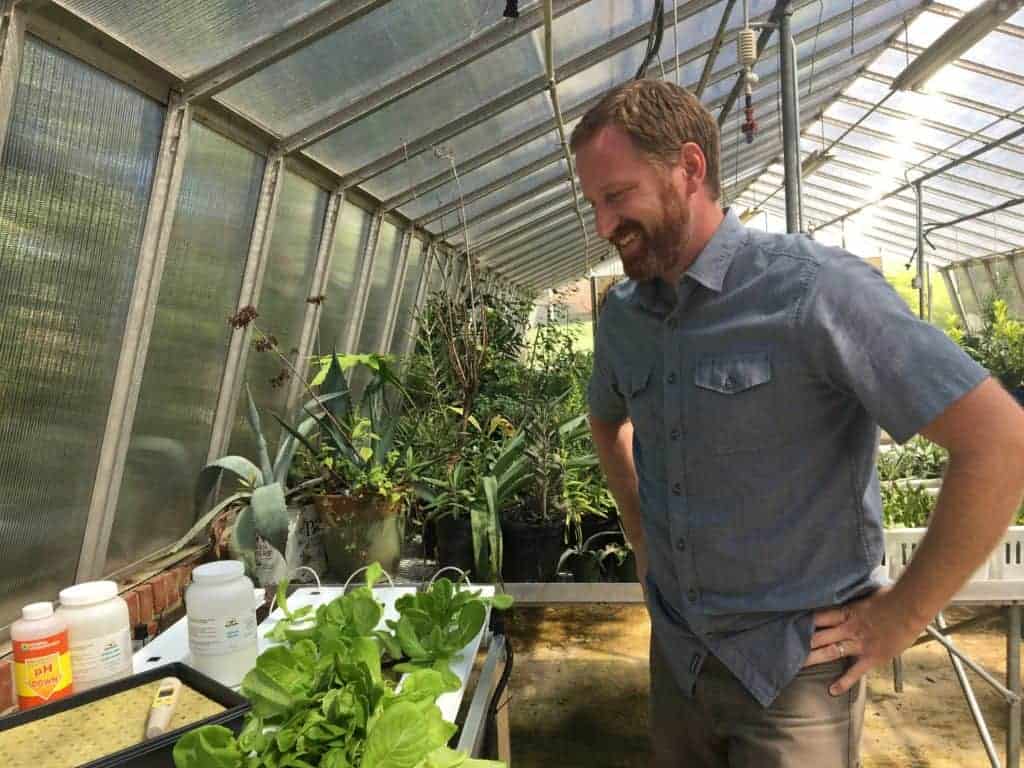
Although not all crops can be grown hydroponically, several high-value crops can, like lettuces, spinach, herbs, tomatoes, and strawberries.
So what’s the point? To produce more crops on less land.
“Land is a limited resource, and it’s being developed for other purposes other than agriculture, so we need to be more efficient overall in terms of our crop productions,” Jones said. “Hydroponics allows for that efficiency.”
Notably, though an alternate crop production, hydroponics shouldn’t greatly affect outcomes like taste.
“When you think about growing in water, you’re still supplying the same amount of nutrients, but you’re of course growing in water so you have a higher water content, which may slightly affect the taste,” Jones said. “Overall, the hydroponic crops have shown to be of high quality, certainly of good nutritional content, and pest free because you’re able to control the pests a little more precisely in that greenhouse or controlled environment.”
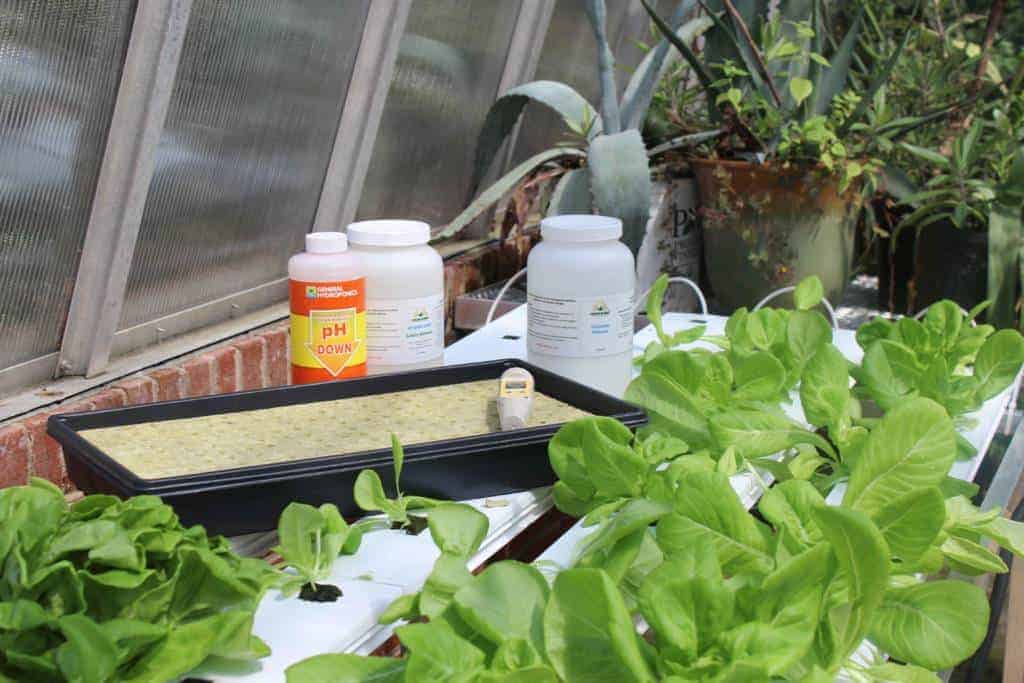
Brandan Shur is one of about 10 students in the Sustainable Horticulture Certificate program who get to have hands-on experience with the greenhouse demo system.
“The program is keeping up-to-date with modernized practices like hydroponics and teaching students how to correctly use this system to have fast yields of a crop in an indoor environment,” Shur said. “Times are changing and so are farming practices.”
Shur also serves as a work-study student to Jones, managing the greenhouse, watching for diseases, and beautifying the campus.
“He also gave me the assignment to create a plan to redo a whole landscape. This includes cleaning it out, designing it, finding the plants, and planting it,” Shur said. “It is a great feeling being able to plant something on the campus I’ve gone to school and obtained several degrees at, and years later, seeing a plant grow.”
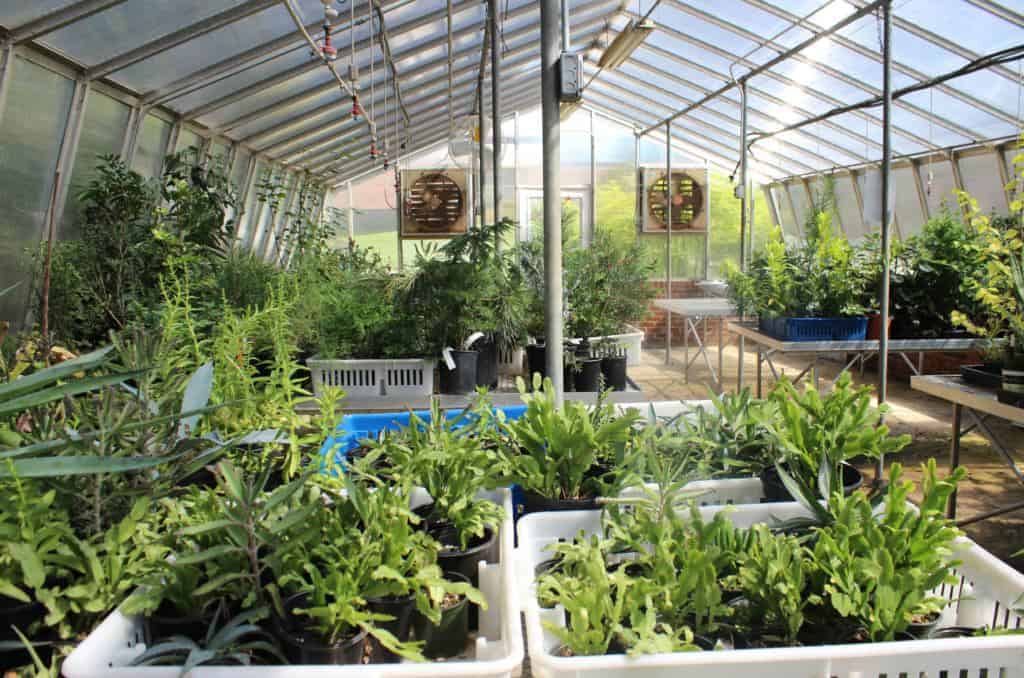
Shur, who grew up on a peach orchard, said he hopes to use skills he learns in the program to help his family’s farm be more successful — but he sees horticulture as a field that affects everyone.
“All in all, agriculture and horticulture is what allows the world to thrive,” Shur said. “While people are destroying trees, who else will be the ones that figure a plan out to replant the world and feed the people? Programs like this allow that.”