
Triangle area high schoolers start off summer at EPA science workshop

“I like trees,” said Sarah Tolman, a rising junior at Jordan High School in Durham.
“I think that when you look at pretty much any environmental problem, it can at least be diluted or helped by planting trees,” said Tolman, who eventually hopes to enter the forestry program at North Carolina State University. In the mean time, she kicked off the start of her summer at the U.S. Environmental Protection Agency’s (EPA) summer workshop in Research Triangle Park (RTP).
The five-day workshop, “Protecting Human Health in a Changing Environment,” ran from June 11 through June 15 with 24 rising high school juniors and seniors from Wake, Durham, and Wilson counties. Through first-hand presentations and activities led by EPA researchers, students gained insight on topics like air quality, water quality, and electric and hybrid cars.
A hands-on approach
“We’ve tried to focus on not just science, but science that relates to EPA work,” said Kelly Witter, director of EPA-RTP’s Community Engagement and STEM Education Program. “Our mission is to protect human health and the environment, and you can’t get kids to do that if they don’t love the environment.”
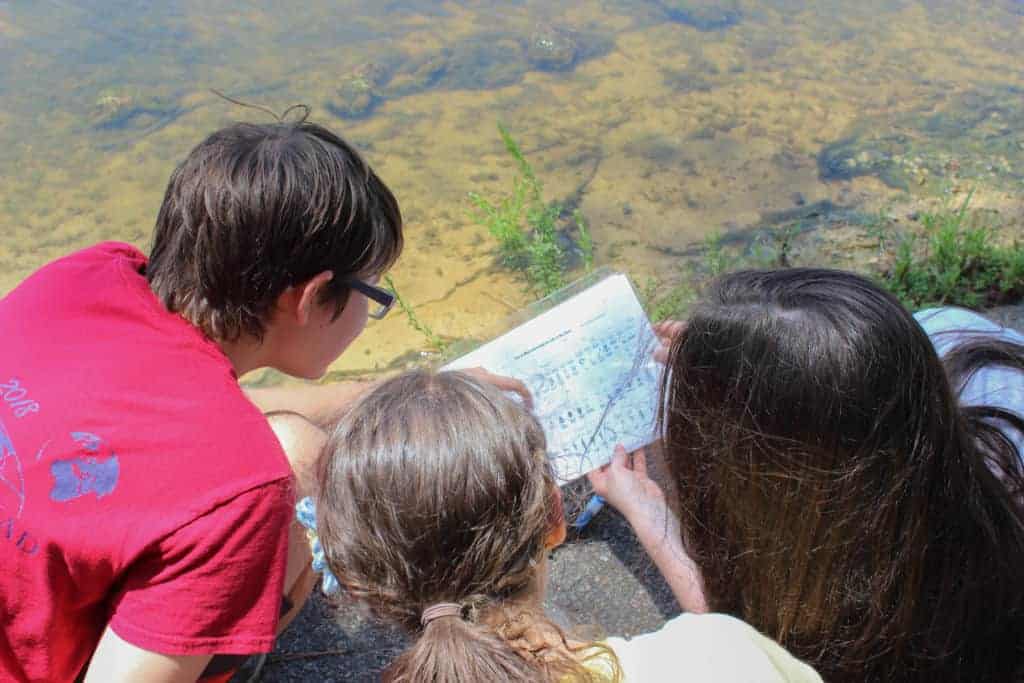
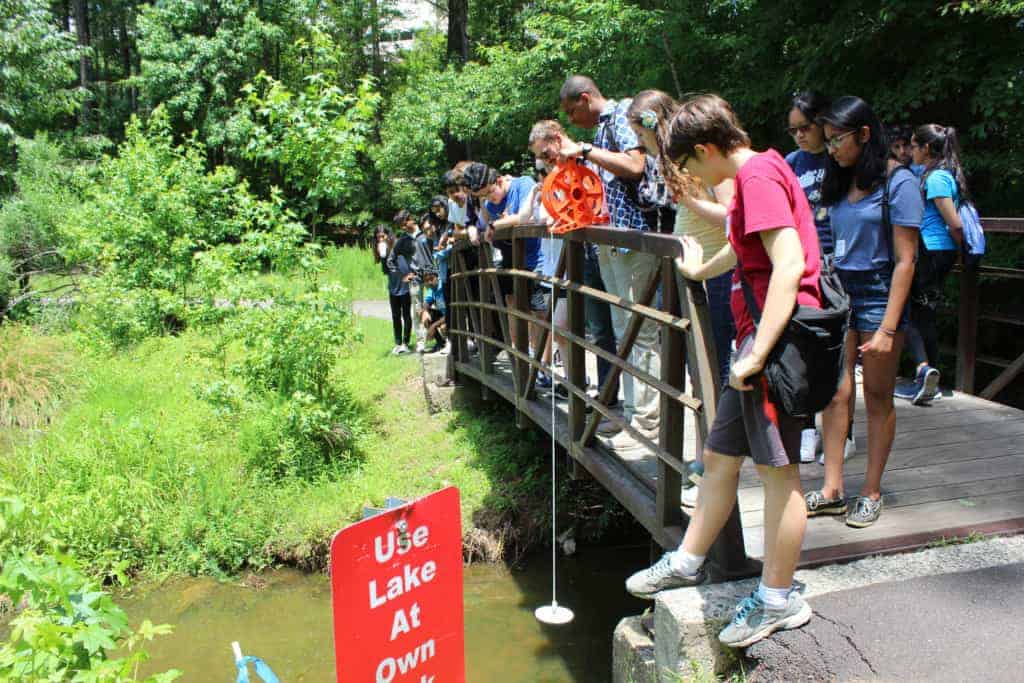
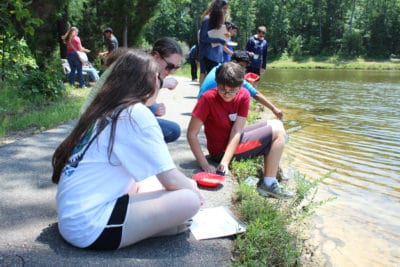
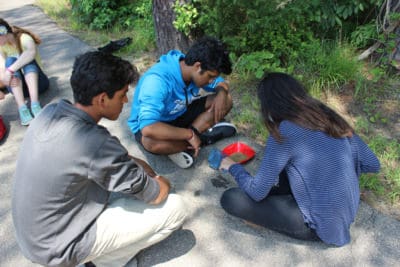
Students spent much of the week outdoors, hiking and testing water quality at the campus’s Discovery Lake. In one activity, students dragged mini nets across the lake bottom in an attempt to capture macroinvertebrates — spineless organisms like snails, dragonflies, and worms that are large enough to be seen with the naked eye. Students then matched their findings against an identification sheet.
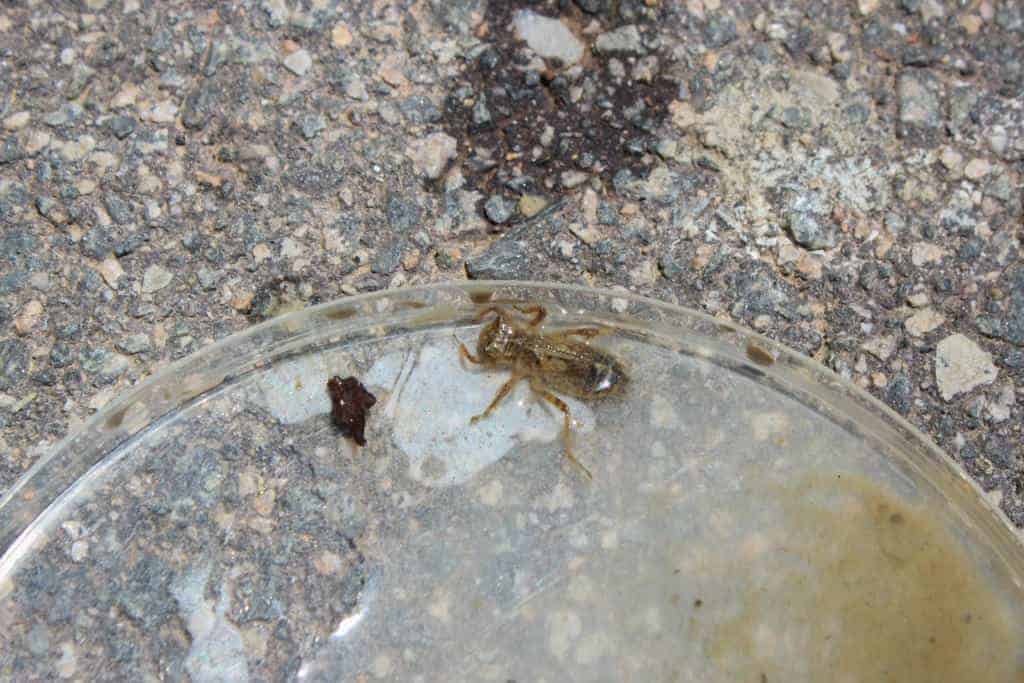
The activity was about more than identifying aquatic macroinvertebrates; students learned that the more intolerant macroinvertebrates they found, the better the water quality.
“There are some species that are very intolerant, so they’re going to die off pretty quickly with pollutants in the water,” said Lauren Bamford, EPA-RTP’s Outreach Coordinator for the STEM Education Program, who led the outdoor activity.
In another workshop lesson, students learned how EPA scientists track water quality in a less hands-on way — from outer space. The EPA uses NASA and European Space Agency (ESA) satellites like Landsat, Sentinel-2, and Sentinel-3 to track a specific blue-green color in lakes. The color signifies growth of cyanobacteria, a harmful algal bloom that can contaminate drinking water and irritate skin. Ingestion and contact with cyanobacteria can also be lethal to dogs. Locally, cyanobacteria growth has been problematic in Jordan Lake.
“Pretty much every single lake is susceptible to algae blooms, especially in the summer,” said Wilson Salls, EPA research fellow, who led the session. Because of researchers like Salls, water quality technicians can now access cyanobacteria levels right away through an app developed by the EPA instead of using traditional water testing methods that take days for results to be returned.
Building connections with scientists
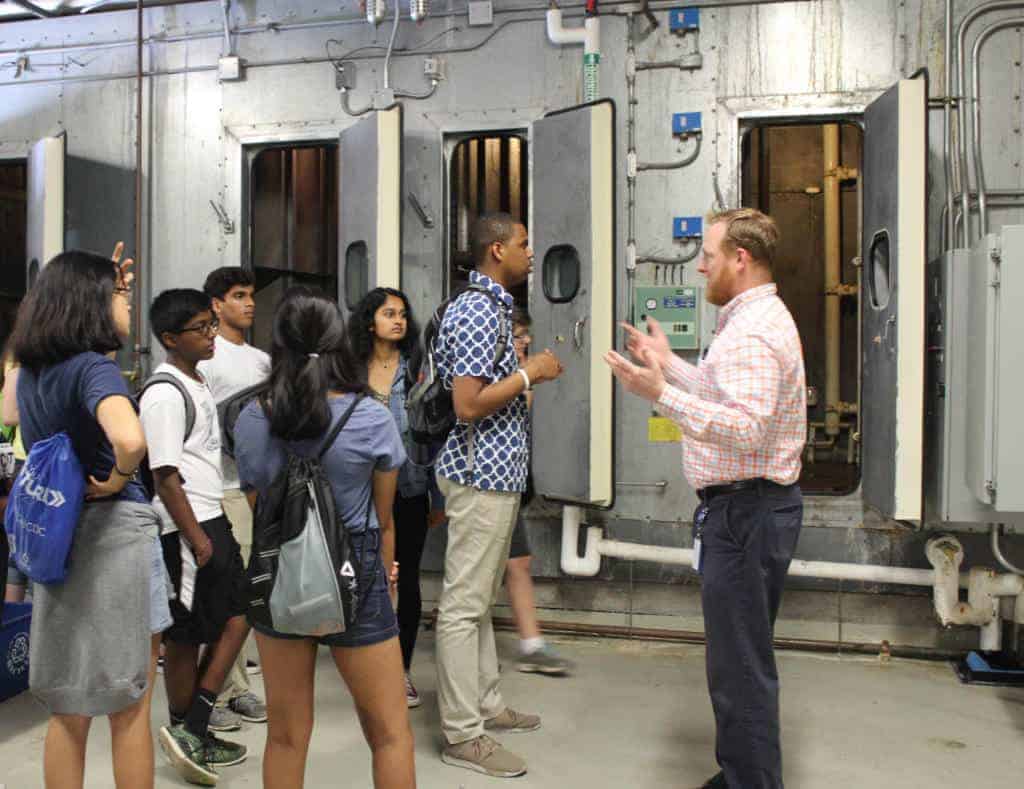
Outside of workshop lessons, students participated in two “speed mentoring” sessions with EPA scientists. The networking opportunity allowed students like Ryan Harris, a rising senior at Jordan High School who has had an avid interest in environmental science since his freshman year, to explore future careers in the field. The networking sessions were also geared toward students who were simply interested in science.
“What I’ve liked [is] the fact that most of these mentors that we have had didn’t come from a traditional background at all,” said Mirannda Stephens, a rising a senior at Durham School of the Arts. “In fact, they thought of having careers completely outside of science and outside of EPA. It was cool to see how their journey here was completely different.”
Although Stephens is an art student, she said she liked to learn things outside of her comfort zone, and the EPA workshop was the first time she had access to so many scientists in one place.
“In fact, this whole building — just being able to freely ask people questions as you’re walking — I’ve never been exposed to that, and I think that’s really good exposure,” Stephens said.