Digital Scholars Initiative promotes technology among teachers
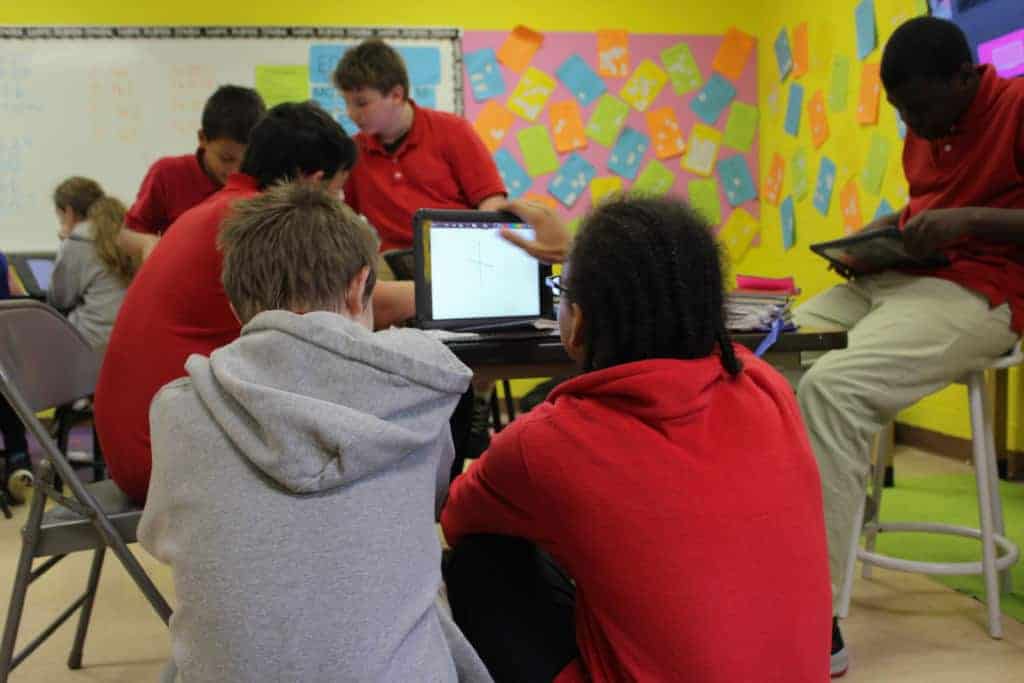

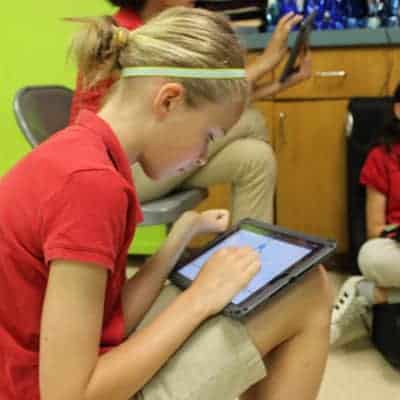
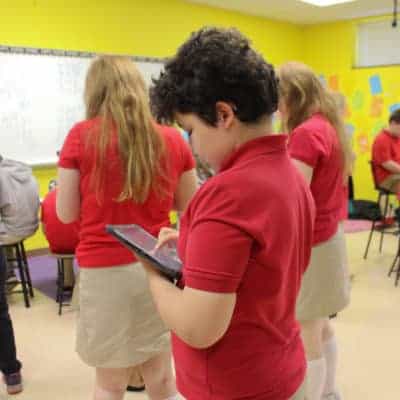
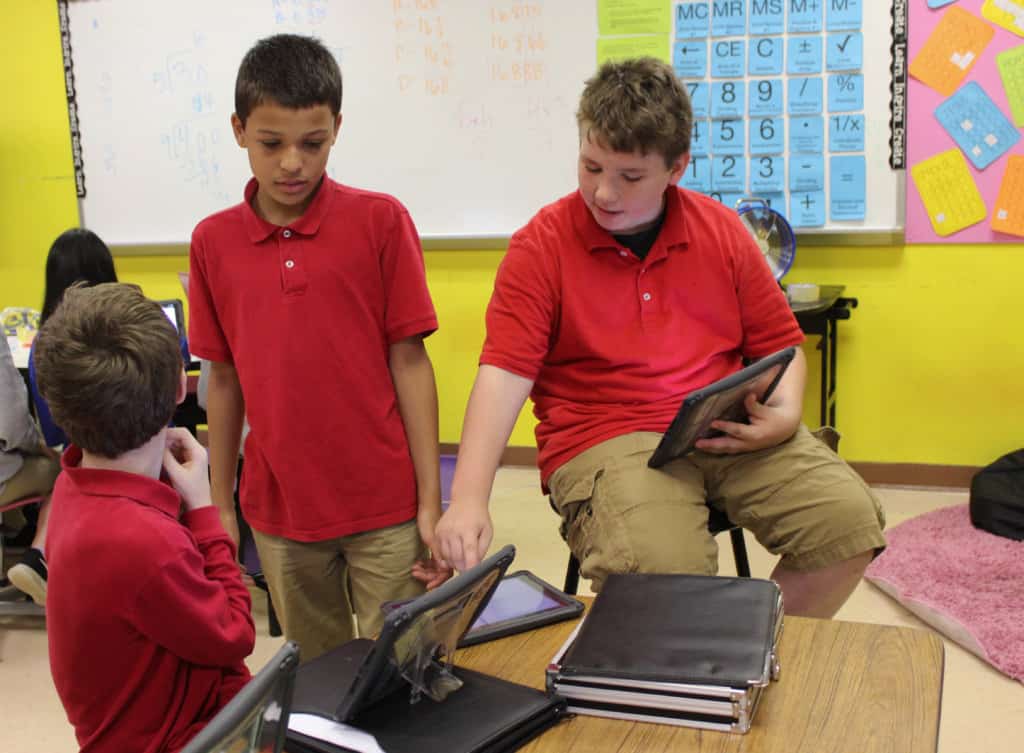
A Pandora station streaming Demi Lovato played in the background of Sally Schultz’s sixth grade classroom at Knox Middle School in Salisbury. Students — some seated on couches, some around a desk, and others on the floor — broke off into competing teams to solve EOG (End-of-Grade) practice questions. All of them held iPads.
“Rowan is a 1:1 district. All of their students have iPads or laptops. The teachers do as well,” said Myra Best, executive director at DigiLearn, a nonprofit dedicated to expanding digital and personalized learning opportunities for students and teachers.
In 2016, DigiLearn launched the Digital Scholars Initiative to cultivate teachers like Schultz as leaders and models for technology use in classrooms. Digital Scholars teachers receive professional development, extended employment, and time outside the classroom to develop leadership and entrepreneurial skills necessary to turn their classrooms into digital learning labs.
DigiLearn is piloting the initiative in Rowan-Salisbury Schools and Durham Public Schools.
“It is a barrier for teachers if they don’t have the appropriate kind of skills and support they need to take advantage of technology, which is why the Digital Scholars piece is so important,” said Best.
Lynn Moody, superintendent of Rowan-Salisbury Schools, said teachers seeing and talking to a practitioner like Schultz demonstrates the value of the initiative.
“The intent is that a teacher could talk to Sally either online or in person and be able to say, ‘What is it I’m going to see, and what is it you think I should take from this?’” said Moody. “Then they would actually watch her teach for some period of time — a couple hours, half the day, whatever we can fit in the schedule. We wanted to really be flexible about what these times look like.”
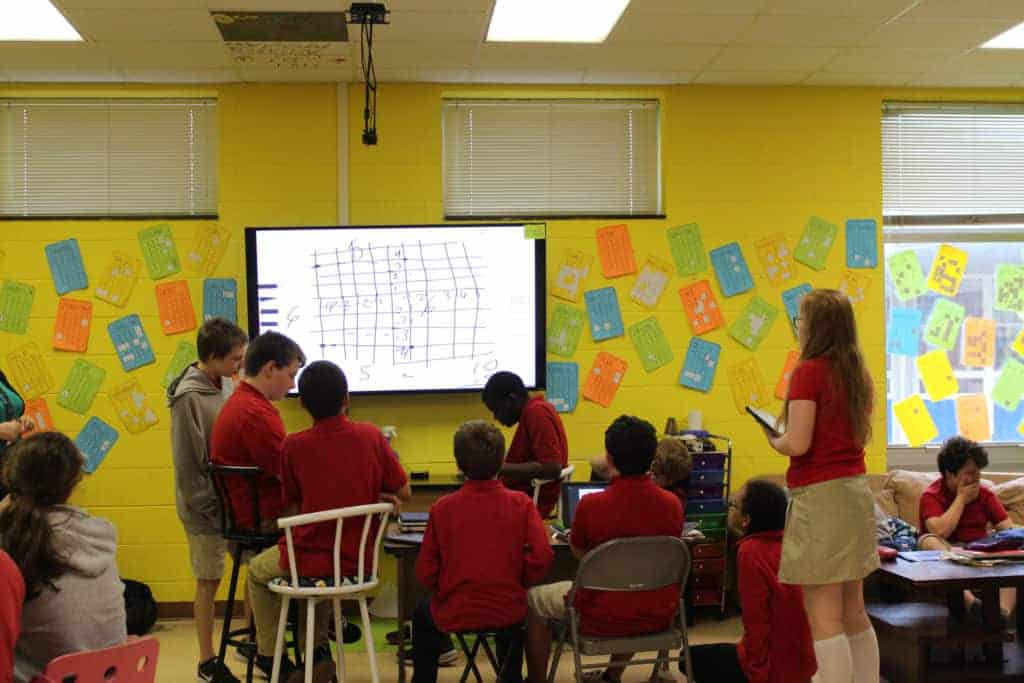
Schultz had used technology in her classroom for six years before becoming a Digital Scholar. Now, through the initiative, her classroom serves as a “learning lab” for other teachers. For the most part, she said, teachers have been open to coming in and observing her class. But ultimately, according to Moody, the goal of the Digital Scholars program is not for teachers to copy Schultz.
“[Observing Schultz] would spur their own ideas [and] their own thoughts about what they want to do in their classroom based on their students’ needs,” said Moody. “We have 65 percent of our students on free or reduced lunch, so we have serious challenges.”
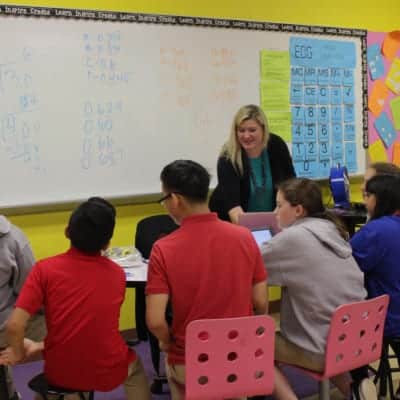
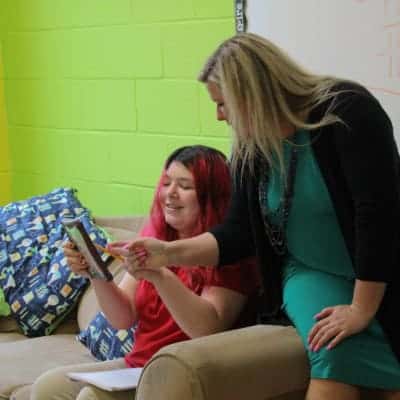
Schultz said she sees clear benefits to incorporating technology in her classroom to engage students, regardless of academic level or other challenges. “I’ve seen score wise and data wise that it works with our kids,” Schultz said. Many sixth graders also stay late and come to school on weekends — another sign of increased student engagement.
“I’ve done Saturday school all year, and then the last month and a half, I picked up doing Sunday,” Schultz said. “After school, I have 14 to 20 [students] every day that stay until six o’clock to get extra review.”
In addition to higher engagement, Schultz credits the use of technology in cutting down on behavioral issues and on micromanagement. Most importantly, she said, her students show more confidence.
“[Technology] benefits not just the teacher and the students, but also the community as a whole because it allows kids to be [more] knowledgeable and better prepared for the world in which they’re going to find themselves,” said former Governor Bev Perdue, who founded DigiLearn in 2014.