
Miguel Cardona says expanding bilingual education is ‘an economic imperative’ at NC State event
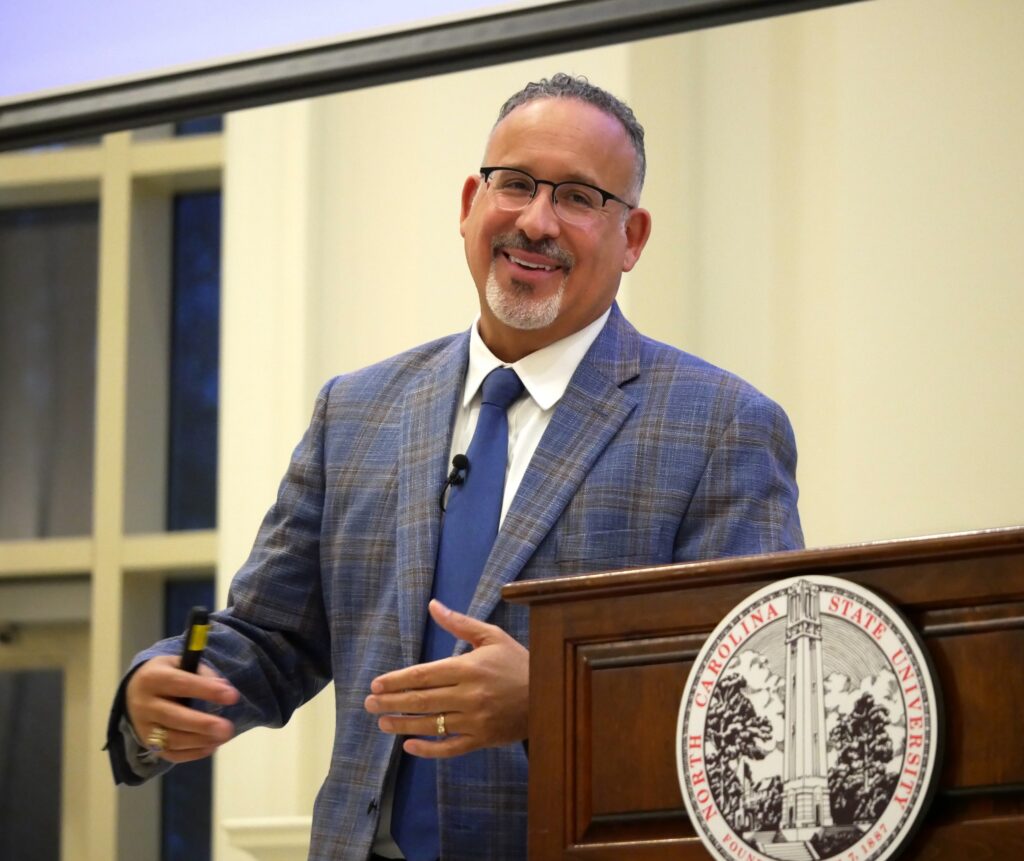
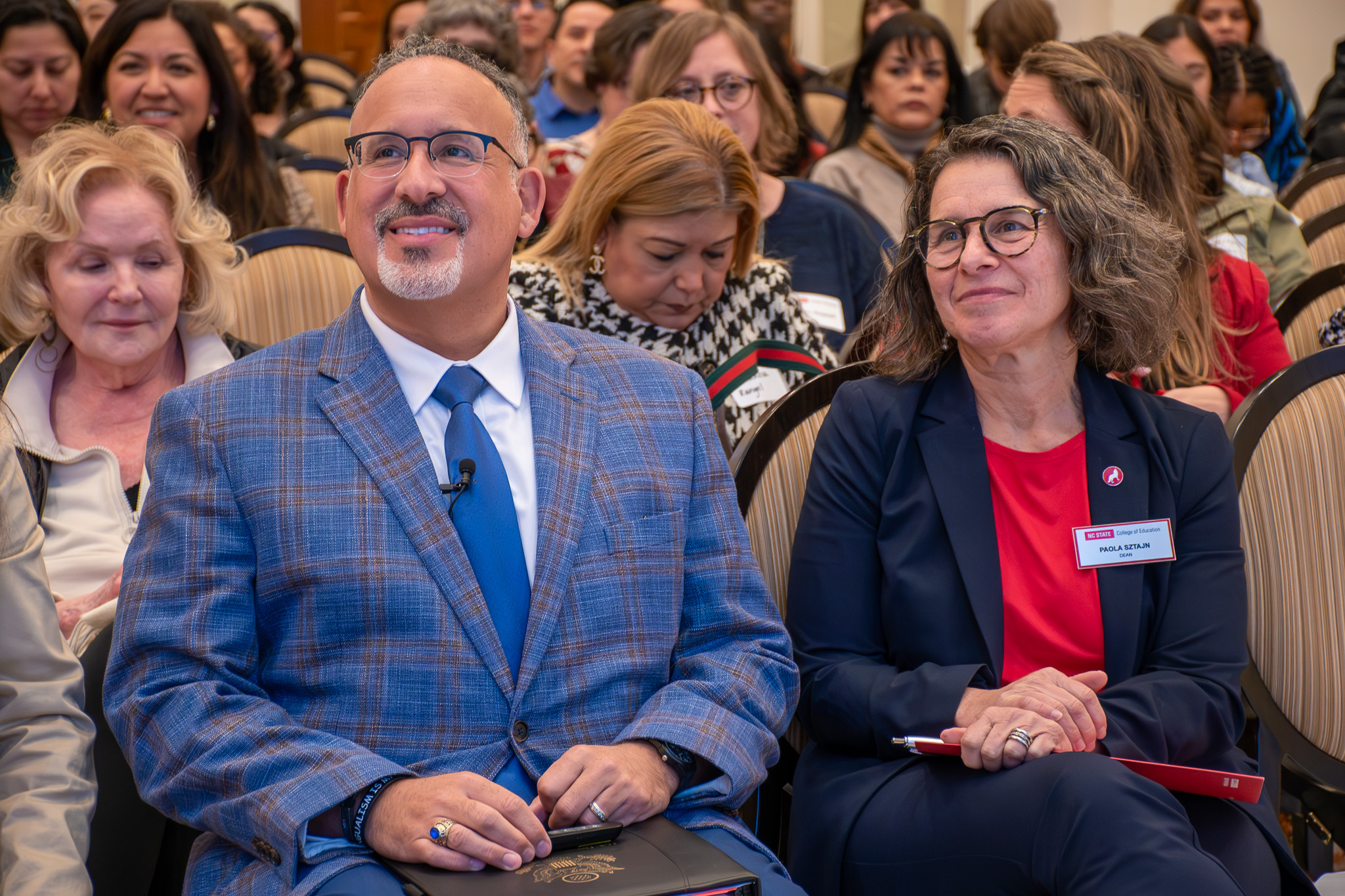
Miguel Cardona, former U.S. Secretary of Education, encouraged a room of bilingual educators and education leaders on Friday to rally around bilingual students and advocate for policies that strengthen their educational opportunities.
During the Biden administration, one of Cardona’s priorities was his 2023 “Being Bilingual is a Superpower” initiative, which provided toolkits to states on how to meet obligations under federal civil rights laws to educate English learners and newcomers. He aimed to grow the number of high school graduates with seals of biliteracy and the number of bilingual teachers.
Many bilingual teachers, children, and families are navigating the Trump administration’s funding uncertainty, policy changes, and aggressive immigration enforcement. A little more than a year after leaving the White House, Cardona’s message remained the same: “I repeat it, and I don’t get tired of repeating it: Bilingualism is a superpower,” he said.
 Sign up for the EdDaily to start each weekday with the top education news.
Cardona reflected on his own educational journey and his time as a teacher, principal, and state superintendent in Connecticut.
While leading an elementary school, Cardona said cultural attitudes and policies like No Child Left Behind implied that bilingual students were the reason for the school’s “failing” label. At the time, if there was a subgroup that did not meet state targets for two years in a row, the school was deemed “in need of improvement.”
“I say it for those kids,” Cardona said. “I say it for the young people who may feel less capable when they look at a white board or a test paper and don’t understand the words right away, for those kids who think in Spanish but speak in English. … I say it for those kids who might not understand that their knowledge of multiple languages and their ability to code switch and culture switch is a powerful gift.”
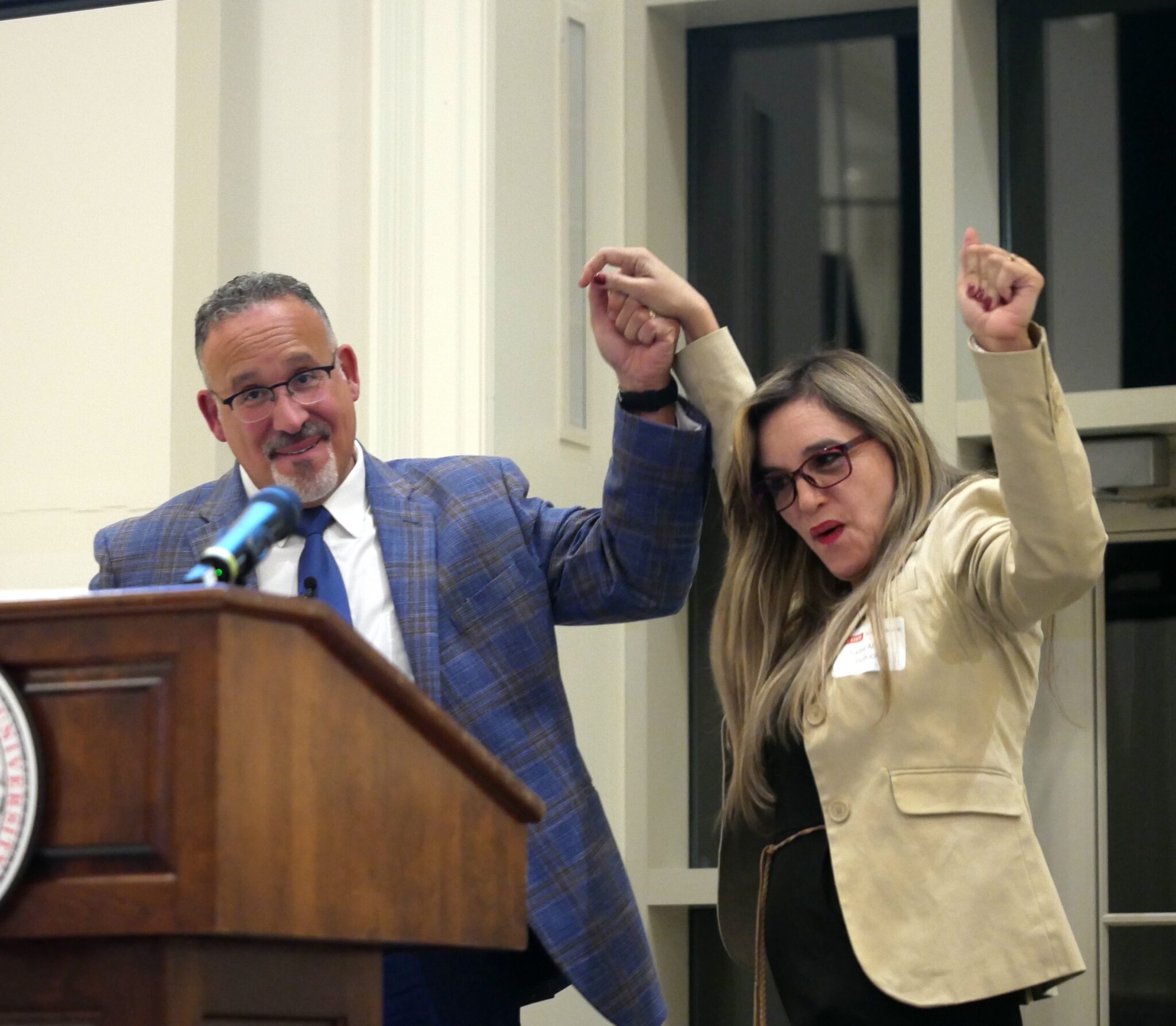
His speech was part of NC State University’s College of Education Multilingual Perspectives Speaker Series, organized by Goodnight Distinguished Professor in Education Maria Coady.
Cardona said the work of bilingual educators is even more important during challenging circumstances for families, schools, and communities.
“Let’s be honest, this year has not been an easy year for educators, especially bilingual educators,” he said. “Schools are being asked to do more with less. Policies are shifting. Culture wars have crept into our classrooms and into our boardrooms.”
Related reads
Cardona highlighted bilingualism and biculturalism as economic and cognitive “superpowers.” Beyond being a helpful skill for children, he said speaking two or more languages is a workforce asset for communities.
Some studies have found that multilingualism can boost job prospects and wages. A 2023 study found that bilingualism was especially helpful for low-income individuals and that early language acquisition could “mitigate income inequality by enhancing the employment prospects of low-income individuals.”
Cardona also pointed to research that shows multilingualism can boost executive function control and creativity. A National Library of Medicine article overviews research finding that early exposure to multiple languages is linked to “greater openness to other languages and to new learning itself.”
He said seals of biliteracy, now adopted in all 50 states, provide a way to place value on students’ multilingualism and to communicate that with postsecondary institutions and employers. North Carolina adopted its seal in 2015, called the “Global Language Endorsement,” as one of seven high school diploma endorsements.
“Across the country, the seal has motivated students, engaged families, and opened pathways to college and career,” he said. “So adopt it, advocate for it, celebrate it.”

Cardona outlined other strategies to uplift bilingualism as an asset for all students, including increasing family engagement, creating pathways for recruitment and retainment of bilingual teachers, and increasing the capacity in leaders to better understand the value of bilingualism.
He said the “ABC’s” of teaching would strengthen the profession for all teachers:
- Agency for teachers.
- Better working conditions, including more support personnel like social workers and counselors, reasonable class sizes, facility improvement, and advancement pathways for teacher leaders.
- Competitive salaries.
“In this country, we’ve normalized that teachers make 24% less than people with similar degrees in other professions,” Cardona said.
Related reads
North Carolina ranked 39th in the country in starting teacher salaries in the annual National Education Association’s 2025 report, with an average starting salary of $42,542, and 43rd in average overall teacher salaries, at $58,292.
Cardona added a “D” onto his normal “ABCs” message, for “diversity.” He said research shows a diverse teacher workforce boosts learning for all students.
Nearly 22% of children across the country, from 5 to 17 years old, speak a language other than English, according to Census data, while only 13% of teachers did in 2023, according to research from The Century Foundation.
In North Carolina, about one-fifth of K-12 students spoke more than one language in 2023, according to the Department of Public Instruction, with a total of 389 languages spoken by students across the state.
Cardona recognized that North Carolina was ranked fifth in the country for its number of dual language/immersion programs. In 2021, the state had more than 260 programs and led the Southeast in bilingual education, according to a report from the American Councils Research Center.
Related reads
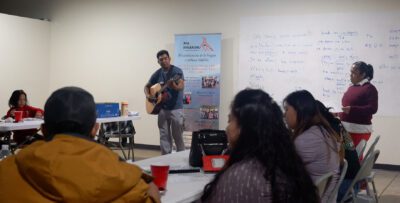
He encouraged North Carolina to become even more of a leader, calling for state policies that expand bilingual programs.
“These laws are going to help our students become more economically successful,” he said. “It will bring back money to our firms. It’ll bring businesses to our state if we do it well. It’s not just a moral imperative. It’s an economic imperative. Let’s do everything we can to make North Carolina a model of multilingual excellence for the rest of our nation.”