
Reading to learn
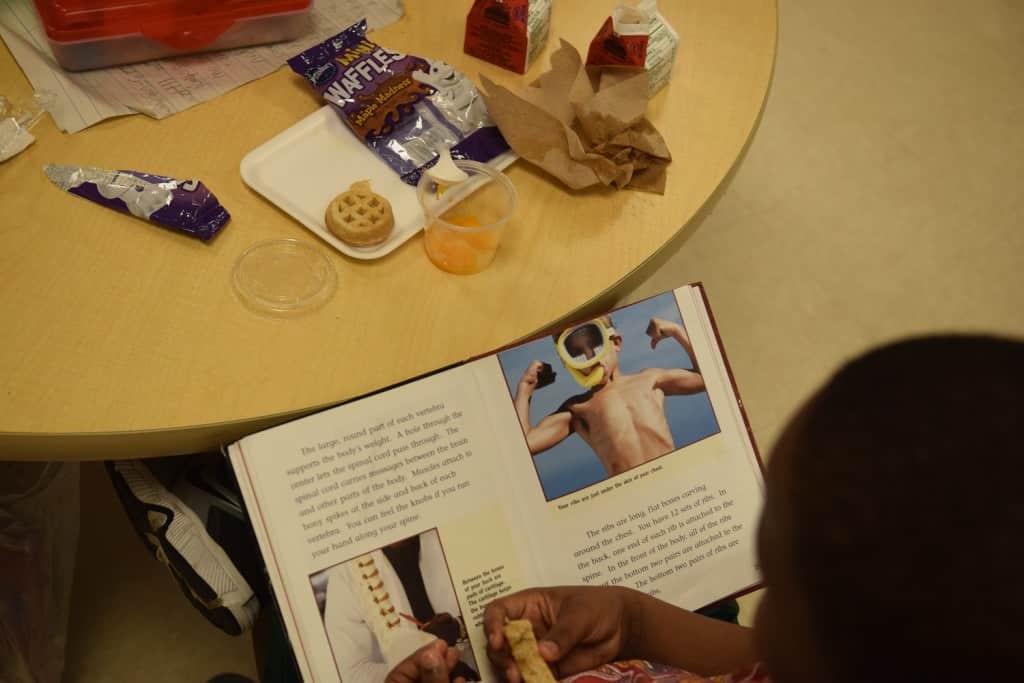
In recent years, North Carolina’s legislative leaders have zeroed in on early literacy and particularly third-grade reading skills, and rightly so.
The beginning of fourth grade marks the time in a child’s education when she is no longer learning to read, but is reading to learn.
The National Research Council has found that high school graduation “can be predicted with reasonable accuracy by knowing someone’s reading skill at the end of third grade.”
In North Carolina, we’ve got some work to do on this front. Only 38 percent of North Carolina fourth graders and 29 percent of students from economically disadvantaged families scored at or above reading proficiency on the National Assessment of Educational Progress (NAEP) in 2015. Although North Carolina has made progress narrowing reading proficiency disparities among students of color, the gap in the average scores between Black and Hispanic students and their non-Hispanic White peers is more than 20 points.
Given the importance of early literacy to a child’s long-term educational trajectory and our state’s current struggles, it’s critical that we approach this issue with a firm understanding of the underlying problems that need to be solved and the best strategies to address them.
That’s why we, the NC Early Childhood Foundation and NC Child, along with the NC Partnership for Children, Inc. and excelleNCe (BEST NC) have teamed up to create a collaborative, data-driven plan to improve third-grade reading in North Carolina.
Up to now, the most notable attempt to improve third-grade reading outcomes has been the “Read to Achieve” measure initiated by the North Carolina State Senate. The “Read to Achieve” law requires third-grade children to display grade-level reading skills before moving on to the fourth grade.
To support grade-level reading success, we need to recognize that literacy is a cumulative process that develops from birth and is rooted in early brain development. Child development is a dynamic, interactive process that is not predetermined. It occurs in the context of relationships, experiences, and environments. A child’s health, access to high quality early learning opportunities, and family stability all impact literacy development.
For our first convening this Friday, November 13, we’ve invited a diverse group of experts to join us for a data-driven discussion about the range of factors that play a role in third-grade reading success. It’s the first step in defining North Carolina’s measures of success beginning at birth that put children on a pathway to grade-level reading success by third grade.
These measures will align with the following four whole-child categories outlined as the key components for third-grade reading in Lisbeth Schorr’s Pathway to Children Ready for School and Succeeding at Third Grade:
Health and Development on Track, Starting at Birth
Supported and Supportive Families and Communities
High Quality Early Care and Education
Effective Teaching and Learning in K‐3 Classrooms
Friday’s convening and our subsequent selection of whole-child measures of success is an important first step in the beginning of a long-term effort to align strategies to improve third-grade reading skills in North Carolina. By analyzing the data and identifying shared goals for progress, we can ensure that everyone – nonprofit advocates, teachers, legislators, pediatricians, and so many others – is working collaboratively to achieve the same outcomes.
When it comes to making big change for North Carolina’s children on big issues, that’s a recipe for success.