This story originally appeared in the North Carolina Tribune newsletter on Thursday, Dec. 11, 2025. Subscribe to the North Carolina Tribune here.
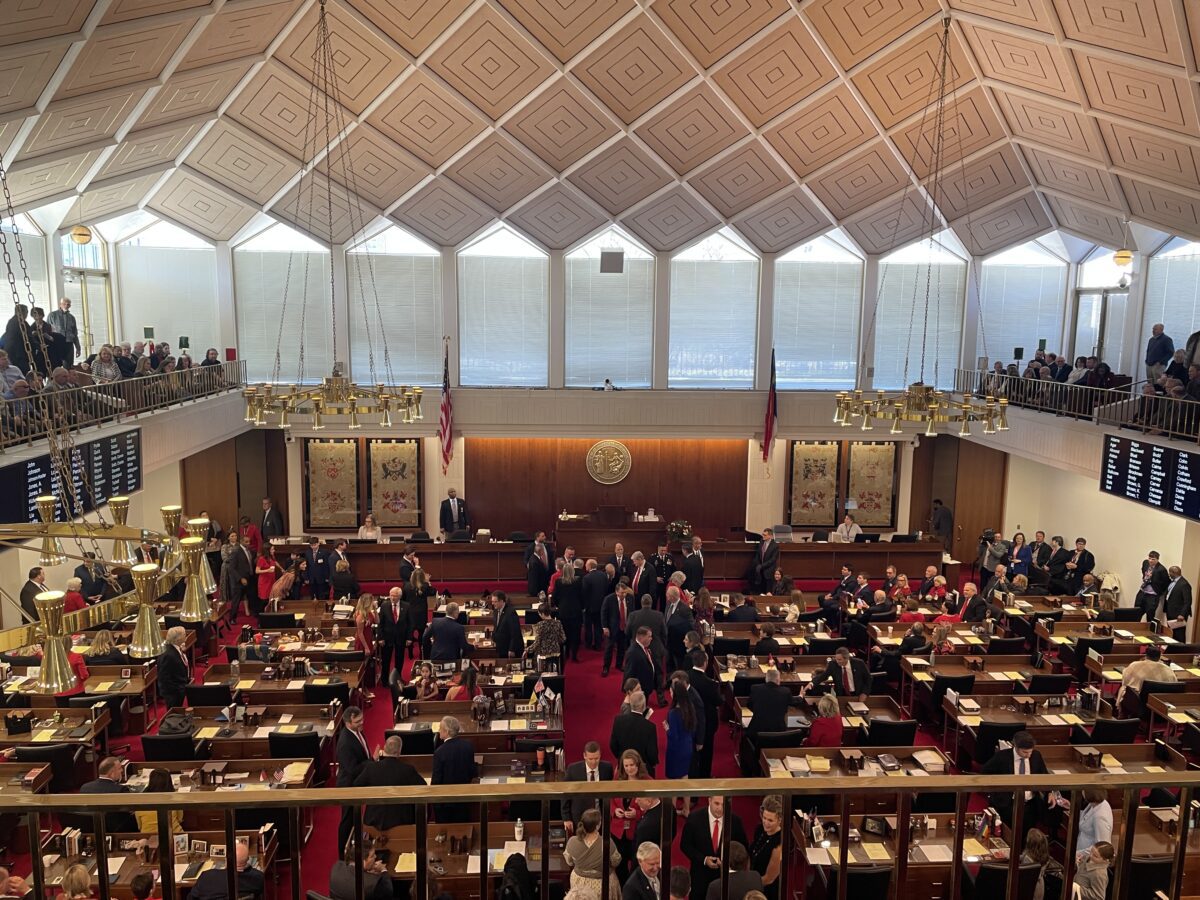
Members of a House committee have warned the leaders of the Chapel Hill-Carrboro City Schools to expect legislative retaliation over their defiance of the 2023 session’s “Parents’ Bill of Rights.”
“You’re going to need state funds, aren’t you?” said Rep. Jeff McNeely, R-Iredell, alluding to the subsidies the General Assembly provides every public K-12 school system. “Well there’s a darn good chance you may not get them.”
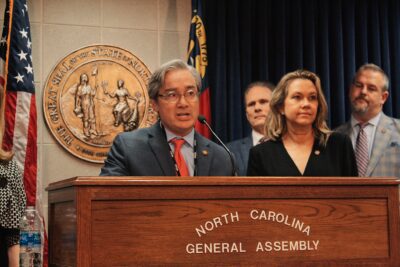
He went on to tell Chapel Hill school board chair George Griffin and Superintendent Rodney Trice that “because of y’all, there’s going to be legislation that comes and it’s going to be pretty tough because we’re not going to put up with rogue school systems.”
 Sign up for the EdWeekly, a Friday roundup of the most important education news of the week.
The setting for McNeely’s comments on Wednesday was a House Select Committee on Oversight and Reform that focused on the district’s compliance with 2023’s Senate Bill 49.
The specific points at issue involve, first, the bill’s order that each district’s elected “governing body” adopt a policy that requires notification to parents before any change to the name or pronoun used for a child in school records or by school personnel.
The elected Chapel Hill-Carrboro board pointedly declined to do so, and instead left it to system administrators to handle.
Supporters of the provision see it as insurance that parents can weigh in if their child shows any signs of being transgender. Critics see it as discrimination against the LGBTQ+ community, not to mention nanny-statism given the wide scope of the provision’s wording.
Wednesday’s hearing produced little evidence that Chapel Hill-Carrboro school officials have failed to deliver the required notifications, beyond an anonymized email that said a child’s “chosen name” had appeared an eighth grade diploma.
But to Republican legislators, that’s beside the point, because SB 49 required school boards to adopt the policy and dictated its wording, allowing no local discretion.
The other point is a separate provision in the law that bars adding “instruction on gender identity, sexual activity or sexuality” to the K-4 curriculum, broadly defined.
Committee co-chair Rep. Brenden Jones, R-Columbus, cited several books he labeled as “filth,” including one called “Santa’s Husband.”
But there was no evidence presented that they’d been used in a classroom or as part of homework assignments.
Trice said a district website had included links to what he termed “resources for parents to have conversations with their students about these issues,” if they wish.
SB 49’s definition of curriculum includes “support materials” and “supplementary materials,” without further defining either term.
Griffin and Trice both said the Chapel Hill-Carrboro system is following the law.
Read more
Achievement gaps in the crosshairs
Wednesday’s House Oversight hearing also allowed legislators to sound off about a perennial issue within the Chapel Hill-Carrboro City Schools, namely the large “achievement gap” between white and Black students.
This is quickly summarized via Department of Public Instruction (DPI) student-proficiency statistics.
For 2025, these show that 70.3% of the Chapel Hill system’s students tested on grade level. But the discrepancy between white and Black students is vast: 86.4% of white students were on grade level, versus 36.7% of Black students.
The number for economically disadvantaged students tracked closely with that for Black students: 36.6%.
Chapel Hill-Carrboro officials “claim to have one of the best school districts in the state, but it seems their core purpose is to serve wealthy professors’ kids,” committee staffers tweeted earlier this month.
Committee co-chair, Jones, and member Rep. Brian Echevarria, R-Cabarrus, both hammered on the point.
“Math scores flat, reading scores failing, basic literacy and numeracy nowhere to be found,” Jones said. “You replaced academics with activism … for the most vulnerable kids in your system, children who came to school to learn and left confused and divided.”
“When I look at your school records, you’re putting a lot of effort into DEI-type of teachings and trainings,” Echevarria added. “However, the people you think you’re helping are actually failing in your school system.”
However, at the local level, the gap’s been a topic of debate and consternation since 1990 at least. Multiple initiatives have tried to address it, and it’s remained intractable.
A group of Chapel Hill-area community leaders tried their hand at it in 2015, producing a historical summary and focus-group results along with a set of recommendations.
The problem, they said, traces to the late-1960s desegregation of the city system, which saw Black students folded into white schools while “erasing the heritage and traditions” they’d previously known.
Chapel Hill and Carrboro’s Black community’s also shrunk due to out-migration. In 1990 Black students made up 22.2% of the system’s population. By 2015, that was down to 11.0%.
Black students were 11.7% of the district’s test-takers in the DPI numbers for 2025.
Focus groups with teachers, student, and parents exposed thoughts about what was wrong and how to fix it that varied widely by race.
For example, white staffers felt officials had to recognize that “four-year colleges are not for everyone.” Black staffers countered that teachers had to assign homework that students could do independently, without parental help.
There was also a question of respect.
“Teachers who speak to white parents as if they are colleagues in a corporate board meeting have been known to speak to black parents in a dismissive, finger-pointing way,” according to one of the responses that came from the district’s Black staffers.
White and Black parents agreed that when “African American parents go in to talk about (their) child, they are asked about drugs or marital status.”
Black students complained that they got “singled out” in advanced classes, “sometimes babied and sometimes (offered) help even when it’s not asked for.” Some said “every teacher” should receive racial-equity training.
The report among other things advised system officials to “rethink tracking” and move toward offering “a a challenging, rich curriculum to all students.”
Above all, it said, race-neutral solutions won’t help “because, as teachers, parents and students consistently told us in listening sessions, these disparities are rooted in race. You cannot solve a race-based problem with a race-neutral solution.”
Achievement gaps exist across the state.
As it happens, both Jones and Echevarria represent counties with separate county and city school systems.
The Cabarrus County Schools have a 23.8 percentage-point gap between white and Black grade-level proficiency. The Kannapolis City Schools have a 21.4-point gap that masks low performance across the board: Only 49.9% of white students are grade-level proficient.
The Columbus County Schools have a 21.7 point gap that, as with Kannapolis, masks a broader problem with grade-level proficiency among all students, which stands at 43.1%. The Whiteville City Schools have a 29.8-point gap and an overall 66.6% proficiency rate.

Recommended reading