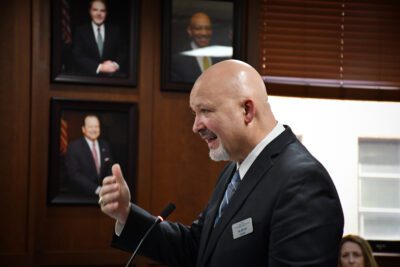
Golden LEAF Foundation President Scott T. Hamilton announced on Friday a $1 million investment to support AdvanceNC, a workforce initiative focused on advanced manufacturing.
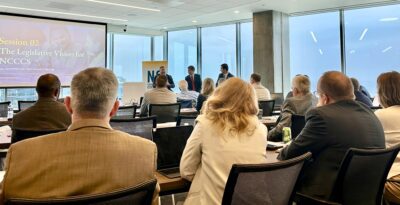
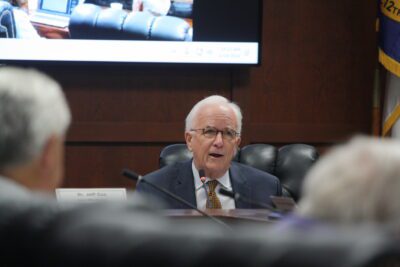
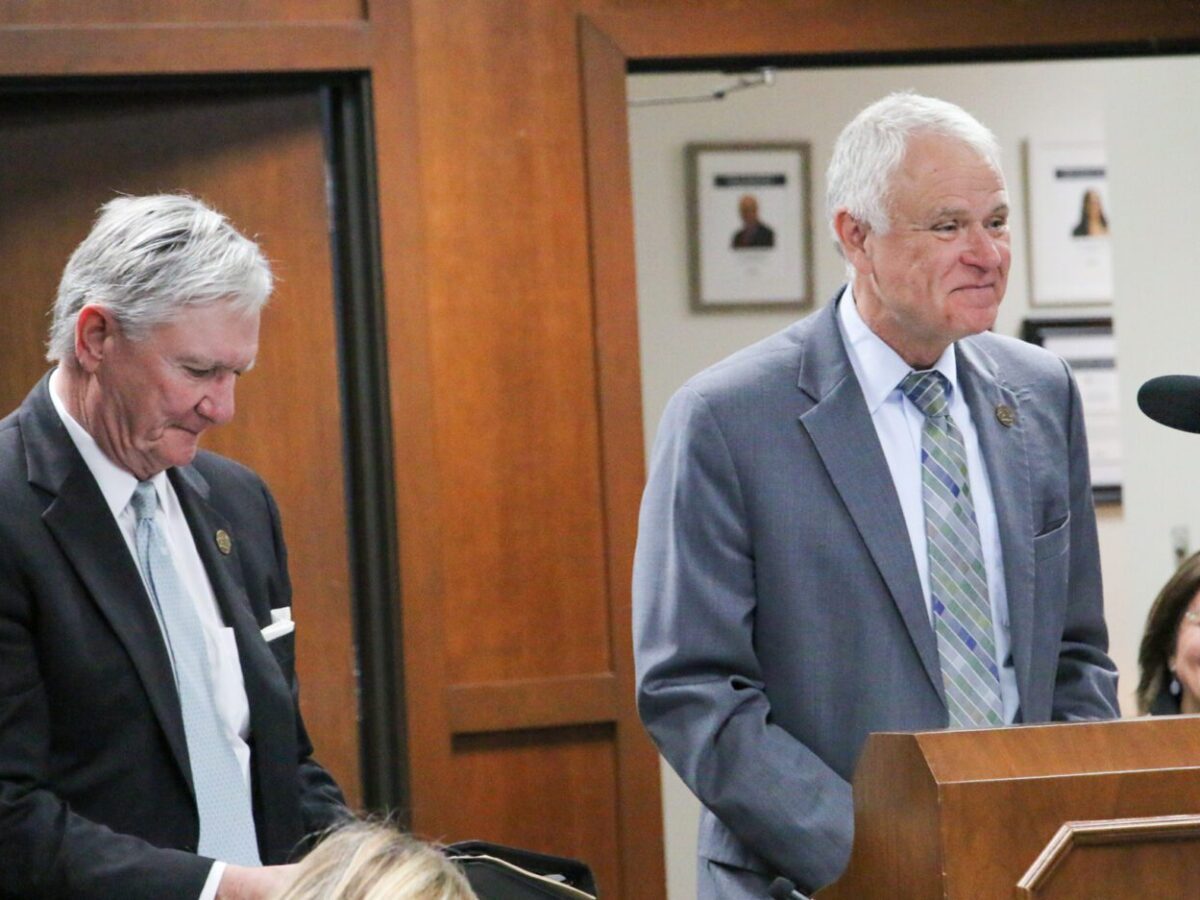
The announcement came during the State Board of Community Colleges’ November meeting, which also featured updates on the North Carolina Community College System’s (NCCCS) next strategic plan, preparation for new Workforce Pell Grants, and the NCCCS presidential search process.
 Sign up for Awake58, our newsletter on all things community college.
The Golden LEAF funding will go to five community colleges in rural areas of the 21-county region supported by the initiative’s participating institutions: Central Carolina, Piedmont, Randolph, Sandhills, and Vance-Granville.
AdvanceNC is a consortium of 12 community colleges, three universities, seven workforce boards, and other workforce partners across central North Carolina working together with employers since 2023 to meet the region’s demand for manufacturing talent.
“We knew that it can be very complicated for our employers to know how to engage with us if their project was really large,” said Central Carolina Community College President Dr. Lisa Chapman, who spearheaded the AdvanceNC initiative, at Friday’s Board meeting. “So, we began to talk about how we come together and streamline the communication for the employers, make sure we’re building the consistent pathways that the employers tell us how to build and tell us what they want, so that phenomenal talent is able to connect with those employers in the right way.”
The investment will be matched by $1.4 million in additional funding from Education Design Lab and myFutureNC.
In partnership with Education Design Lab, AdvanceNC is developing ten employer-validated micropathways aligned with high-demand careers such as industrial machinery mechanic, maintenance repair worker, electrician, HVAC technician, and welding.
“These pathways will provide students with stackable microcredentials and third-party credentials as well as advancing training within the entire region,” Hamilton said.
The five colleges with this allocation will share instructors and curriculum materials in openNCCC, the system’s open learning platform and repository of educational materials, said Dr. Brian Merritt, the system’s chief academic officer.
The Board’s finance committee approved the allocation of funds during the Board’s Thursday meeting.
Moving forward, the system said in a press release that the Board, system office, and the North Carolina Community Colleges Foundation are co-leading “a collaborative national fundraising effort to secure additional private sector support for AdvanceNC and to replicate the success of AdvanceNC to other industries and in other regions across the state.”
“Our System is focused on leading through change by aligning educational opportunities with employer demand,” said Dr. Jeff Cox, president of the NCCCS, in the release. “The Golden LEAF Foundation’s generous funding is a testament to the proven success of AdvanceNC and represents a strategic investment in the future of our state’s workforce and economy. It enables us to deliver high-quality, relevant training that puts North Carolinians to work in great-paying jobs.”
Updates on the presidential search and strategic plan
Board Chair Tom Looney said the presidential search committee to find Cox’s successor released the RFP for search firms on Friday.
Search firm presentations will occur in December, and the Board intends to award the search firm contract in January. The presidential profile will be developed throughout January and February 2026 to select the new president and CEO by April 2026.
The system office’s goal is to have the Board approve the 2026-2029 strategic plan next September. Next month, the system will gather feedback from the North Carolina Association of Community College Trustees and other selected stakeholders to inform the plan’s goals.
Dr. Zach Barricklow, interim vice president of strategic initiatives, said the Board will receive draft goals informed by that feedback in January to be considered for adoption in February. In February and March, the system will then work on setting key performance indicators before turning their focus toward tactics to implement the plan.
Dr. Dale McInnis, chair of the Board’s strategic planning committee, noted that the strategic plan’s creation will run alongside the legislative cycle and the system’s presidential search process. As candidates are interviewed, McInnis said, the system office will need a clear commitment to its goals.
Those goals will also be shaped by feedback from community college presidents, obtained through a series of sessions conducted in October. Featuring input from around 80% of the state’s community college presidents, a report on the sessions concluded that presidents broadly affirmed the simplified three-year structure of goals, KPIs, and tactics — though they cautioned a successful plan will require discipline from all stakeholders.
Presidents appreciated having colleges as co-owners of the plan rather than being passive stakeholders, according to the report.
“The overall tone of all five of these regional gatherings was optimistic and forward-looking … they see this as a chance to strengthen how the system office and the colleges are working together,” Barricklow said.
Presidents’ feedback in the report also highlights the need to clarify and reinforce the role of the system office and other stakeholders involved in the planning process. Additional feedback called for clear links between the plan and governance structures within the Board and across the college network. Presidents also expressed a desire for the next system president to foster a culture of responsiveness and collaboration.
“Taken together, these themes point toward a unified vision for the North Carolina Community College System: locally unique, System strong, and aligned to build the best workforce in the world,” the report says.
Workforce Pell Grants and legislative updates
The Board also heard an update on challenges facing the current strategic plan, including the implementation of new Workforce Pell Grants and funding concerns surrounding apprenticeships.
Merritt said colleges will receive a draft statewide toolkit after Thanksgiving to prepare for the rollout of the grants, which are scheduled to launch on July 1.
He also noted that after reviewing short-term programs offered across the NCCCS, 90 met the grants’ hour requirements — between 150 to 599 hours long. But this number will likely drop once additional eligibility requirements are considered.
Cox said that the immediate impact of these grants’ may not be as “huge” as the System Office initially hoped.
“There are some of the states that we don’t think are going to have any programs that are going to qualify at all,” Cox said. “So I think we have to temper expectations … and be thoughtful and deliberate about how do we get more programs in there.”
Board members also received an update on the system’s legislative priorities and the mounting uncertainty at the General Assembly. According to Alex Fagg, the vice president of government and external relations, lawmakers have indicated they do not plan to return to session this year, raising questions about when a comprehensive budget will be passed.
Despite the uncertainty, system officials will update their legislative agenda for the short session in the meantime, he said. They hope to finalize that work with the State Board and the Presidents Association in January.
The system is also monitoring significant program shifts from the U.S. Department of Education to the U.S. Department of Labor, though many of the details are still unclear, Fagg said. The shifts are part of a broader move announced this week to transfer some of the Education Department’s programs to other agencies.
Curriculum program applications
In response to teacher vacancy needs, the NCCCS has served as an Educator Preparation Program (EPP) since its approval by the State Board of Education in 2022, according to a report from the programs and student success committee.
On Thursday, the system asked the Board to review the addition of six new licensure areas and 18 new courses. The residency licensure programs are: Birth through kindergarten, high school math, high school science, middle school math, middle school science, and special education.
Dr. Mary Olvera, a program administrator for the system, said colleges can offer specific licensure areas based on their community’s needs. She also said some colleges have asked to start these new programs next fall.
As future action items on the meeting agenda, the Board will have a few more months to consider the curriculum requests in order to give presidents and chief academic officers more time to review the items.
Transformation, modernization, and data systems
During the Board’s transformation subcommittee meeting, Subcommittee Chair Scott Ottman presented a slideshow on the subcommittee’s work informed by visits to 11 community colleges, with one more visit scheduled for December (the presentation is available starting at minute 6:00 of this recording).
During these visits, Ottman said he gathered feedback from presidents and senior leaders about system transformation and modernization. He used that feedback to inform the committee’s vision and value proposition.
Ottman’s presentation focused on how the committee plans to approach transformation, including laying out the guiding principles, strategic vision, and strategic direction for system transformation.
Amy Mast, executive director of State Board relations for the system, shared that a delegation of about 20 people — including legislators, NCCCS Board members and System staff, and business leaders — will visit Kentucky in February to meet with state leaders along with the State Higher Education Executive Officers Association and the national nonprofit Data Quality Campaign.
The goal of the trip is to understand how Kentucky successfully led statewide modernization and data transformation, Mast said.
The N.C. Longitudinal Data System’s Governance Board met last Monday for the first time since it launched its flagship data request service in September. According to Cox, who also serves as chair of the advisory board, they’ve “built a secure, integrated system that will empower our state to make cross-sector, data-informed decisions for the benefit of the citizens of North Carolina.”
Other business updates
- ApprenticeshipNC, the system’s apprenticeship program, has been registering pre-apprenticeship programs since 2014 without a documented definition or policy for them, according to a Board report. This has created challenges for pre-apprenticeship programs, including a lack of guidance on their operations, limits on their ability to connect participants with a Registered Apprenticeship Program, and a lack of hands-on experience for some participants in some cases.
- The Board’s policy and governance committee approved a proposed definition and program standards related to registered pre-apprenticeship programs. Next, the proposals will be open for comment until Dec. 25 and presented for adoption at the Board’s January meeting.
- The Board allocated $40,000 in funding to Gaston College and Mayland Community College, in partnership with the system office, to co-lead a statewide initiative to modernize degree program competencies. More details are available here.
- The Board received a summary of state-funded financial aid programs for community college students. “In the 2024-25 fiscal year, 92,933 students received $23,134,673 in North Carolina Community College Grants,” the summary document says.
- The Board received legislative reports for high-cost health care and the N.C. child care grant program. Sarah West said that in previous years, Board members expressed concerns that colleges had unused funds left over from the grant money designated to provide child care services for parent-students. Based on the legislative report, she said there have been successes in better allocation of those funds.
The next meeting of the full Board is Jan. 15-16. The strategic planning committee may meet in December if necessary.


Recommended reading