The North Carolina Task Force on Child Care and Early Education released its 2025 year-end report outlining progress toward its recommendations along with future action steps.
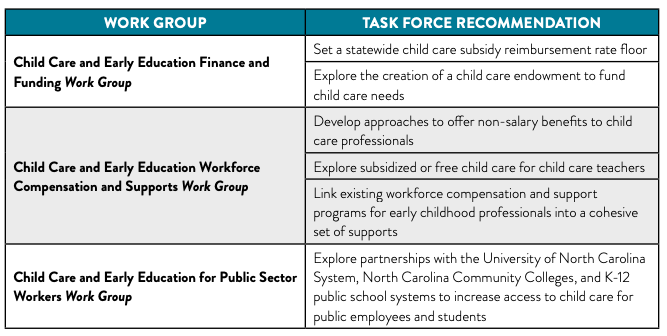
Those recommendations include setting a statewide subsidy reimbursement floor, offering non-salary benefits to child care professionals, and linking existing workforce compensation and support programs into a cohesive set of supports.
Task force members are also exploring the possibility of creating a child care endowment fund, providing free or subsidized child care for child care teachers, and partnering with statewide public education systems to increase access to child care for public employees and students.
“Too many families in our state can’t afford to work because child care is expensive and in short supply,” Gov. Josh Stein said in a press release. “I look forward to working with leaders in government and the private sector to turn these recommendations into results. Doing so represents a win-win-win: It gets parents the freedom to work, kids the safe start they need, and employers the workforce necessary to keep North Carolina’s economy thriving.”
Task force overview
The latest report outlines the origins and progress of the bipartisan task force, which was established by Stein’s executive order in March 2025.
The task force is co-chaired by Democratic Lt. Gov. Rachel Hunt and Sen. Jim Burgin, R-Harnett. It includes members from the General Assembly, leaders of state agencies and advocacy organizations, and child care providers.
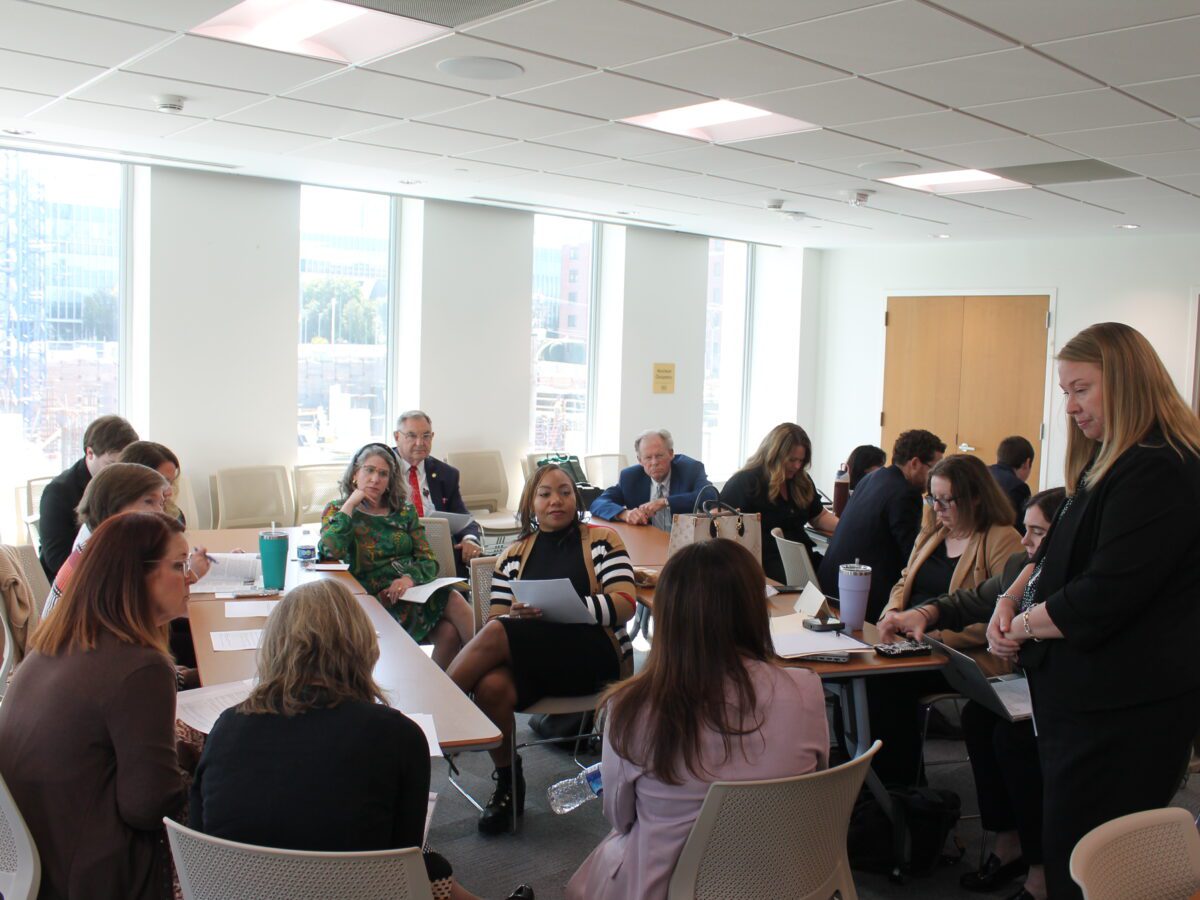
Members of the task force met monthly in spring 2025 to examine barriers to expanding affordable, high-quality early care and learning in North Carolina. EdNC was at each of those meetings, and you can read our coverage below.

During those meetings, members started developing potential solutions to the state’s child care crisis. Over the summer, the task force broke out into three work groups and published an interim report outlining their recommendations.
The task force also commissioned a study on the role of financing in the state’s early care and learning system, which is expected to be completed this spring and will inform future recommendations.
The work groups met in July, September, and November, with the full task force coming together to continue its work in August, October, and December 2025. The year-end report includes summaries of those meetings, including key takeaways. EdNC attended the public meetings and you can read our coverage below.


“Over the past year, the Task Force on Child Care and Early Education has focused on real, practical ways to make child care more affordable and accessible in all 100 counties,” Hunt said in the press release. “In the year ahead, we’ll keep pushing that work forward and urging leaders in the General Assembly to treat child care like the essential support for working families that it is.”
While the task force is focused on child care solutions at the state level, the year-end report also notes the challenges to North Carolina’s supply of child care posed by the federal government shutdown last fall.
The shutdown affected six Head Start and Early Head Start programs that were due to receive funds on November 1, 2025, resulting in several programs closing temporarily, furloughs of hundreds of staff, and thousands of North Carolina children and their families scrambling to find alternative child care options… Ultimately, these programs had to make difficult decisions about whether and how to keep their doors open during the uncertainty of the shutdown, which had ripple effects on families, employers, and economies.
— 2025 year-end report
Funding and finance
The group working on recommendations related to finance and funding is focused on figuring out how to set a statewide subsidy reimbursement floor, in addition to exploring the creation of a child care endowment fund.
State subsidy reimbursement rates are currently based on county-specific estimates of what families can afford to pay for child care. The rates do not take into account the actual cost of providing high-quality child care.
Estimates of what families can afford in rural counties are typically lower than in urban counties, but the cost of providing high-quality early care and learning remains high regardless of location. That means the subsidy reimbursement covers less of the gap in rural counties than in urban ones.
According to the report, a statewide child care subsidy reimbursement floor would use a statewide average estimate of what families can afford as a minimum reimbursement rate. Child care providers who currently receive less than this amount would see their reimbursement rates bumped up to the subsidy floor level, helping to close the existing gaps they face.
The work group is also looking into how to take incremental steps toward funding subsidies based on the true cost of care, rather than relying on market rates estimates. Members plan to provide policymakers “clear and thorough” information that will help maintain existing child care slots while considering subsidy improvements.
The finance and funding group has also been looking into the creation of a child care endowment fund like those in Connecticut, Arizona, Montana, Nebraska, and Washington, D.C. The report says they’ve learned most of these initiatives rely on state funding and identifying those funding sources can be challenging.
The group’s next steps are to assess the feasibility of such a fund in North Carolina and to consider creating a blueprint for doing so.
Workforce compensation and support
Another work group is dedicated to finding ways to expand workforce compensation and support. That includes identifying non-salary benefits that could be provided for child care professionals, exploring subsidized or free child care for child care teachers, and linking existing workforce compensation and support programs into a more cohesive set of supports.
The main non-salary benefit that the group has considered is health insurance. Less than half of licensed child care centers offer their employees any form of health insurance. Many early childhood educators — both at centers and in home-based child care — rely on Medicaid and the Affordable Care Act (ACA) marketplace.
The work group looked into adding licensed child care providers to the State Health Plan, but determined the price tag for adding roughly 42,000 new employees to those rolls would be cost-prohibitive.
Instead, they propose partnering with the NC Chamber to make child care providers aware of health plan options through Carolina HealthWorks. Additionally, they’re looking into enhancing support for navigating other existing health insurance options as they seek to learn more about how child care professionals are currently accessing health insurance.
The group is also examining options for providing free or subsidized child care for child care teachers. They reviewed similar initiatives in 13 other states, and are planning to build legislative support for a pilot program in North Carolina.
At meetings throughout 2025, task force members learned about a number of existing workforce compensation and support programs working across the state, like TEACH and WAGE$. There was concern that early childhood educators may not be aware of these opportunities, so this work group has the goal of mapping them, then creating a single resource for accessing them.
Child care for public sector workers
The third work group is studying the possibility of providing early care and education for public sector workers. The members of this group have narrowed their focus to exploring partnerships with the UNC System, the North Carolina Community College System, and K-12 public school systems to increase access to child care for their employees and students.
Here’s what they’ve learned about existing offerings so far, according to the report:
- Ten of 17 UNC System campuses and 16 of 58 community college campuses may have some form of on-site child care.
- The N.C. Department of Health and Human Services awarded grants to 16 higher learning institutions for child care academies in December 2025 — three from the UNC system and 13 community colleges.
- At least 13 high schools have on-site child care services.
The work group plans to conduct a landscape analysis to learn exactly which schools offer which child care services, and what other child care-related benefits may exist. They’ll also develop a toolkit for how to establish such programs and expand pathways for education systems to share this information with one another.
The full task force, along with its work groups, will continue working on all six recommendations through March 2027.
“North Carolina’s children and families are counting on investment in child care and early education,” Burgin said in the press release. “In 2026, the task force will remain steadfast in our commitment to improving education opportunities for young children and child care access for working families.”
You can read the full year-end report here.
Recommended reading