
Improving student success and closing equity gaps: Lessons from Forsyth Tech

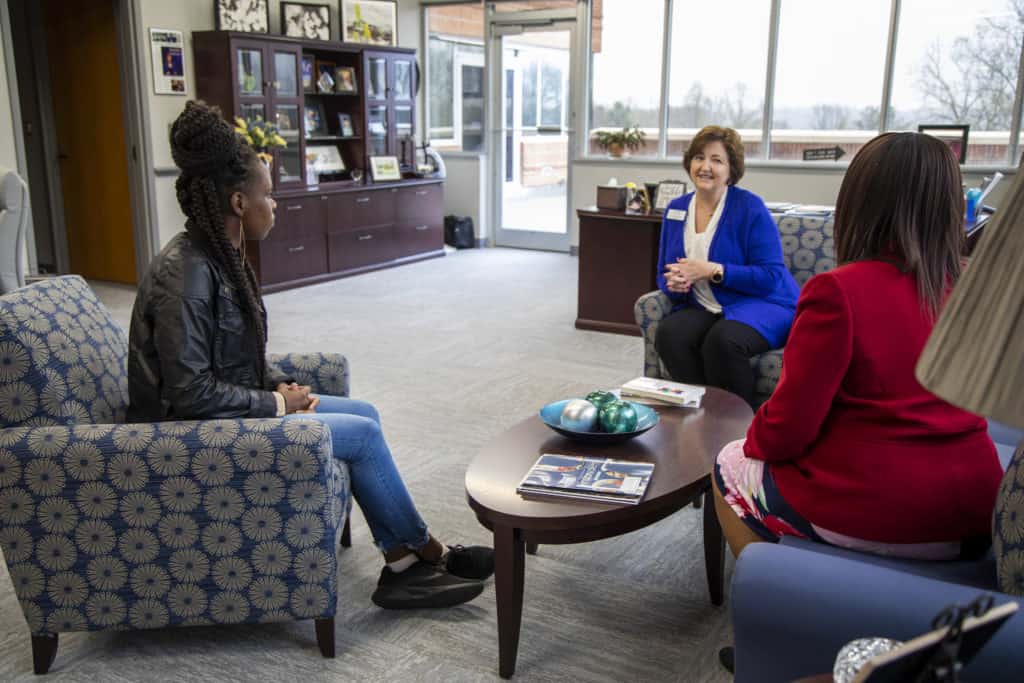
A new case study released in June highlights Forsyth Technical Community College as a leader in improving student success and closing racial equity gaps.
The case study, from the Pullias Center for Higher Education at the University of Southern California, documents changes implemented at Forsyth Tech under the leadership of president Janet Spriggs. Forsyth Tech used strategic planning to improve the student onboarding experience, which has resulted in higher completion rates and closed racial equity gaps.
“By focusing on the student experience and implementing strategic changes in our advising and support services, we have made significant strides in improving completion rates and closing equity gaps,” Spriggs said. “We are proud of the progress we have made and remain committed to ensuring that all students at Forsyth Tech have the support they need to succeed.”
 Sign up for Awake58, our newsletter on all things community college.
When Spriggs became president of Forsyth Tech in 2019, three-year completion rates were behind the national average. Only 12% of Hispanic/Latino students and 6% of Black students graduated within that three-year span. The goal highlighted in the case study was to improve student success by making significant changes to the student onboarding, enrollment, and advising processes through what they called the “Student Experience of Onboarding” project.
Forsyth Tech used the strategic planning process to tie changes in onboarding to broader institutional goals. Spriggs promoted a campus culture that was “open to change and driven by data rather than by adherence to the status quo,” the case study said. Researchers said the president’s collaboration with key stakeholders across campus brought the college together to implement the changes.
The case study is part of a larger series of case studies that accompany a change leadership toolkit. Each case study highlights “leader moves” that promote systemic institutional change.

The Forsyth Tech case study highlights several leader moves made by Spriggs to improve student success. One such move was to create a shared vision with expectations and pacing.
The college’s mission is to meet students where they are, and Spriggs used this mission to create a shared vision around making the college “student ready” rather than saying students were not “college ready.” As part of this shared vision, Forsyth Tech restructured student support services to proactively reach out to help with enrollment and registration.
According to the case study, data collection was an important part of implementing change. As part of the “sensemake and learn” leader move, Forsyth Tech grew their capacity for data collection and tracking on campus to help keep stakeholders aware of student performance as well as equity gaps.
Read more about Forsyth Tech

The case study highlights the leadership context, which it defines as the internal and external factors that “shape a leader’s change landscape” and influence their decision-making. Being a community college with a mission to serve students from all backgrounds helped Spriggs get buy in from faculty and staff for the project, she said.
The case study also identified two levers, which it defines as opportunities to amplify change.
The first lever Forsyth Tech used was the strategic planning process, which they leveraged to get buy in for the project. The second lever was external partnerships. Forsyth Tech collaborated with the Aspen Institute, Achieving the Dream, and the National Academic Advising Association (NACADA), which helped validate the new onboarding and advising approaches.
According to the case study, the overall completion rate at Forsyth Tech improved to 31% as a result of this project. In terms of closing equity gaps, the completion rate gap for Black students decreased by 15 percentage points, and Hispanic/Latino students are now completing at higher rates than white students.