
Here’s why three child care providers chose to close their programs for a day

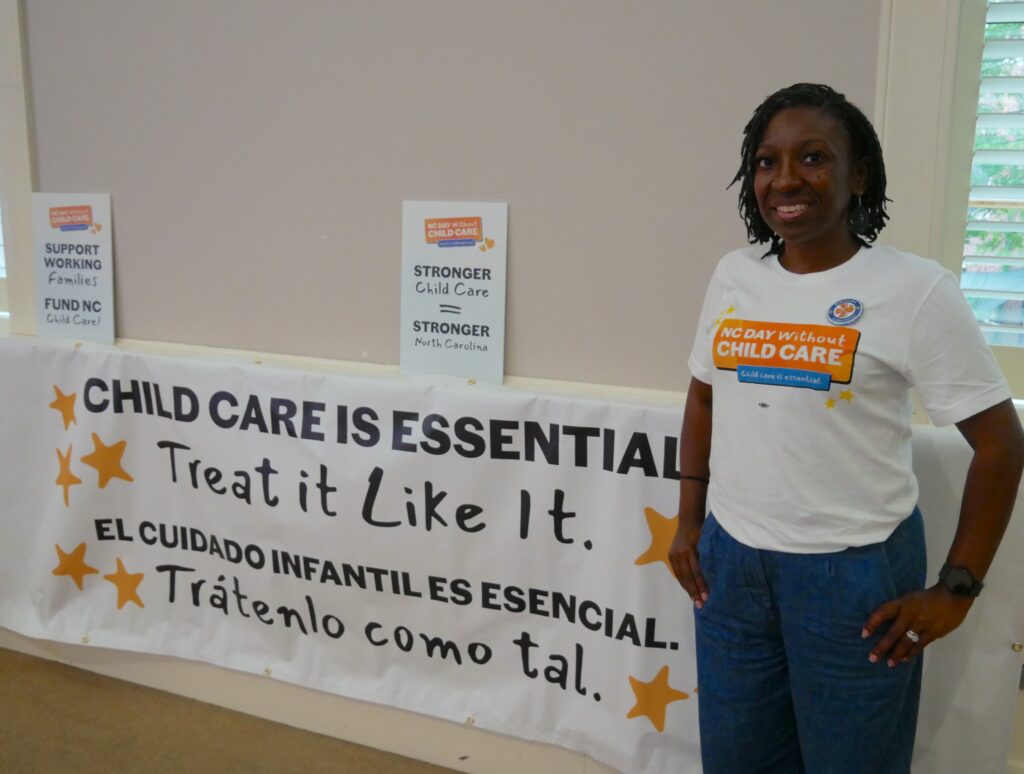
Dozens of child care providers closed their programs and drove to Raleigh Monday to advocate for more funding to serve low-income families and support child care teachers.
Providers did the same in Charlotte, and hundreds across the country are participating in similar “A Day Without Child Care” events organized by the advocacy group National Domestic Workers Alliance (NDWA).
Providers said they want policymakers to grasp the implications of child care closures, which they expect to accelerate as programs struggle to remain open without pandemic-era funding that ended in March.
“It’s getting worse,” said Ann Devane, owner and director of A Bright Child Development Center in North Raleigh. “It’s not going to be sustainable.”
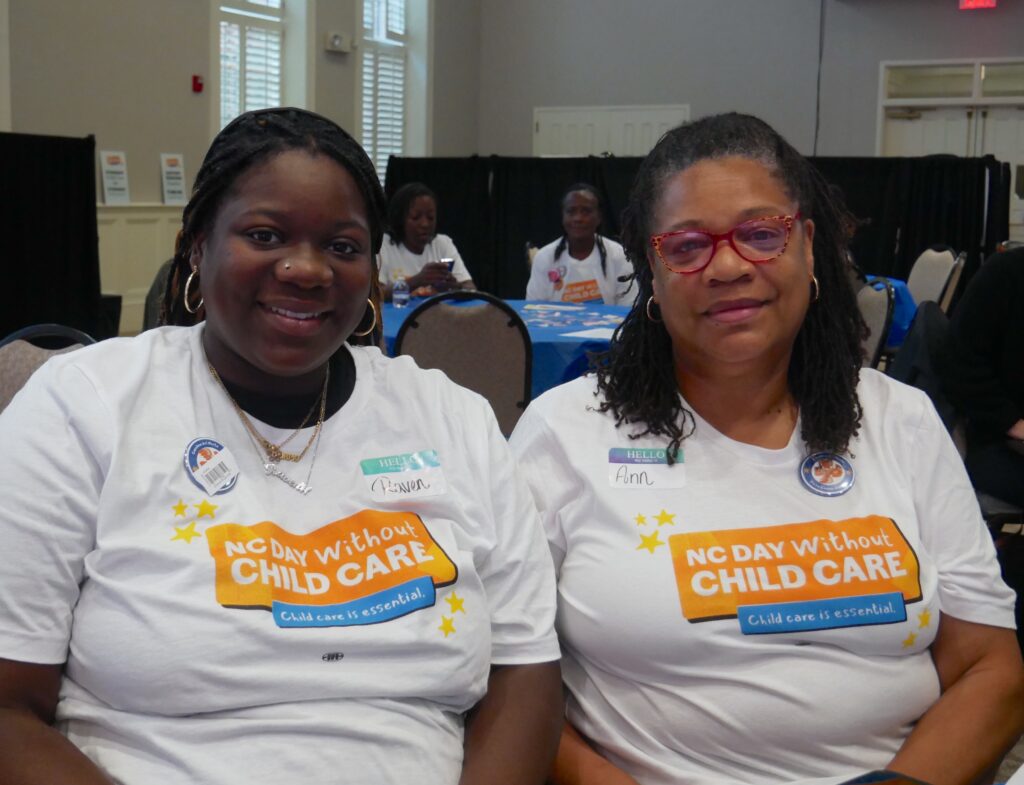
Devane said most of her parents were missing work Monday. She said that 70% of her center’s families participate in the child care subsidy program, which helps low-income working parents afford child care.
“They are 120% behind us,” Devane said of the parents she serves. She said she hopes lawmakers work with providers to ask what they need. More subsidy funding is at the top of her list.
The two top priorities for this legislative session from NDWA, and several early childhood advocacy groups, are $220 million for a subsidy rate floor and $60 million to cover the cost of child care for child care teachers. The subsidy funding would increase the rates that providers receive to serve children through the program and would lessen the disparities in funding between programs in rural and urban counties.
More on child care this legislative session


“We are essential to the workforce,” Devane said. “Without us, the wheel is not going to turn properly.”
Without the compensation grant funding that programs have been receiving, Devane said, providers are forced to either raise prices, which many parents can’t afford, or cut teacher wages. Devane has attended similar legislative days asking for public funding as those grants wear out in recent years.
“This is a repetitive thing that we’re doing, and it shouldn’t have to be,” she said. “How loud do we have to scream to say there’s a problem?”
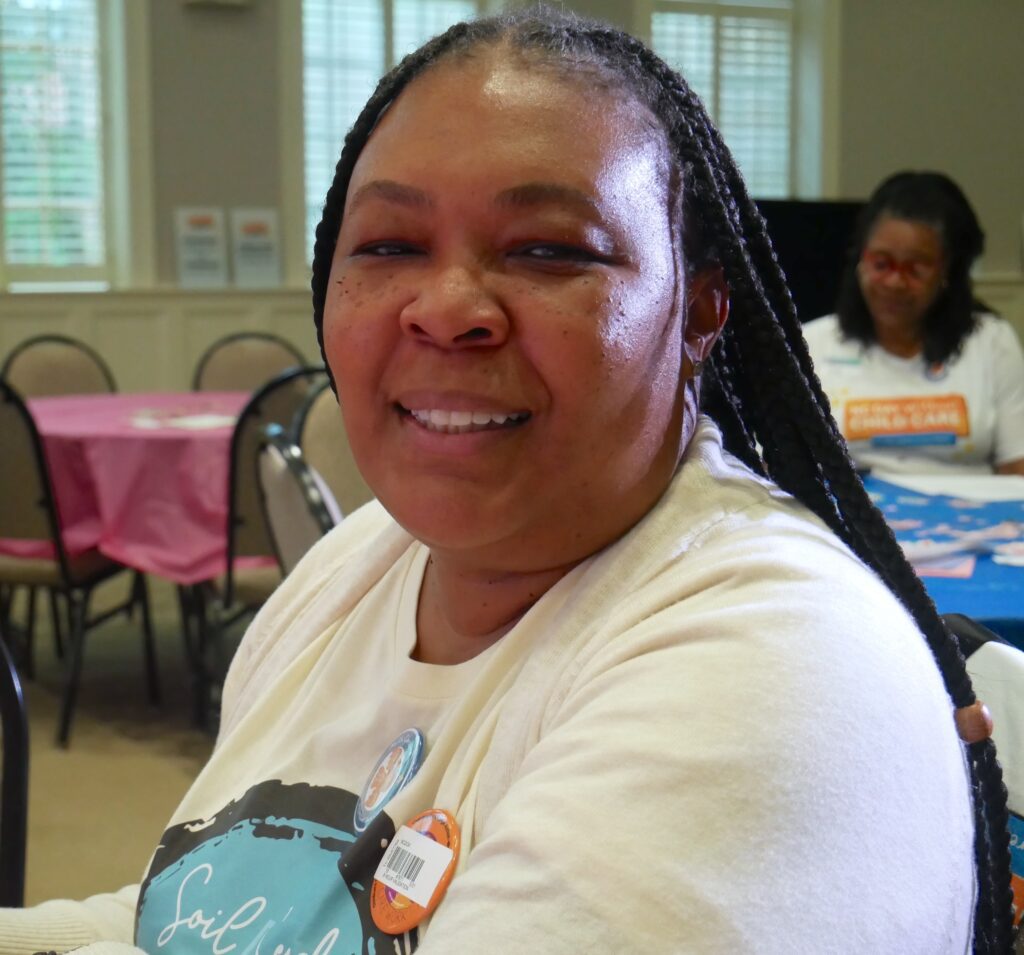
Tracy Conyers has worked in various child care settings. At the event, she pointed out multiple people whose children she cared for. Since 2023, she has been the director of Kate’s Korner Learning Center in Durham.
Conyers said she wants to show up for educators who do not feel respected. She wants higher wages for the valuable work they do.
“Most of all, it’s coming together and standing up for one another,” Conyers said. “We’re not just day care or babysitters, stuff like that. We are educators too.”
The program Conyers directs is owned by Kate Goodwin, who operates on an “empowerment model” where educators’ well-being is prioritized.
More on Kate Goodwin’s model



Conyers said she wants others to experience the kind of high-quality environment she has found, in which Goodwin is focused on “empowering us to find our purpose and being wholly supported.”
From compensation to professional development and mental health supports, the program provides supports that are rare in the field and matter to the quality of care that children receive, she said.
“When you have resources for teachers, it helps the kids too,” she said.
Public funding is needed so that level of quality can reach a child no matter where they are, she said.
Conyers traveled with several of the program’s educators. She also attended last year’s rally, her first advocacy event of her career. She said it feels frustrating this year to see a lack of change in the field.
“You’ve just got to keep pushing,” she said.

Donna White, director of Carol’s Care Child Development Center in Reidsville, had to find alternate arrangements with a family member for her own child who attends the program where she works. So did a teacher who traveled with her.
Though she understands the struggles of even one day without child care, she said, she has not received backlash from the center’s families.
“When we fight, we’re not just fighting for us, but we’re fighting for families as well,” White said.
About 90% of the program’s families participate in the subsidy program, White said. The amount the program receives per child through subsidy does not cover the cost of high quality, including providing teachers a living wage.
“So child care providers are providing high-quality care to families without getting the pay in return,” she said.
More on child care policy


According to the state Division of Child Development and Early Education, the current rates cover about half of the true cost of care.
“Unfortunately, we’re in a situation where if we raise the cost, we’re hurting the family,” she said. “If we don’t raise the cost, we can’t afford to pay teachers.”
At the end of the day, it all comes down to the support children receive during a critical time in their learning and development, White said.
“I’m here to take a stand for better pay, not just for the teachers, but also to provide universal child care for all children,” she said. “Every child deserves to be in a high-quality child care facility.”
Editor’s Note: Kate Goodwin sits on EdNC’s strategic council.