
NC Institute of Medicine releases recommendations for strengthening the state’s nursing workforce

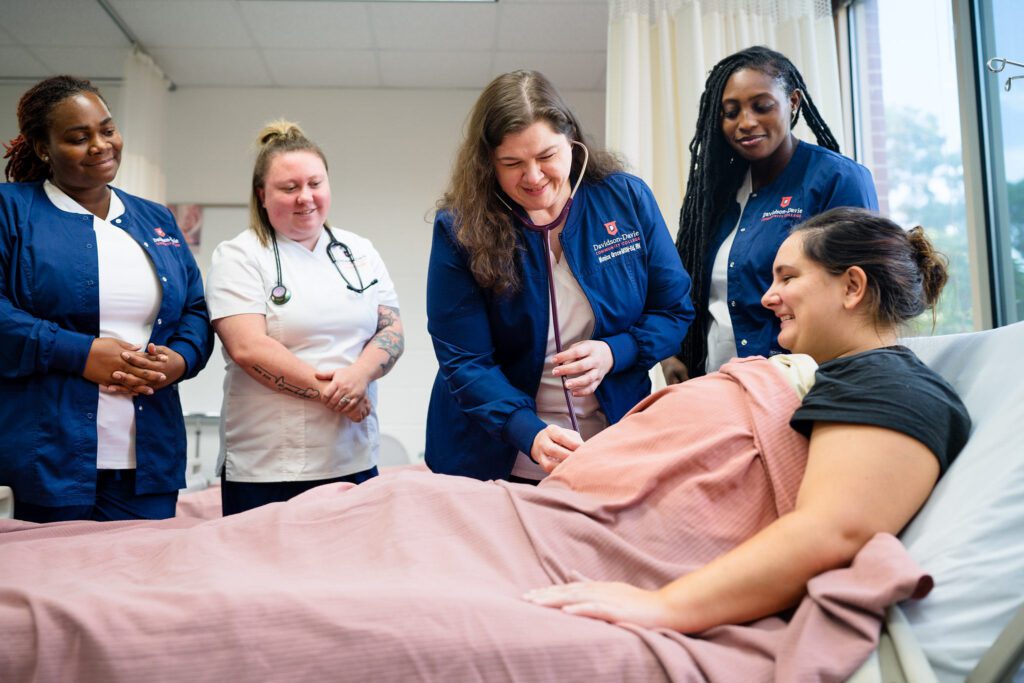
“Nurses provide care in all health environments, and North Carolina is facing a critical shortage of these vital providers,” according to this press release from the N.C. Institute of Medicine (NCIOM).
Over 12 months, a diverse group of stakeholders — including nurses, researchers, advocates, public health practitioners, payers, and elected officials — came together to develop eight evidence-based recommendations with 25 strategies for the report, “Securing a Strong Nursing Workforce for North Carolina.” They included:
- Develop a strong and diverse nursing workforce that is representative of the communities served and is prepared to meet the growing health care needs of North Carolinians;
- Enhance the educational and career advancement of nurses through all stages of their careers, particularly those serving in practice environments experiencing persistent shortage (e.g., hospital, long-term care, underserved, and rural settings);
- Ensure a workplace culture that values the physical and psychological safety and well-being of nurses;
- Expand the role of nurses in leadership, shared decision-making, and team communication;
- Improve retention of nurses in practice environments with high rates of turnover or vacancies by addressing work environment issues such as workloads and offering flexibility in scheduling;
- Equip nurses and the public to be strong advocates for nursing and health care improvement;
- Quantify the value of nursing care; and
- Optimize payment for health care services to support nursing care.
With support from the N.C. Pandemic Recovery Office, The Duke Endowment, and AARP NC, NCIOM convened the Task Force on the Future of the Nursing Workforce to develop policy recommendations for ensuring that nurses feel prepared and supported to practice in our state.
“The task force has provided a path forward to address a workforce crisis that threatens the health and well-being of all North Carolinians,” said Stephanie McGarrah, executive director of the North Carolina Pandemic Recovery Office. “More than ever, we owe it to our nursing professionals to take action using the strategies laid out in this report.”
More than 50 members of the task force learned from experts in nursing education and career progression, workforce retention, and health care payment models, as well as from one another. With an underlying focus on equity, their recommendations call on lawmakers, educators, employers of nurses, trade associations, and the general public to advocate for strengthening pathways to nursing careers, sustaining the nursing workforce, and valuing the work of nurses.
“The members of this task force worked hard to develop a truly actionable vision for building and sustaining North Carolina’s nursing workforce, ensuring that those who care for us feel safe, valued, and prepared to meet our state’s growing needs,” said Michelle Ries, MPH, president and CEO of the NCIOM.
The task force’s work sought to address driving factors of the key challenges to our state’s nursing workforce:
- Shortage of nursing educators
- Stressful work environments
- Insufficient staffing
- Trauma and burnout compounded by the COVID-19 pandemic

The task force was co-chaired by Ernest Grant, PhD, RN, FAAN, immediate past president of the American Nurses Association and current vice dean for diversity, equity, inclusion, and belonging at Duke University School of Nursing; Catherine Sevier, DrPH, MSN, RN, president emerita of AARP NC; and Hugh Tilson, Jr., JD, director of North Carolina Area Health Education Centers.
“The task force worked extremely hard to understand how serious the nursing shortage is in North Carolina. Now, we must address the findings, innovate, and make the changes needed to assure a healthy future for our state,” said Sevier.
Editor’s Notes: The Duke Endowment supports the work of EdNC.