Centering students in the future of work at the biennial NC Community College System conference

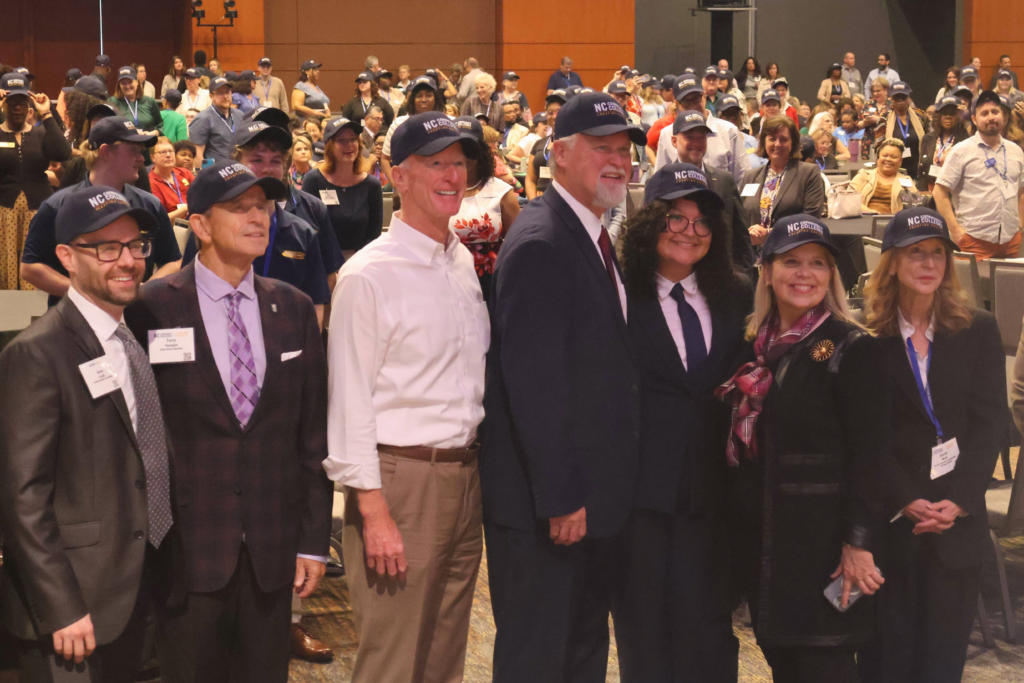
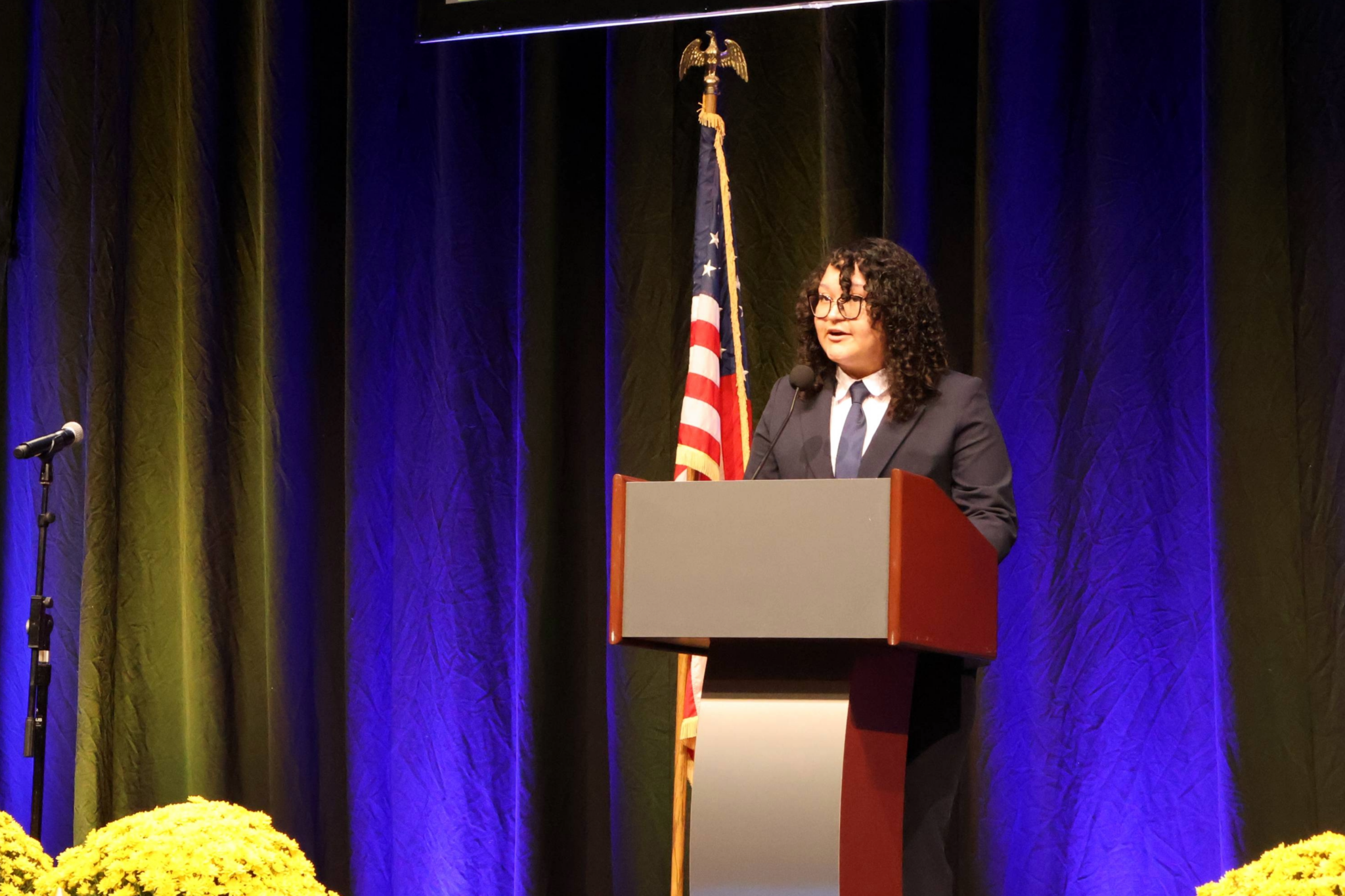
Speaking to a room of roughly 2,000 community college faculty, staff, and leaders from across North Carolina, Dr. Brian Merritt, senior vice president and chief academic officer at the N.C. Community College System (NCCCS), welcomed to the stage “the most important part of our work, and someone who represents the reason we are all here” — Stephanie Pano.
Pano, a student at Johnston Community College, serves as president of the North Carolina Community College Student Government Association (N4CSGA), representing and advocating for students across the state’s 58 community colleges.
In her opening remarks during the system’s biennial conference in Raleigh last week, Pano reflected on the conference’s theme — “An Essential Investment: Centering Students in the Future of Work” — which she said “gets straight to the core of why our system exists.”
 Sign up for Awake58, our newsletter on all things community college.
“North Carolina’s community colleges have never just been about bricks, mortar, or textbooks,” Pano said. “We are about the fierce, uncompromising belief that where you start in life should never dictate where you finish.”
That is why, Pano said, every decision made about community colleges leads back to the students.
“When we debate budgets, when we restructure courses, when we plan facilities or draft statewide policy, the ultimate metric of our success — and in my belief, the only true measure of impact — is the people sitting in our classrooms,” she said.
Those students include veterans transitioning to civilian life, student parents with caregiving responsibilities, students working multiple jobs, and dual-enrolled high school students taking college courses for the first time. Each one of them, Pano said, walks through the doors of a community college looking for an opportunity.
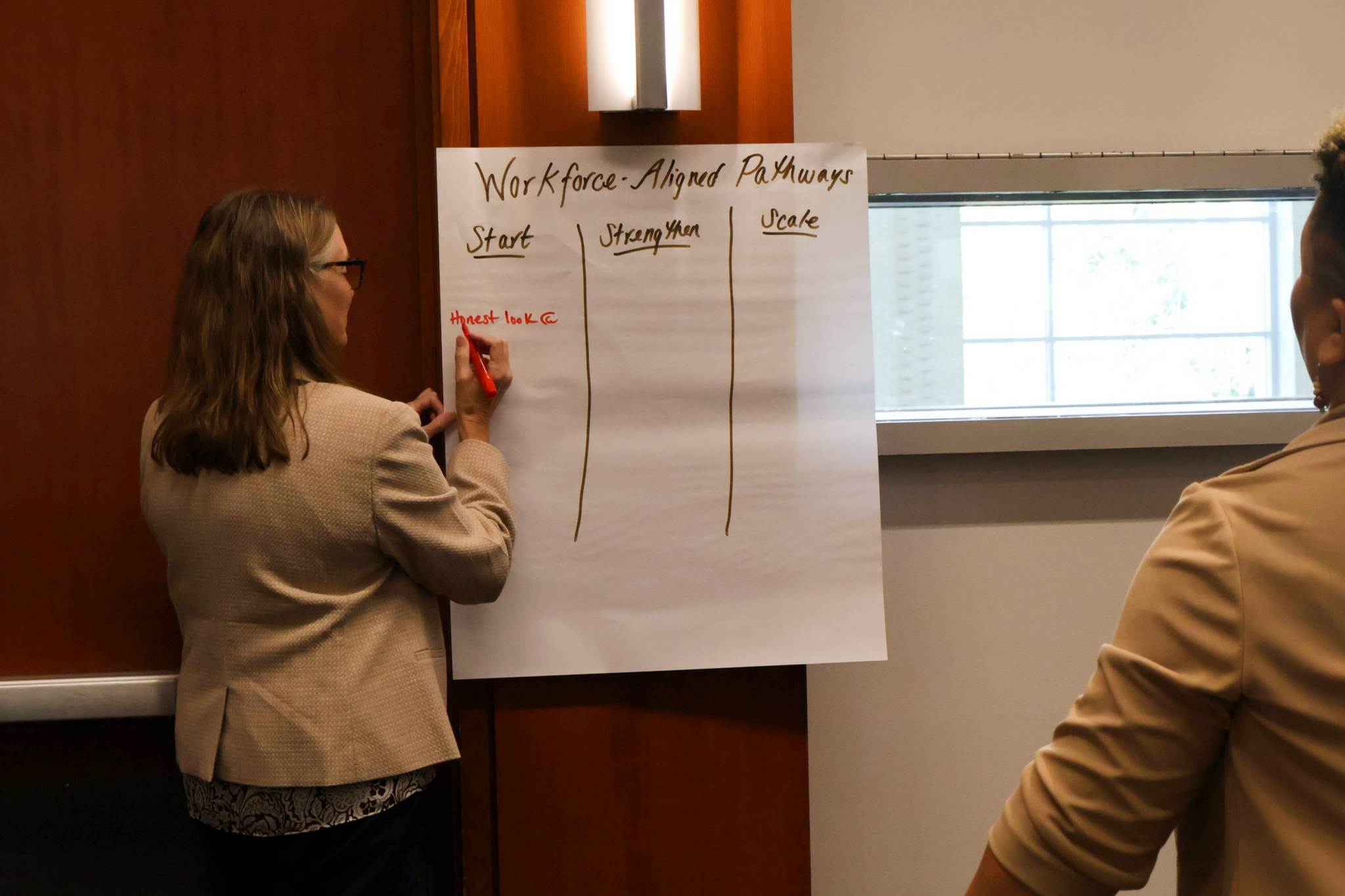
As conference attendees prepared for three days of connecting with colleagues and participating in breakout sessions, Pano encouraged them to keep students at the center of their work.
“Our progress isn’t measured by data points or balance sheets, but by the doors we open for students dreaming of a better future,” she said. “Every policy we establish and resource we secure directly impacts students who are counting on education to change their lives.”

‘Who did you help today?’
Conference attendees also heard from Dr. Monty Sullivan, interim president of the NCCCS, who has been in the role since Aug. 24. The system is now awaiting the General Assembly’s consideration of Sullivan’s nomination; the legislature’s deadline to confirm Sullivan is likely to take place during the Nov. 30-Dec. 18 voting session.
“After spending just a few months with Dr. Sullivan at the helm, I’m confident that our focus moving forward will be exactly where it needs to be — a dedicated focus on our students,” said Merritt.
During his remarks, Sullivan thanked the audience for the warm welcome to North Carolina. Before taking this role, he had retired after 12 years of leading the Louisiana Community and Technical College System.
Reflecting on his more than 30-year career in higher education and workforce development, Sullivan said he has long looked to North Carolina as an example of the promise of two-year colleges.
“You and I were entrusted with this mission that fundamentally changes the lives of people. That’s the work that you and I get to get up and go to every single day,” he said. “Is it always easy? Absolutely not. But is it rewarding? You bet it is.”
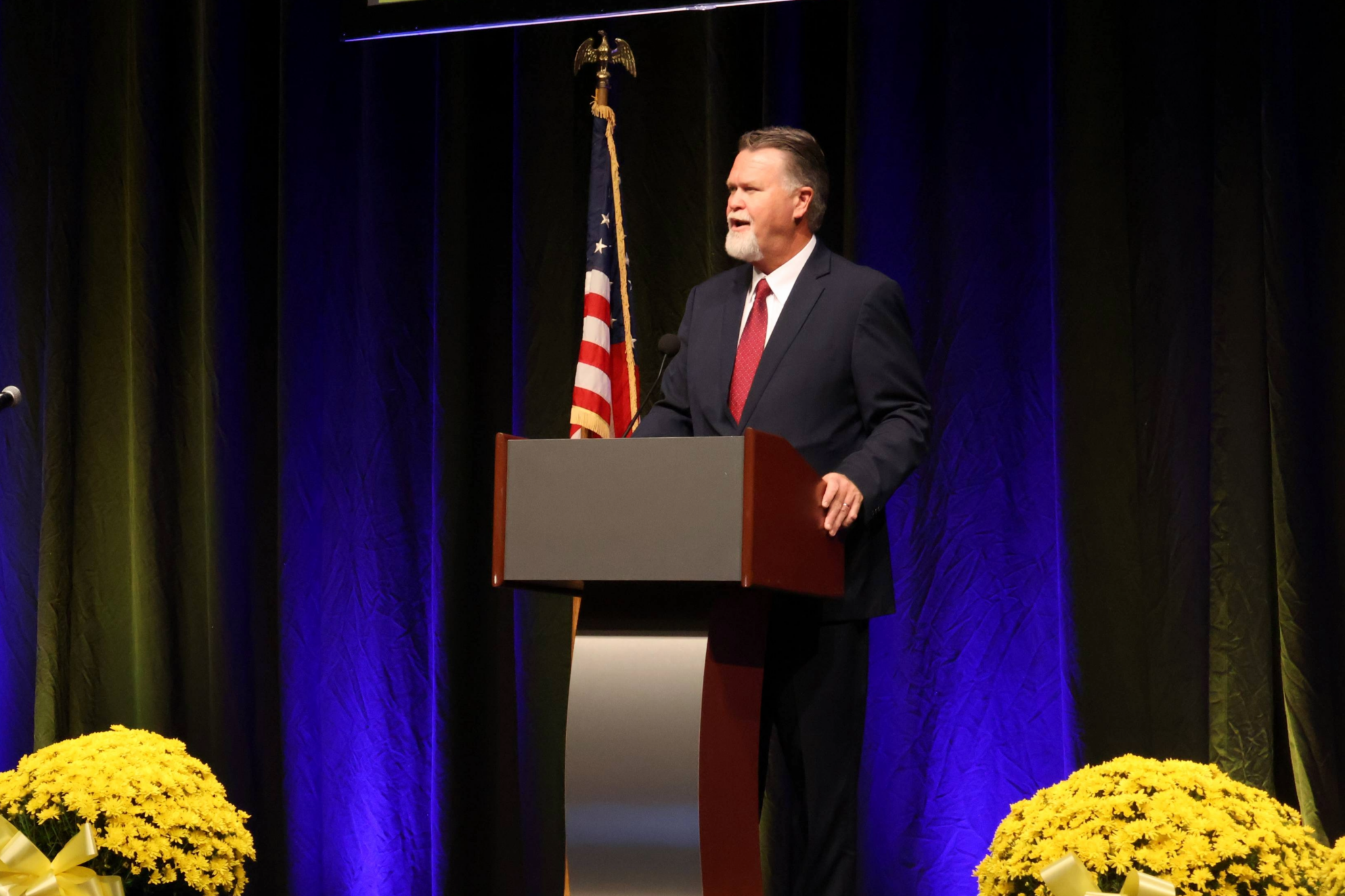
Sullivan also shared the personal connections he holds to community colleges and workforce training. His father, one of 13 children, never earned a high school diploma, but could “cover the wall” with short-term certifications that allowed him to “work and feed and clothe and educate me,” Sullivan said.
Sullivan’s wife, Kelley, completed her registered nursing degree at a community college after dropping out of high school. Every day after work, they ask each other not only, “How was your day?” but also, “Who did you help today?”
Sullivan charged the audience to ask themselves that same question.
“Who did you help today? Did you put someone on a better path? Did you help someone to be convinced that they could?” Sullivan said. “Because that’s what this mission is about — it’s about helping people understand the ‘what’s possible.’”
That could be as simple as sharing a look, handshake, or encouraging words with a student, Sullivan said.
He also reflected on the current moment facing the state’s community college system. The state budget, passed in July, made historic investments in community colleges, including $57.5 million in funding for Propel NC, an overhaul of the system’s business model that prioritizes funding for programs in high-demand, high-wage sectors.
That level of investment in two-year colleges, Sullivan said, is unique nationally, and positions North Carolina to define “the next generation of the American community college.”
“Now the question is, what will we do with it?” Sullivan said of new funding. “It is teed up for you and for me to catch the ball and run, to do what others can only dream of.”